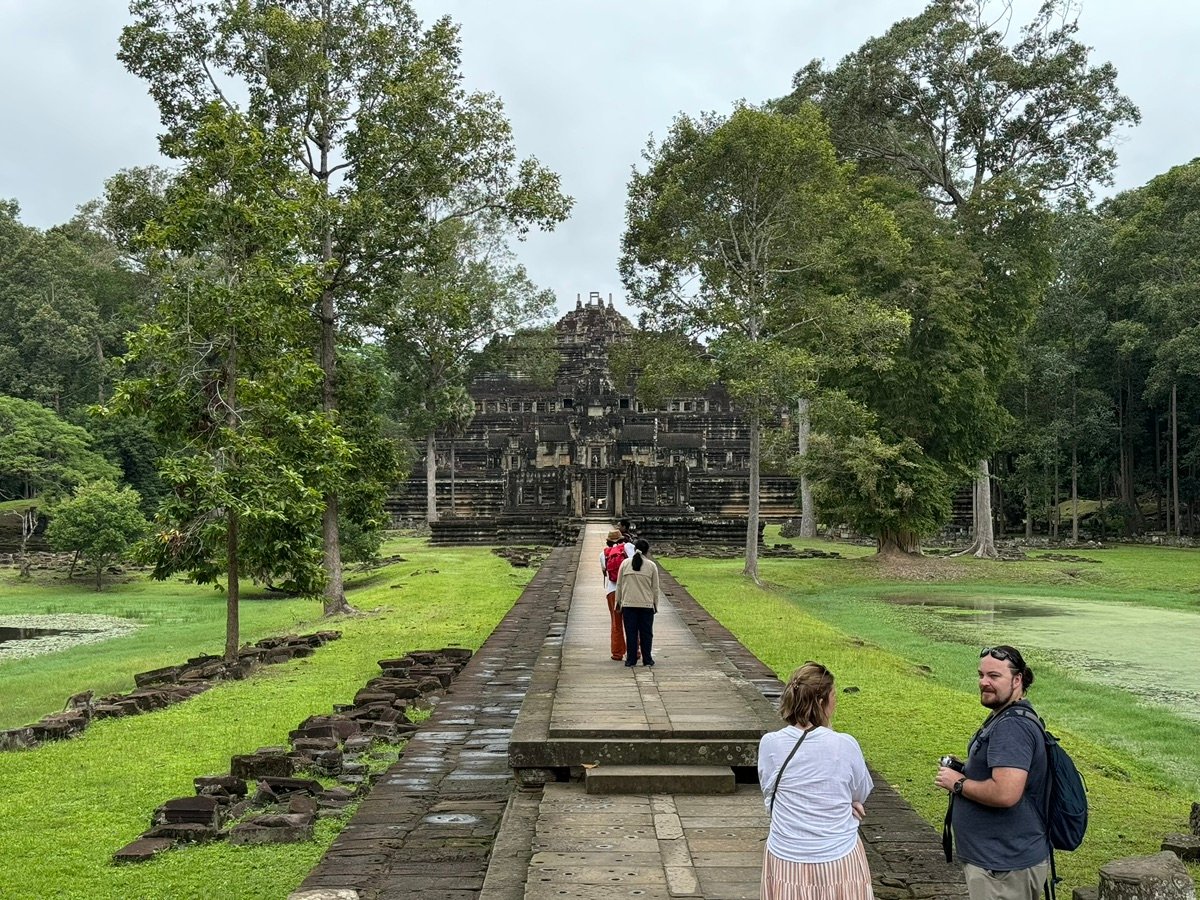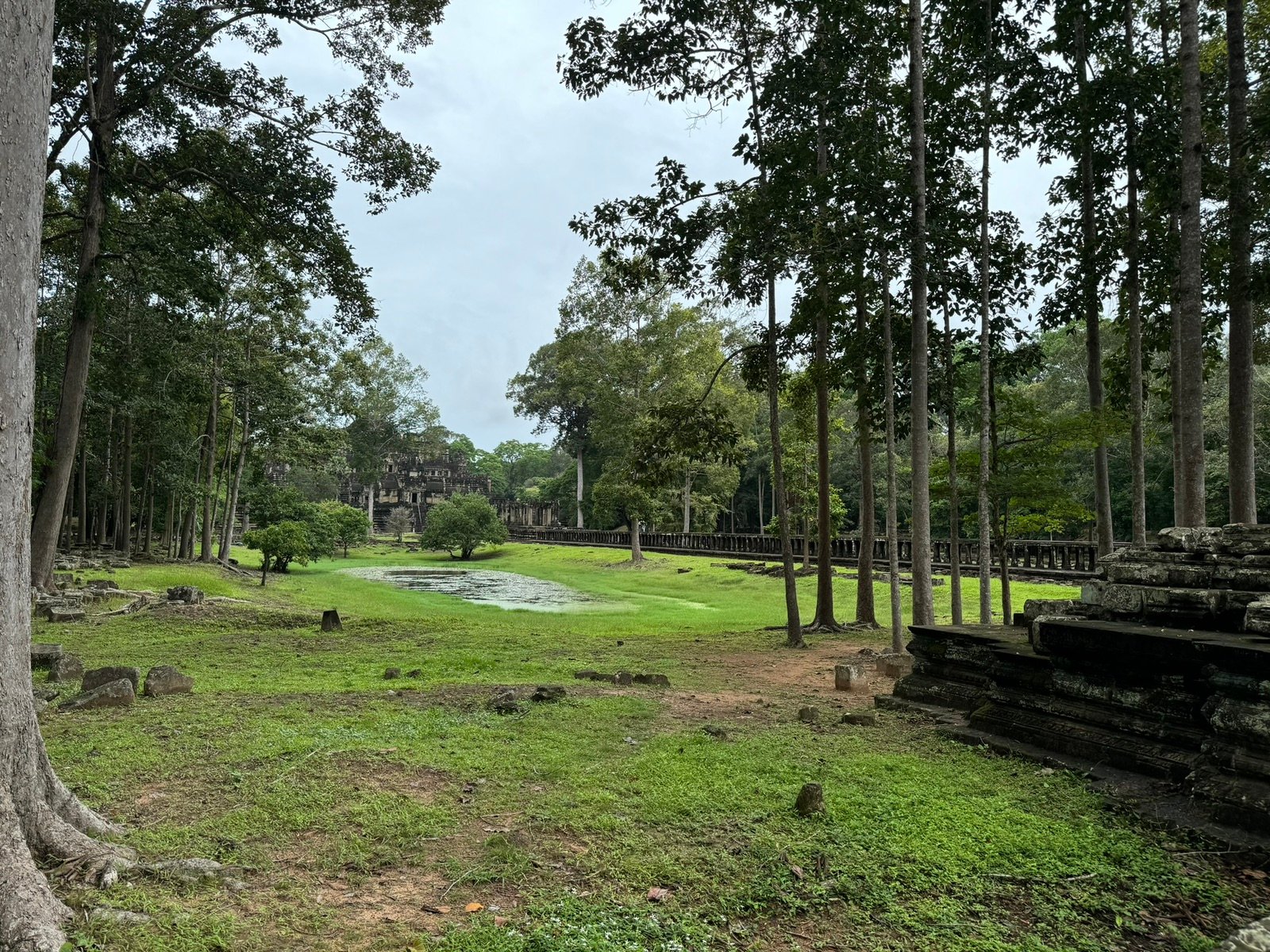
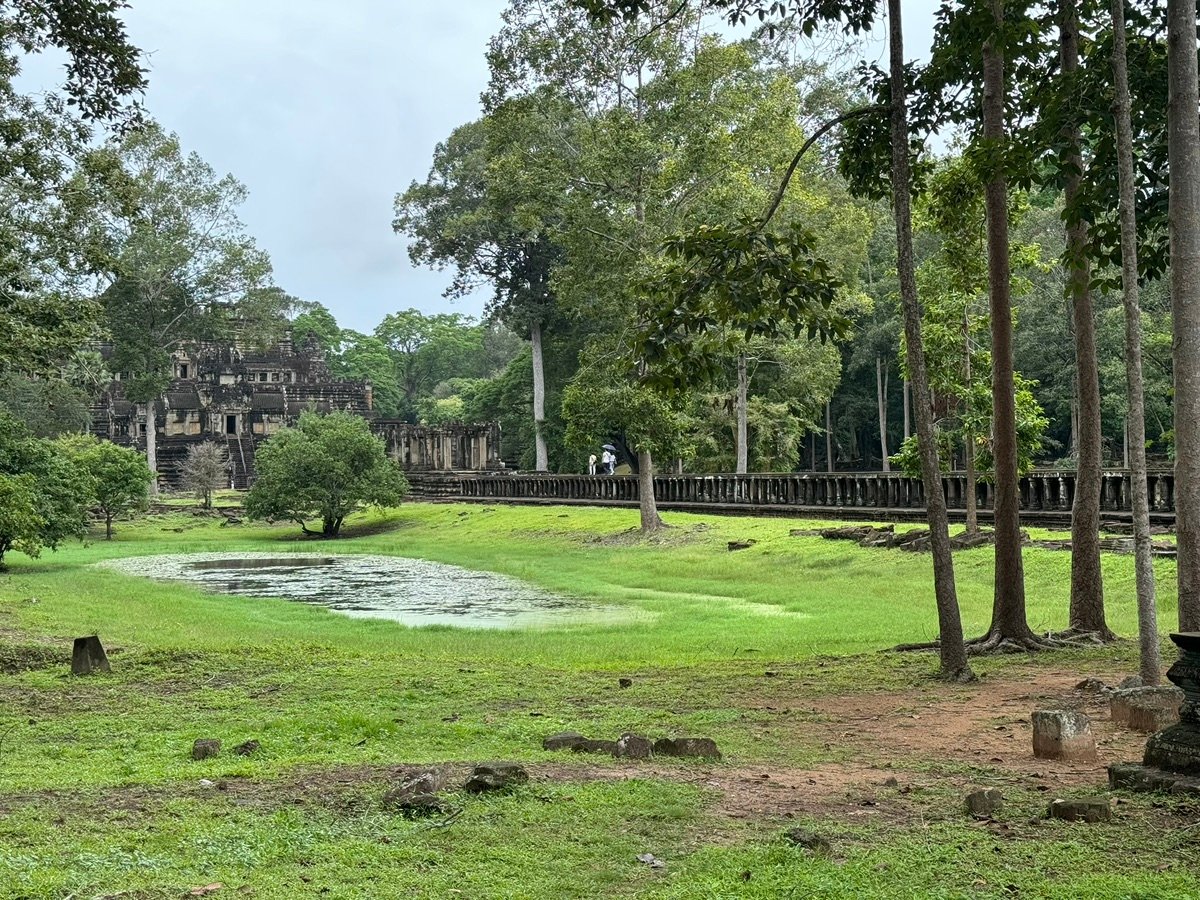
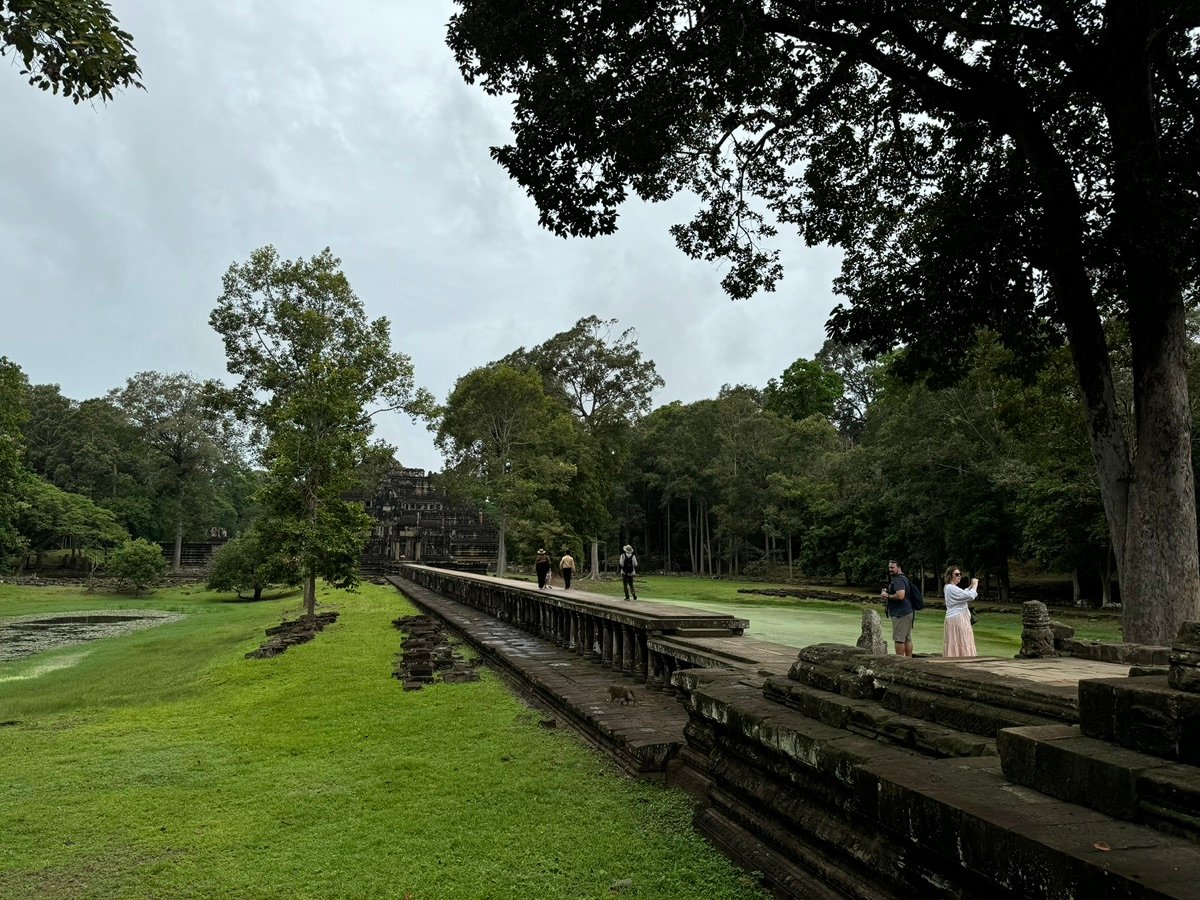
Stepping into the vast Angkor Thom complex in Cambodia, beyond the bustling main attractions, one can find a quieter reverence. The ancient pyramid temple of Baksei Chamkrong stands as a testament to the Khmer Empire’s early architectural prowess, an often-overlooked gem situated near the South Gate. Surrounded by a tranquil landscape of lush green fields, a reflective pond, and towering trees, it offers a moment of peaceful contemplation away from the crowds. This unique vantage point reveals the multi-tiered brick structure emerging from the verdant jungle, connected by a long, ancient causeway that hints at the grandeur of the city it once guarded.
An Early Masterpiece Hidden in Plain Sight
Built in the 10th century, Baksei Chamkrong predates many of the grander temples of Angkor. It was originally a Hindu temple dedicated to Shiva and was likely built by King Harshavarman I, though completed by Rajendravarman II. The temple’s name translates to “The Bird Who Shelters Under His Wings,” possibly referring to a legend where a king sought refuge from an attack. Its design, a relatively compact three-tiered brick pyramid, represents a significant stage in Khmer architecture, laying groundwork for later, larger structures. It’s a captivating reminder of the evolving artistry and spiritual devotion that shaped the Angkorian era, offering a glimpse into the foundational elements of this remarkable civilization.
Whispers of Ancient Serenity and Lush Greenery
The atmosphere around Baksei Chamkrong is one of profound tranquility. Unlike its more famous neighbors, it exudes a quiet dignity, allowing visitors to truly absorb the historical weight and natural beauty. The dominant colors are the deep, earthy greens of the surrounding jungle, punctuated by the moss-covered grey stones of the ruins and the reflective surface of the small pond. The air is thick with the scent of damp earth and tropical foliage, often accompanied by the distant calls of jungle birds. It’s a place where time feels suspended, inviting introspection and a deep connection to Cambodia’s rich past.
Best Timing
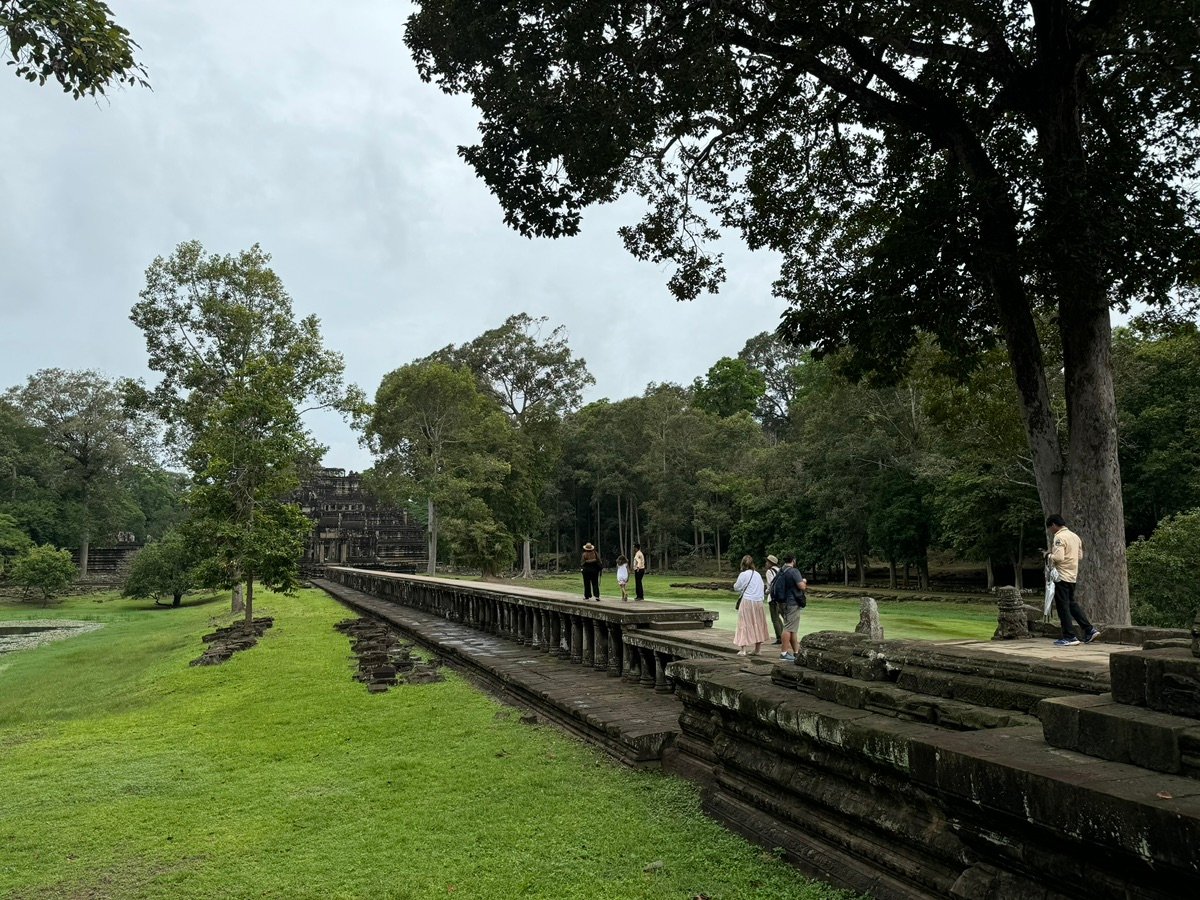
For the most comfortable experience and the best light for photography, visit Baksei Chamkrong during the early morning hours, shortly after sunrise, or in the late afternoon before sunset. These times avoid the midday heat and the largest tour groups. The ‘green season’ (May to October) brings lush landscapes and vibrant colors, as seen in this image, but also higher humidity and occasional rain showers. The dry season (November to April) offers clearer skies but can be hotter and dustier. Aim for a cloudy day if you want to capture the soft, diffused light shown here, enhancing the temple’s mystical aura.
Key Highlights
Here are some key highlights of visiting Baksei Chamkrong:
- Pyramidal Structure: Admire one of Angkor’s earliest and best-preserved brick pyramid temples.
- Historical Significance: Discover an important precursor to the grander Khmer temples, showcasing early architectural styles.
- Tranquil Setting: Experience a peaceful atmosphere, often less crowded than other Angkorian sites, allowing for quiet reflection.
- Lush Surroundings: Enjoy the beautiful interplay of ancient stone and vibrant jungle foliage, especially photogenic after rain.
- Panoramic Views: Climb to the top for views over the surrounding forest and parts of the Angkor Thom complex (check accessibility before your visit).
Traveler’s Memo
Access
Baksei Chamkrong is located just south of the South Gate of Angkor Thom, within the Angkor Archaeological Park near Siem Reap, Cambodia. It’s easily accessible by tuk-tuk, taxi, or bicycle from Siem Reap. Most visitors will pass it on their way into Angkor Thom. A valid Angkor Pass is required to enter the park.
Budget
There is no separate entrance fee for Baksei Chamkrong itself, but you will need an Angkor Pass.
- Angkor Pass: A 1-day pass costs $37 USD, a 3-day pass $62 USD, and a 7-day pass $72 USD.
- Transportation: A full day tuk-tuk rental for the Angkor Wat circuit typically costs between $15-25 USD, depending on the route and negotiation. Bicycles can be rented for $2-5 USD per day.
Recommended Gourmet
While there are no specific restaurants directly adjacent to Baksei Chamkrong, many local eateries and small food stalls can be found near the South Gate of Angkor Thom or along the main roads within the park. Look for traditional Khmer dishes like Amok (fish curry steamed in banana leaves), Lok Lak (stir-fried beef), or fresh spring rolls. Always ensure the vendors maintain good hygiene practices.
Nearby Spots
- South Gate of Angkor Thom: The magnificent entrance adorned with gods and asuras, a short walk north.
- Bayon Temple: The iconic temple of many faces, located in the center of Angkor Thom.
- Angkor Wat: Cambodia’s most famous temple, a short ride south from Angkor Thom.
- Phnom Bakheng: A temple mountain known for its sunset views, located between Angkor Wat and Angkor Thom.