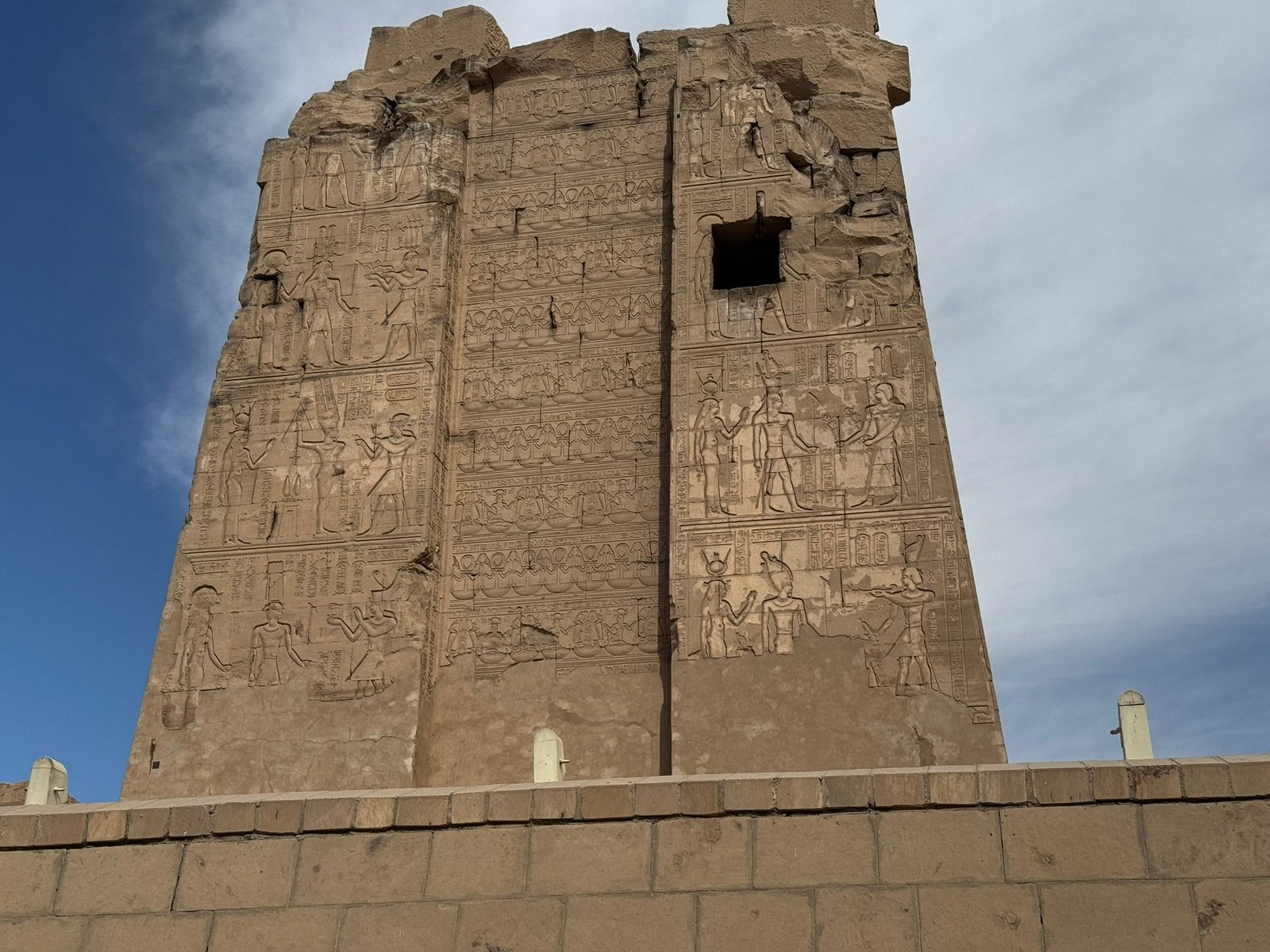
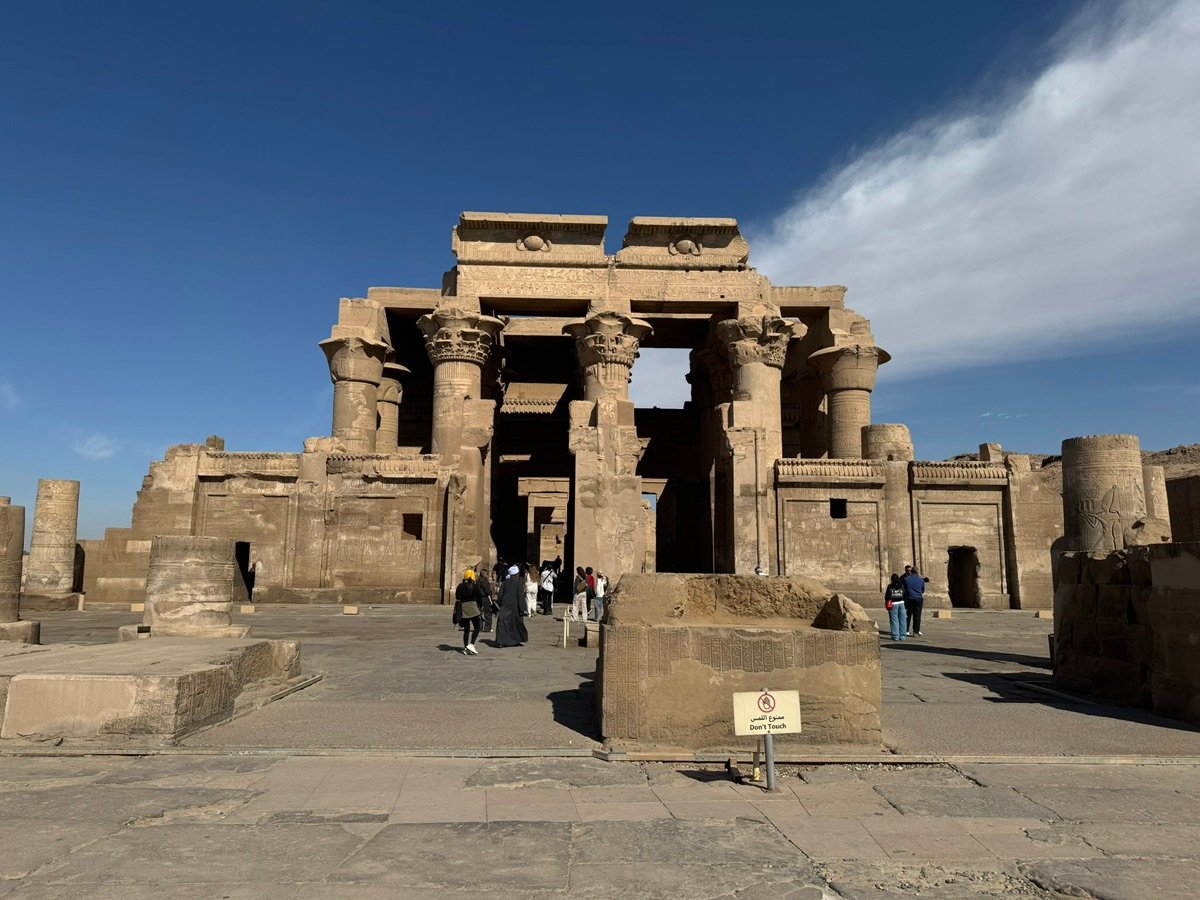
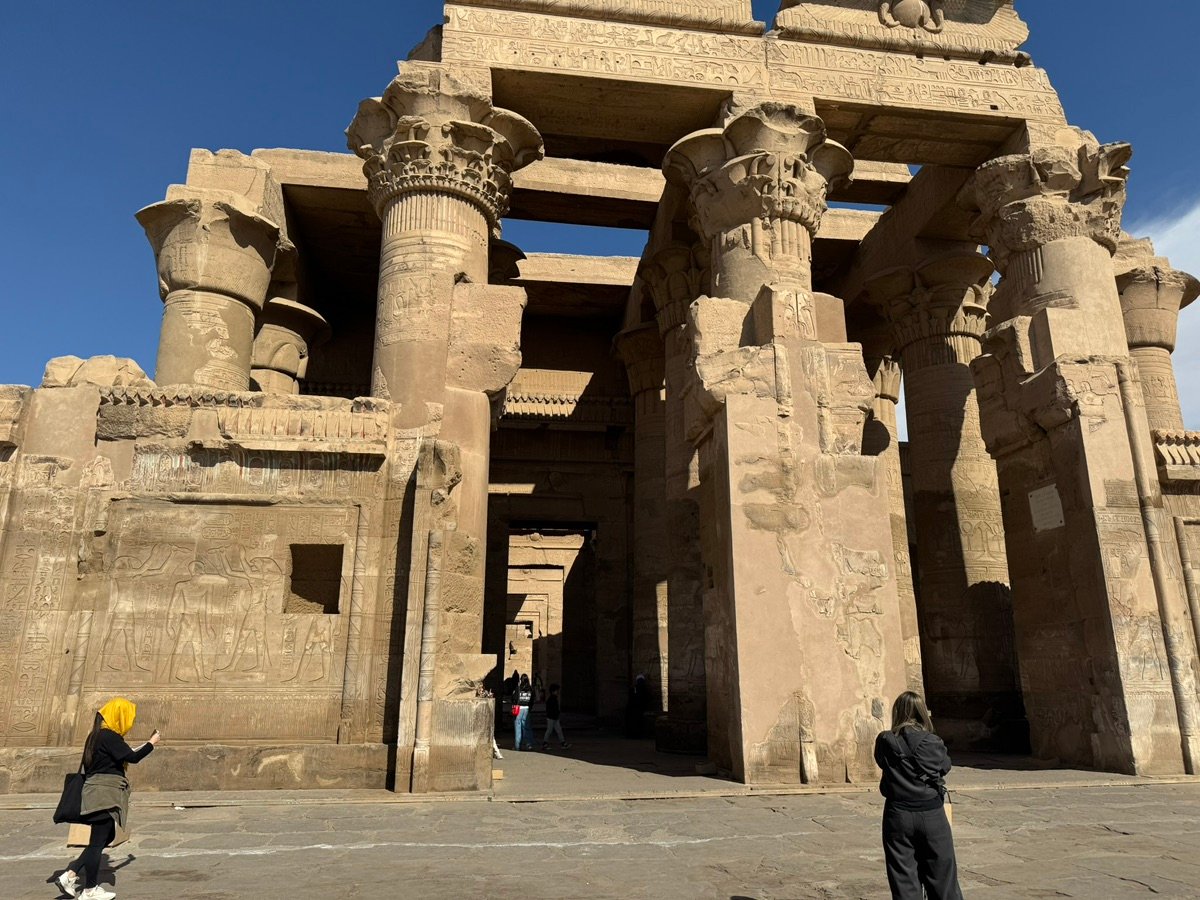
The massive, intricately carved stone wall that dominates your view is a breathtaking testament to ancient craftsmanship, found at the unique Temple of Kom Ombo in Egypt. Often seen from Nile cruise boats, this particular section, likely part of the grand pylon or an outer hall, reveals layers of stories etched into its weathered surface, inviting you to step into a bygone era.

Dual Narratives of Pharaohs and Gods: Unearthing Kom Ombo’s History
This wall belongs to the Temple of Kom Ombo, a rare “double” temple dedicated to two distinct deities: Sobek, the crocodile god of fertility, and Haroeris (Horus the Elder), the falcon-headed god. Completed during the Ptolemaic dynasty, around 180-47 BC, the temple’s reliefs depict pharaohs making offerings to these gods, along with medical instruments and calendar details. The wall itself, with its impressive height and a peculiar square cutout—possibly for a flagpole or a later modification—stands as a historical ledger, documenting the religious and daily life of the ancient Egyptians.
Feeling the Ancient Breath: The Wall’s Timeless Whisper
Standing at the base of this towering wall, you are immediately struck by the sheer scale and the incredible detail of the carvings. The warm, sandy tones of the stone, accentuated by the harsh desert light, make the hieroglyphs and figures pop with a three-dimensional quality. The air often carries a dry, ancient scent, and the vastness of the site makes you feel like a small observer in a colossal outdoor museum. It’s a place where history isn’t just displayed; it’s physically present, palpable in every eroded line and chisel mark. The blue Egyptian sky above provides a stark, beautiful contrast to the earth-toned structure.
Best Timing
For the best experience, visit in the early morning or late afternoon. The sun’s angle at these times softens the light, creating dramatic shadows that enhance the depth of the carvings, making them far more vivid. It also helps to avoid the peak heat of the day, especially from May to September.
Pro-tip: Arrive shortly after opening or an hour before closing. Not only will the light be ideal for photography, but you’ll also find fewer crowds, allowing for a more serene and contemplative exploration of these ancient narratives.
Must-See Details
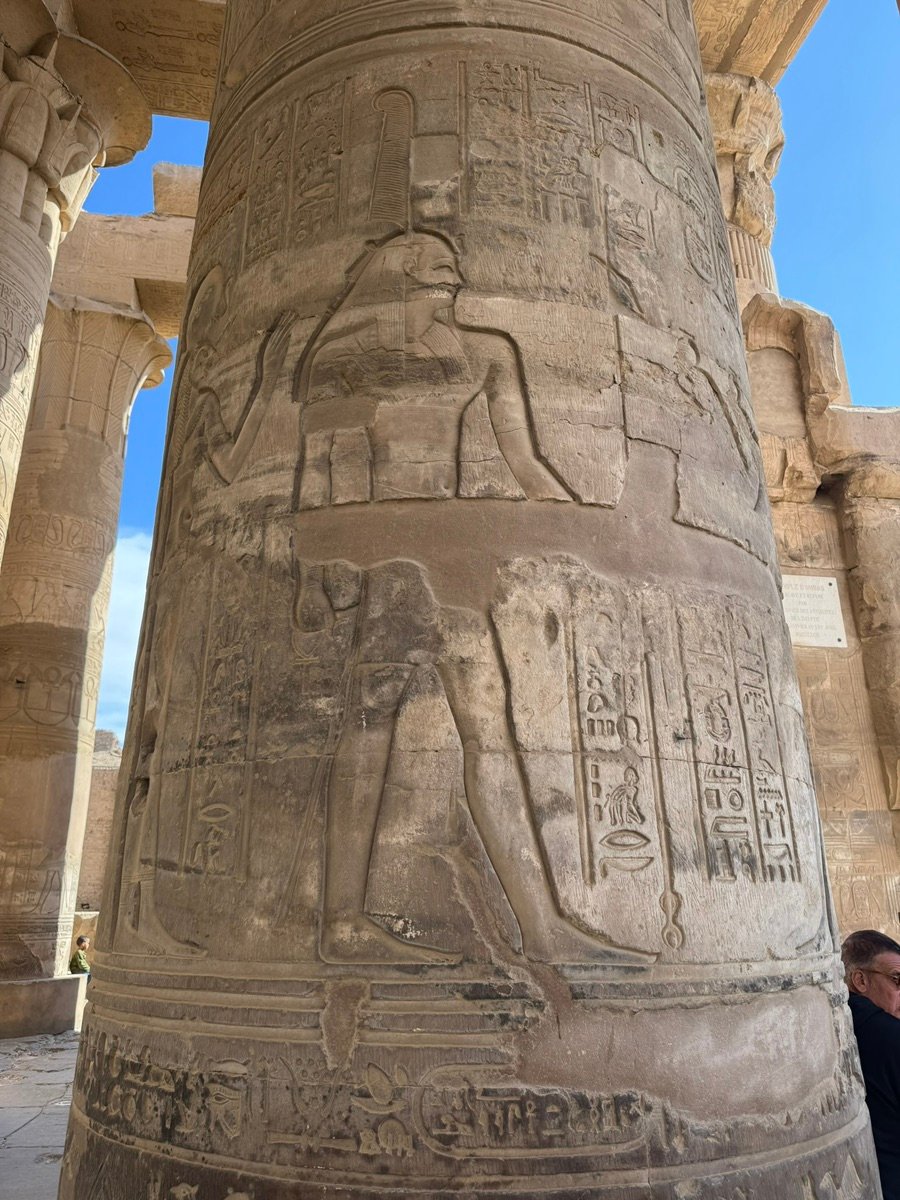
- Intact Reliefs: Look for the remarkably preserved carvings depicting pharaohs offering to deities. Many show intricate details of clothing, crowns, and ritualistic gestures.
- Hieroglyphic Narratives: The columns of hieroglyphs accompanying each scene tell stories of religious rituals, royal decrees, and historical events. Even without understanding them, their visual rhythm is captivating.
- The Square Opening: Notice the distinct square hole carved high into the wall. While its exact original purpose is debated, it adds a unique architectural element to this section.
- Weathered Beauty: Observe how centuries of wind and sand have sculpted the stone, giving it a unique texture and patina that tells its own story of endurance.
Traveler’s Memo
Access
The Temple of Kom Ombo is situated on a high bank overlooking the Nile River, about 48 kilometers (30 miles) north of Aswan. Most visitors arrive as part of a Nile cruise itinerary, as many cruise ships dock directly beside the temple. Alternatively, it can be reached by car or taxi from Aswan (approx. 45-60 minutes drive).
Budget
Entrance fees for the Temple of Kom Ombo are typically around 200 EGP for foreign adults (prices are subject to change, so check current rates). Guided tours are often included if you’re on a cruise package. Budget for additional small expenses like water or souvenirs.
Recommended Gourmet
While Kom Ombo itself is a smaller town with limited dedicated tourist restaurants, nearby Aswan offers a vibrant culinary scene. Try traditional Egyptian dishes like Koshary (a hearty mix of rice, pasta, and lentils), Ful Medames (fava beans), or fresh grilled fish from the Nile. On a cruise, meals are usually provided, often featuring a blend of international and local cuisine.
Nearby Spots
- Crocodile Museum: “Located right next to the Temple of Kom Ombo, this small museum houses mummified crocodiles found within the temple precinct, reflecting Sobek’s cult.”
- Temple of Edfu: “Another well-preserved Ptolemaic temple dedicated to Horus, often visited on the same Nile cruise route as Kom Ombo, known for its magnificent pylon and vivid reliefs.”
- Aswan High Dam: “A modern engineering marvel near Aswan, essential for Egypt’s agriculture and power, offering panoramic views of Lake Nasser.”
- Unfinished Obelisk: “In Aswan, this ancient quarry site shows a colossal obelisk still attached to the bedrock, providing insight into ancient Egyptian stone-cutting techniques.”