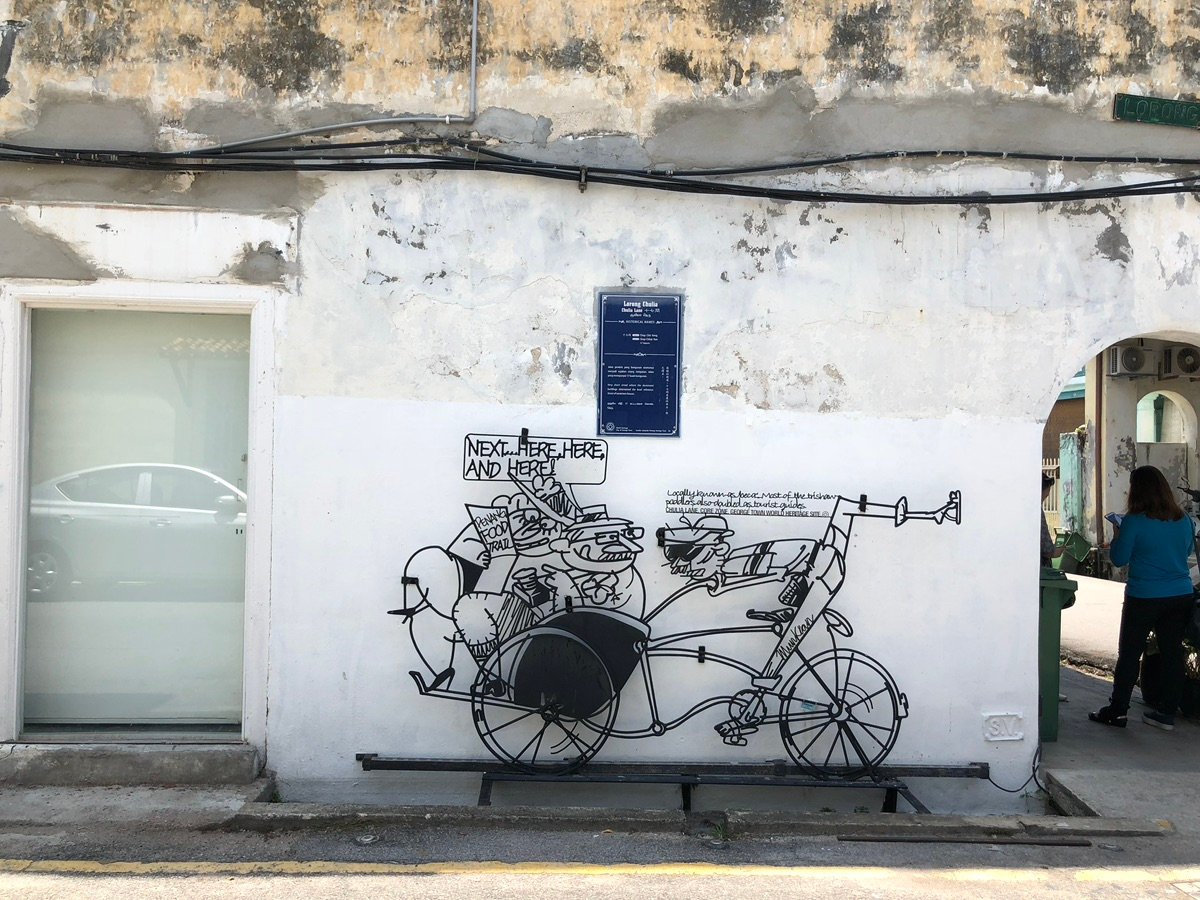
Walking through the bustling streets of Georgetown, you’ll stumble upon an art piece that perfectly encapsulates the city’s charm and its UNESCO World Heritage status. The iconic Trishaw mural on Chulia Lane, Penang, Malaysia, is not just a visual delight but a playful invitation to dive into the local culture, especially its renowned food scene. This particular installation, a metal sculpture against a white wall, stands out among Georgetown’s vibrant street art, beckoning travelers with its lively characters and intriguing message.
The Wheeled Tale: Art, History, and Penang’s Culinary Call
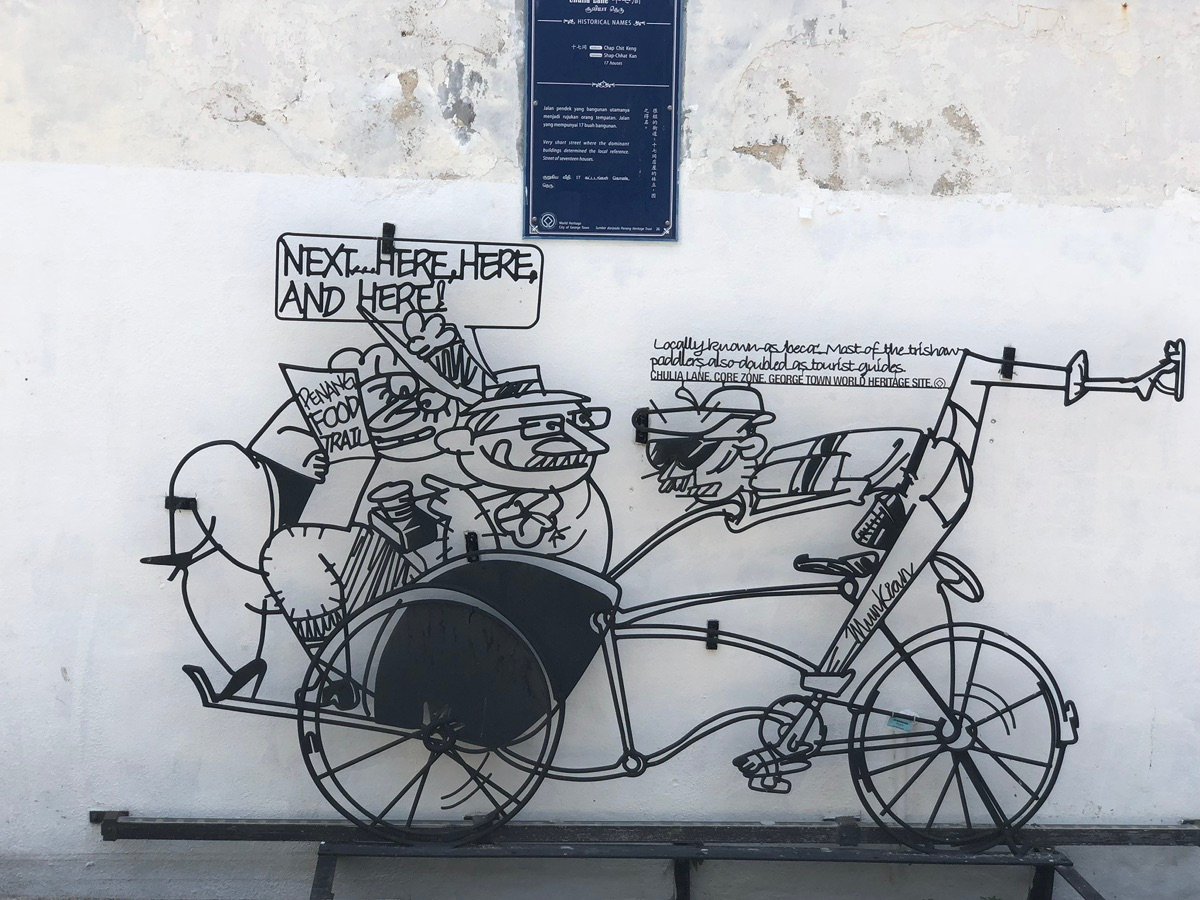
This charming metal sculpture, titled “Next…Here, Here, and Here!” is one of the many “Markers” by local artist Mini Kian scattered throughout Georgetown. Unlike the painted murals, these wireframe pieces interact with their surroundings, often adding a humorous or historical commentary. This specific artwork celebrates the trishaw, a traditional mode of transport still visible in Penang, and highlights the city’s reputation as a foodie paradise.
The characters in the trishaw, looking eager and pointing, symbolize the endless discoveries awaiting visitors, particularly along the famed Penang Food Trail, which famously meanders through Chulia Lane itself. It’s a playful nod to Penang’s UNESCO World Heritage Site status, reminding visitors that every corner holds a story or a delicious treat.
The Pulse of Chulia Lane: A Sensory Feast
Standing before this mural on Chulia Lane, you’re enveloped by the vibrant energy of Georgetown. The sun-drenched facade of the old shophouse, with its peeling paint and weathered texture, provides a rustic backdrop to the sleek, modern lines of the metal sculpture.
You’ll hear the distant hum of traffic, the chatter of locals and tourists, and perhaps the tantalizing aroma of street food wafting from nearby stalls. The mural itself feels dynamic, as if the trishaw is about to whiz past, inviting you to join its journey. It’s a place where history feels alive, integrated seamlessly with contemporary art and daily life, a true representation of Penang’s eclectic charm.
Best Timing: Catching the Art in the Best Light
The best time to visit the Trishaw mural on Chulia Lane is during the early morning, around 8:00 AM to 10:00 AM, or late afternoon, from 4:00 PM to 6:00 PM. These hours offer softer light for photography and generally fewer crowds, allowing you to appreciate the artwork and its surroundings at a leisurely pace. The intense midday sun can cast harsh shadows and make exploring less comfortable.
Pro-tip: Arrive early to capture stunning photos without other tourists in your shot, and then explore the burgeoning street food scene along Chulia Lane as it awakens. Many hawker stalls begin setting up around late morning, making it a perfect pre-lunch activity.
Must-See Details: Beyond the First Glance
- The Trishaw’s Symbolism: Look closely at the trishaw itself. It’s not just a mode of transport but a living piece of Penang’s heritage, a reminder of slower times amidst the modern bustle.
- “Penang Food Trail” Sign: The sign held by one of the characters isn’t just a prop; it’s a direct invitation to indulge in Penang’s world-famous cuisine, particularly along this very street.
- Expressive Characters: Observe the animated expressions and gestures of the three figures. Their excitement to explore (“NEXT…HERE, HERE, AND HERE!”) is infectious and reflects the joy of discovery in Georgetown.
- The Textured Backdrop: The contrast between the sleek black metal of the artwork and the distressed, white-washed wall behind it is striking. This interplay highlights the old and new aspects of Georgetown’s urban fabric.
- Artist’s Signature: Don’t miss the small signature “Mini Kian” near the rear wheel. It’s a subtle mark of the talent behind many of Georgetown’s iconic street art installations.
Traveler’s Memo: Navigating Your Penang Adventure
Access
The Trishaw mural is located on Chulia Lane in Georgetown, Penang. It’s easily accessible by foot if you’re exploring the heritage area. From Komtar, a major landmark, it’s about a 10-15 minute walk. Alternatively, ride-sharing services like Grab are widely available and convenient in Penang. Look for the distinctive blue plaque on the wall above the mural for easy identification.
Budget
Viewing the street art itself is completely free. Your primary budget considerations will be for transportation to Georgetown and, most importantly, for the incredible food that surrounds Chulia Lane. Expect to spend anywhere from RM 5 to RM 15 per dish at hawker stalls.
Recommended Gourmet
Chulia Lane and its immediate vicinity are a food lover’s paradise. Don’t leave without trying: Penang Char Kway Teow (fried flat noodles), Hokkien Mee (prawn noodle soup), Nasi Kandar (rice with various curries), and Assam Laksa (sour fish noodle soup). Many of these iconic dishes can be found at the hawker stalls that set up along the lane, especially in the evenings.
Nearby Spots
- Komtar: The tallest building in Penang, offering a panoramic view from its Skywalk and a major shopping complex.
- Chew Jetty: One of the last surviving clan jetties, a traditional village built on stilts over the water, offering a glimpse into old Penang life.
- Blue Mansion (Cheong Fatt Tze Mansion): An exquisitely restored indigo-blue heritage building, famous for its architecture and history, offering guided tours.
- Armenian Street (Lebuh Armenian): Known for its vibrant street art, quaint cafes, and artisan shops, it’s another hub for Georgetown’s cultural explorations.