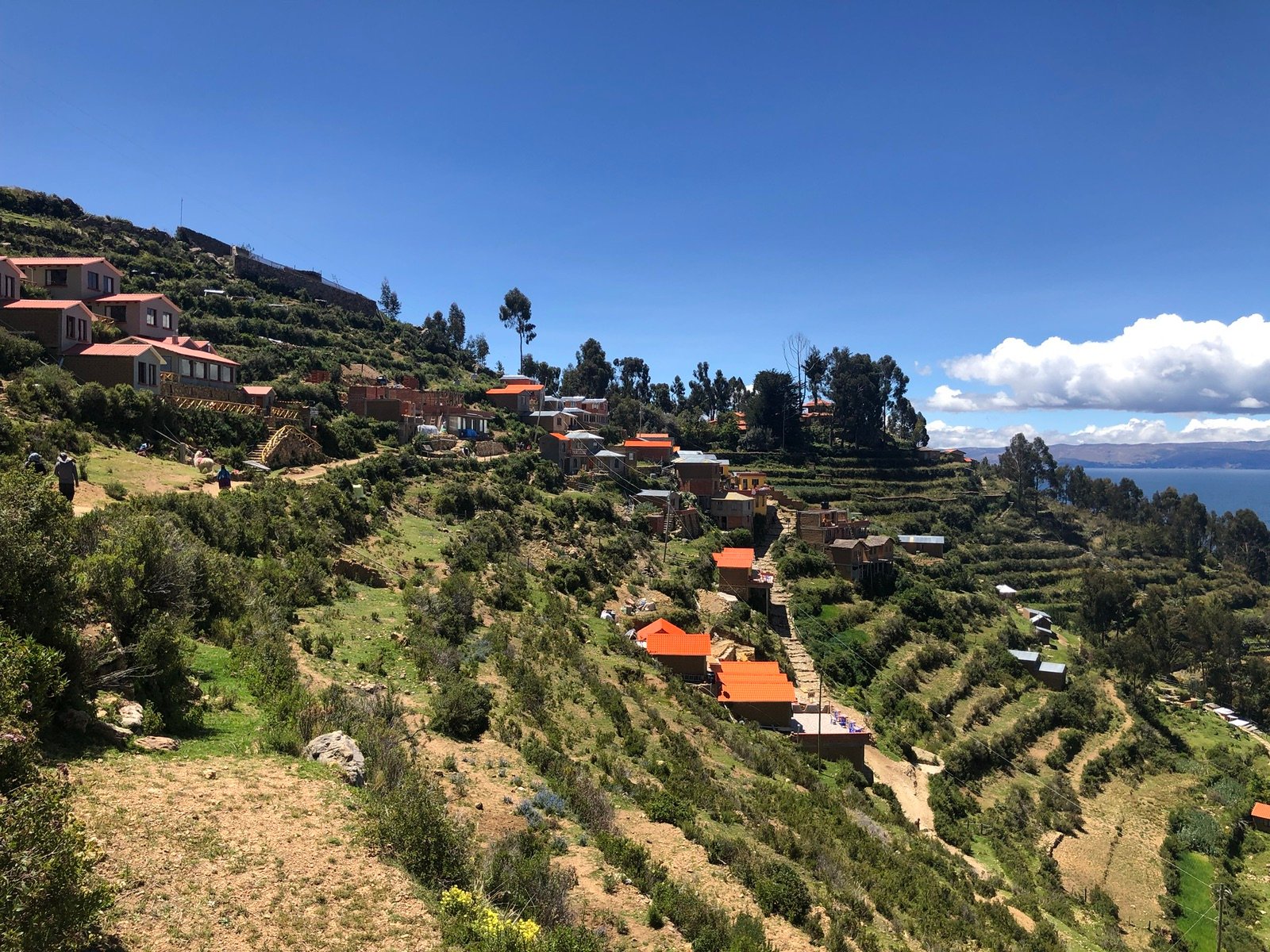
As your boat approaches the shores of Lake Titicaca, you’ll glimpse a village sprawling up the hillside, a tapestry of orange roofs and verdant terraced fields. This is Yumani Village, nestled on the southern tip of the sacred Isla del Sol (Island of the Sun), believed to be one of the birthplaces of Andean civilization. Tucked away in the Bolivian highlands, this settlement offers a sense of timelessness, enveloping visitors in tranquility and stunning natural beauty.
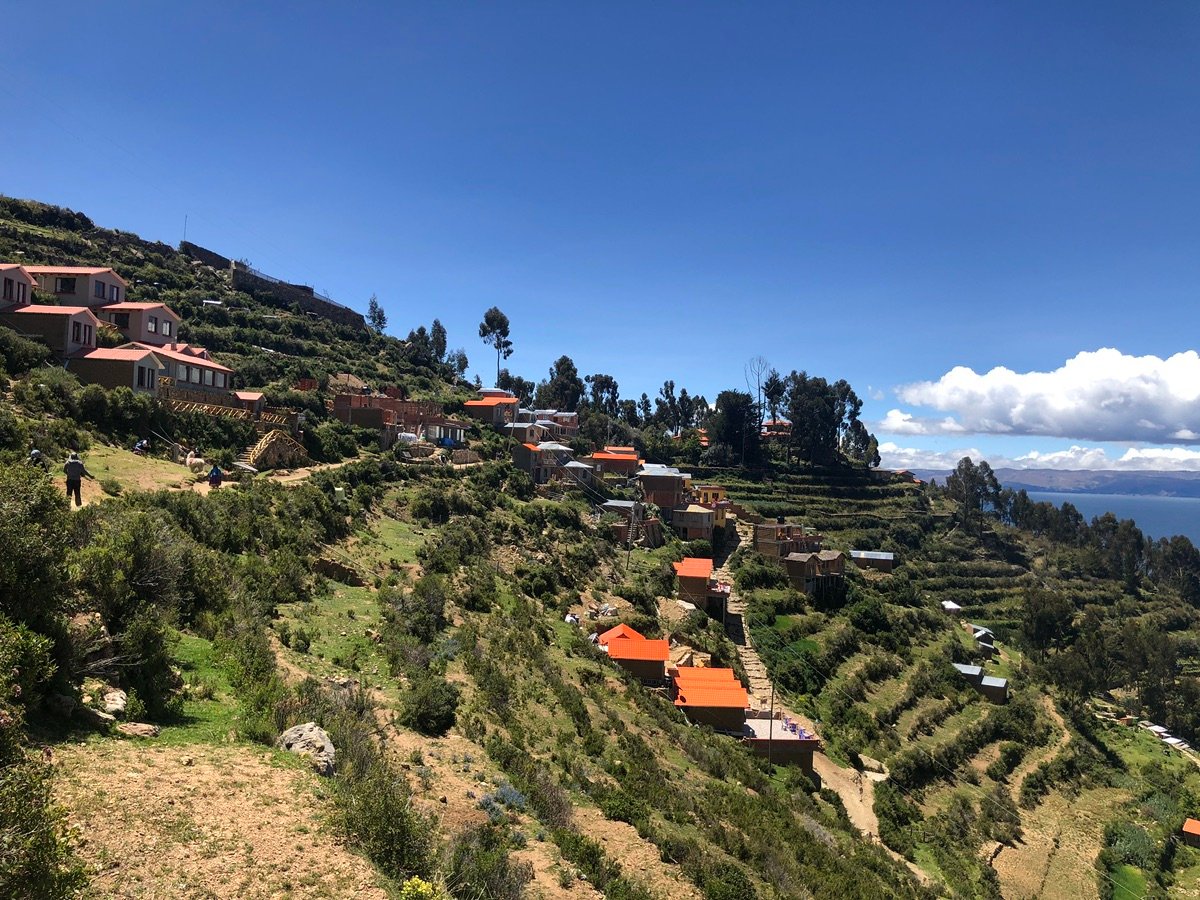
The Enduring Legacy of Sacred Inca Terraces
The terraces of Yumani Village are more than just a picturesque sight; they are a testament to ancient Andean agricultural ingenuity, inherited from pre-Inca times. Isla del Sol is believed to be the birthplace of Inti, the Inca sun god, making the entire island a sacred place. These meticulously constructed terraces on steep slopes allowed for the cultivation of crops like potatoes, corn, and quinoa in limited land, showcasing the wisdom and diligence of past civilizations. Still actively used by locals today, they offer a living history where ancient practices meet modern life.
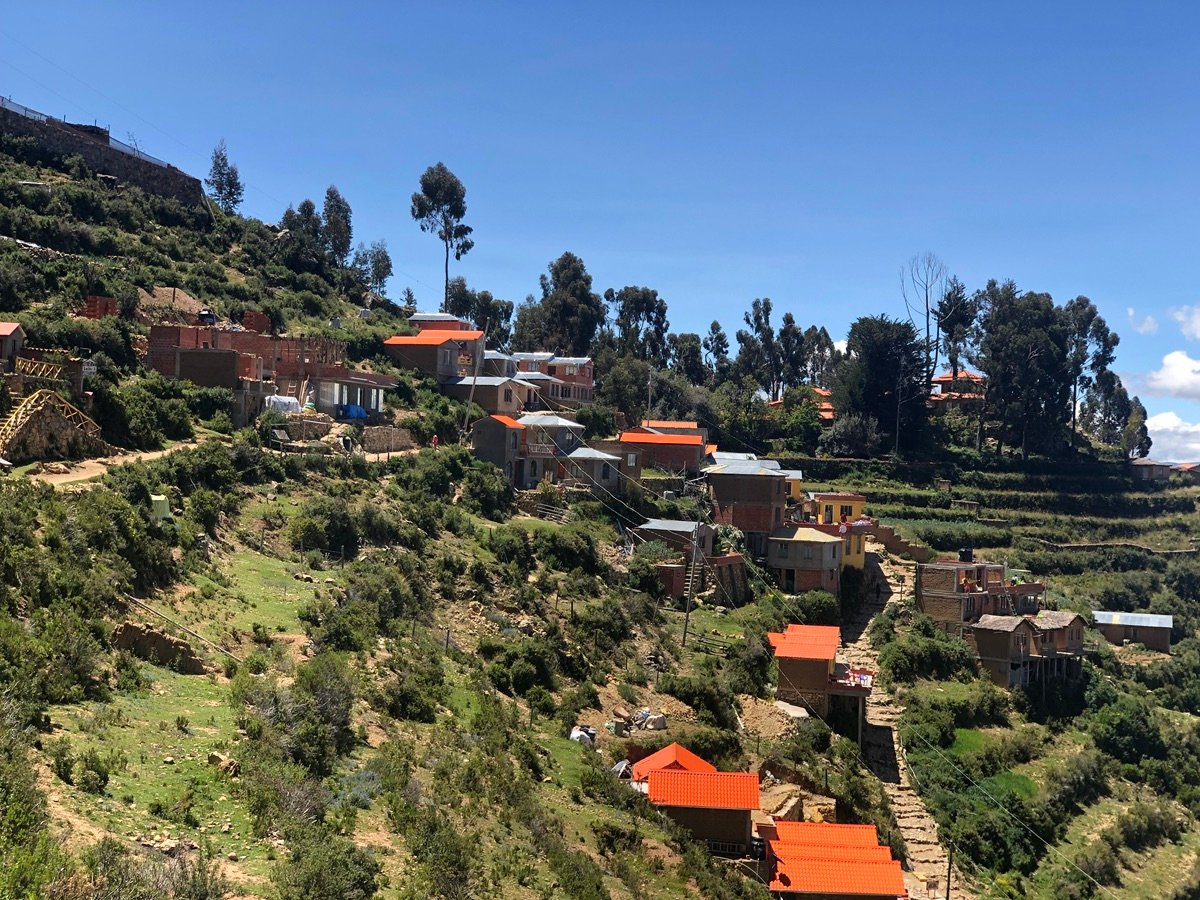
A Symphony of Silence and Color Carried by Highland Winds
At an altitude of approximately 3,800 meters (12,500 feet), the crisp highland air of Yumani Village fills your lungs, enveloping you in a sense of complete detachment from urban bustle. The vast, unobstructed blue sky, contrasting with the deep indigo of Lake Titicaca below, creates a breathtaking panorama. The earthen houses, vibrant orange roofs, and green terraces of the village add warm hues to this natural palette. Especially at dusk, the lake’s surface shimmers gold, and clouds blush pink and purple, painting a magnificent scene. The sheer physical scale of this place fosters a sense of humility while powerfully connecting visitors to the grandeur of nature.
Best Timing
The best time to visit Yumani Village is during the dry season, from May to October. During these months, clear skies are frequent, and Lake Titicaca’s waters are at their most transparent, allowing for unparalleled views. The light is brightest from morning to early afternoon, making the terraces and lake colors appear most vivid. Pro-tip: stroll the village paths early in the morning before the crowds arrive to experience the tranquility of local life and make more personal discoveries.
Must-See Details
- Inca Stairway (Escalera del Inca) and Three Fountains (Fuente de la Eterna Juventud): This stone staircase, leading from the boat landing to the village, is believed to have been built during the Inca era. At the top, you’ll find three fountains said to grant eternal youth.
- Panoramic Views from the Viewpoint: From the highest point in the village, a lookout offers breathtaking 360-degree panoramic views of Lake Titicaca, with the snow-capped Bolivian mountains in the distance. It’s an unforgettable photo opportunity.
- Ancient Agricultural Terraces: Visible throughout the village, these hand-built terraces are an astonishing example of pre-Inca agricultural engineering. Observing their structure and the crops grown on them offers a tangible connection to the region’s rich history.
- Local Life: Venture slightly off the main tourist routes, and you’ll encounter the serene daily life of the Aymara and Quechua people living traditionally. Their textiles and handicrafts make for wonderful souvenirs.
Traveler’s Memo
Access
The primary way to reach Yumani Village is by public boat from Copacabana, Bolivia. Boats typically depart in the morning, taking approximately 1.5 hours one way. Upon arrival at the village port, you’ll need to climb the steep Inca Stairway to reach the main part of Yumani. This requires considerable physical effort, so take your time and be mindful of altitude sickness.
Budget
Accommodation primarily consists of simple, family-run hostels and guesthouses, which are affordable at around $10-$30 per night. Meals at local small restaurants can be enjoyed for approximately $5-$10. Round-trip boat fare is typically $5-$8. You’ll need cash (Bolivian bolivianos) on the island as ATMs are scarce, so it’s strongly recommended to withdraw sufficient cash in Copacabana.
Recommended Gourmet
Fresh Lake Titicaca trout (trucha) is a must-try dish, served grilled, fried, or with garlic sauce. Andean staples like quinoa (often in soups or salads) are also highly recommended. Simple yet hearty local cuisine will soothe your travel-weary soul.
Nearby Spots
- Pilko Kaina Inca Ruins: An important Inca archaeological site within walking distance of Yumani, considered one of the centers of sun worship.
- Moon Island (Isla de la Luna): Located close to Isla del Sol, accessible via tours from Copacabana. It features the ruins of Acllawasi, an Inca temple for virgins.
- Copacabana: A charming town on the shores of Lake Titicaca and the gateway to Isla del Sol. It boasts a famous basilica and offers a glimpse into local culture.