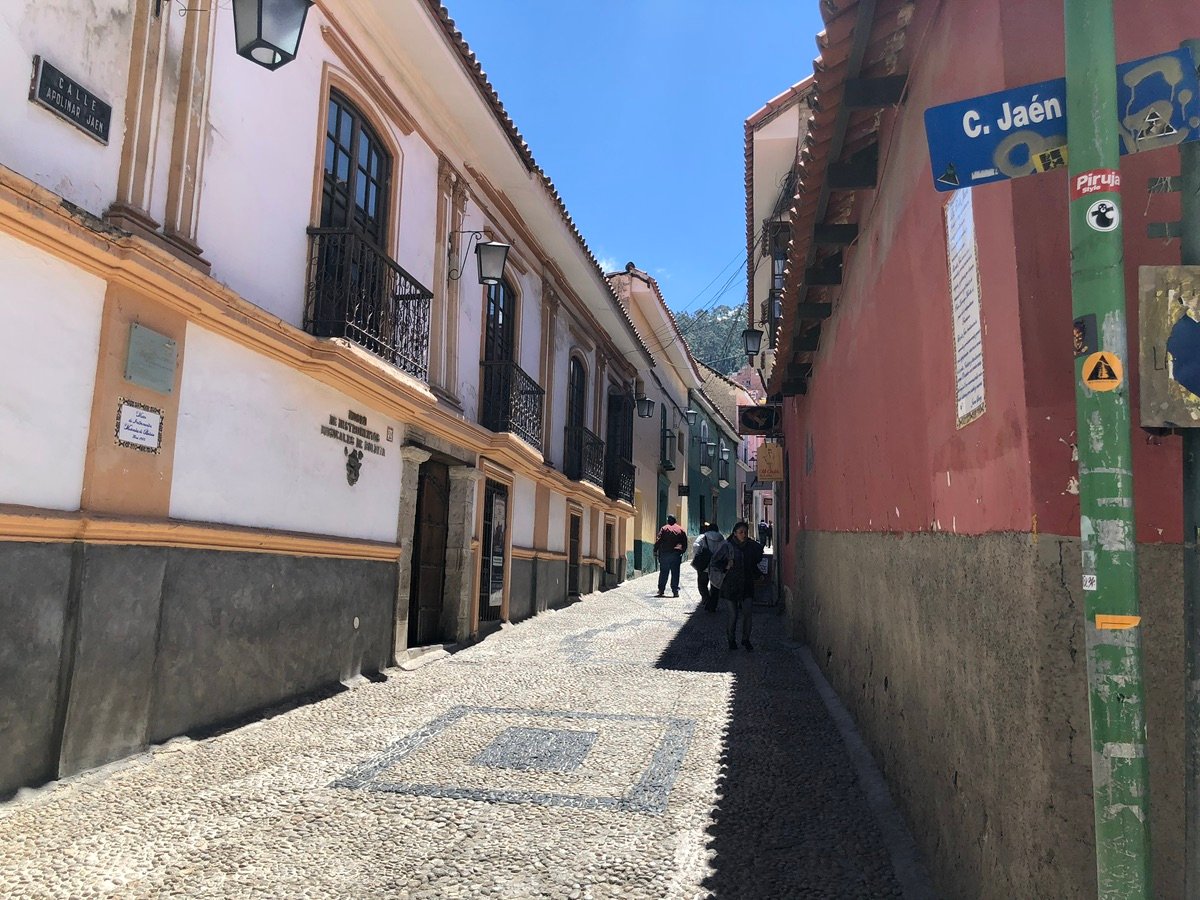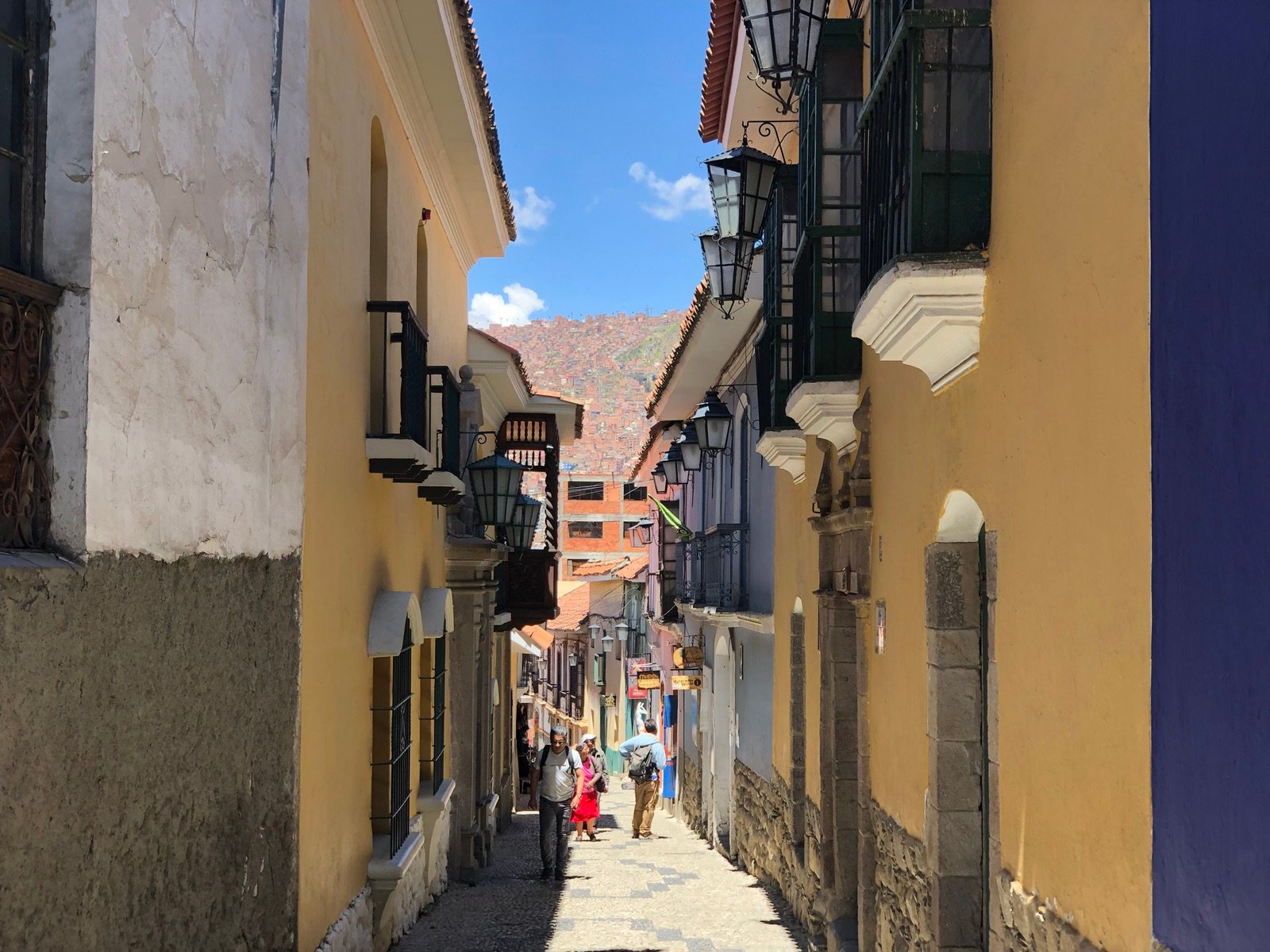
Step off the bustling main streets of La Paz and discover a place where time itself seems to slow down: Calle Jaén. This is one of the most beautiful and enigmatic streets in La Paz, Bolivia. Here, vibrant colorful buildings, historic lanterns, and the dramatic backdrop of La Paz‘s towering hills create a sensation of having stumbled upon a secret passage. This street is a living museum, a testament to La Paz‘s rich colonial past.

Where History Whispers Behind Vibrant Walls
Calle Jaén holds significant importance as one of La Paz‘s best-preserved colonial streets. This narrow cobblestone lane narrates centuries of stories, offering a glimpse into what life was like in old La Paz. Along the street, several important museums, such as the Museum of Precious Metals and the Musical Instruments Museum, invite visitors to explore Bolivia’s rich cultural heritage. Each building on the street tells its own unique tale of past inhabitants and historical events.
A Timeless Stroll Through La Paz’s Past
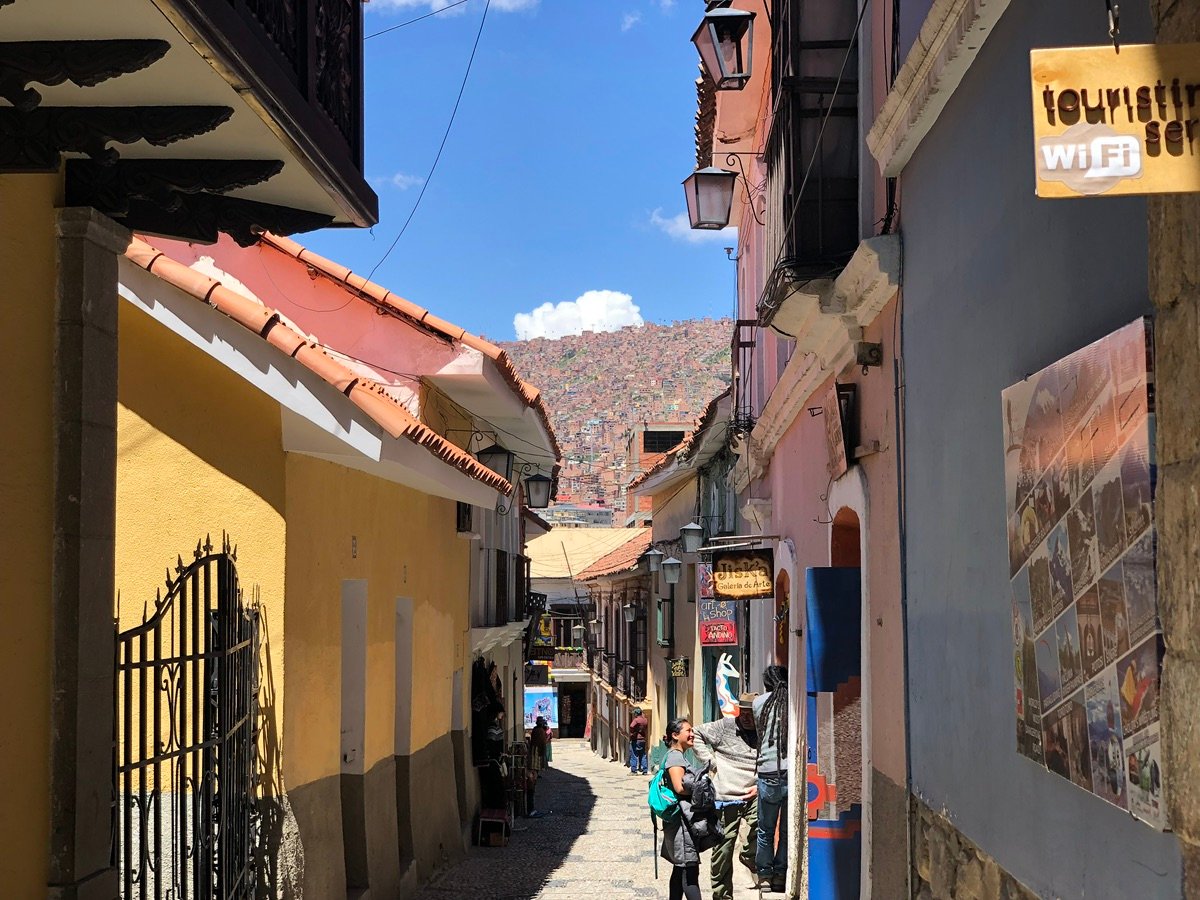
Walking down Calle Jaén feels like stepping into another era. Removed from the city’s traffic and noise, a sense of quietude pervades, offering solace to visitors. The vivid yellow, blue, and white facades gleam under the sun, while the cobblestone path underfoot speaks of history’s weight. The distinct wrought-iron balconies and antique lanterns captivate with their intricate beauty, and the dramatic view of La Paz‘s hillside city, seemingly pressing in from both sides, completes this unique atmosphere. It’s truly a photographer’s dream.
Best Timing
To truly appreciate the charm of Calle Jaén and avoid the largest crowds, visiting in the early morning or late afternoon is highly recommended. During these times, the street is quieter, and the softer light beautifully highlights the vibrant colors of the buildings, making for excellent photo opportunities. Pro-tip: To have the street almost to yourself, aim to visit on a weekday morning, sidestepping the weekend bustle.

Must-See Details
- The Colorful Facades: The bright yellow, blue, and white buildings are the most striking feature of Calle Jaén.
- Distinctive Iron Balconies and Historic Lanterns: Pay attention to the beautiful craftsmanship of the ironwork and the antique lanterns that light the street at night.
- The Cluster of Museums: Explore the small museums, including the Museum of Precious Metals, the Musical Instruments Museum, and the Casa de Murillo, which offer insights into Bolivian history and culture.
- The Cobblestone Street Itself: The old cobblestones underfoot contribute significantly to the colonial atmosphere, making every step resonate with history.
- Dramatic La Paz Hillside Backdrop: The view of La Paz‘s densely packed hillside houses, visible at the end of the narrow street, highlights the unique geography of the city.
Traveler’s Memo
Access
Calle Jaén is located in the old town of La Paz and is easily accessible by foot from Plaza Murillo. While taxis can take you close, walking through the surrounding streets to reach it is recommended for a more immersive experience.
Budget
Walking the street is free. Entrance fees for the museums are typically small, but check each one individually. Additional costs will apply for souvenirs or any food and drink from nearby cafes.
Recommended Gourmet
Calle Jaén itself does not host many restaurants, but the surrounding central La Paz area is brimming with excellent traditional Bolivian eateries and cafes. Be sure to try local delights such as Salteñas (Bolivian empanadas) or Rellenos (stuffed potatoes).
Nearby Spots
- Plaza Murillo: The political heart of Bolivia, surrounded by significant buildings like the Congress and the Metropolitan Cathedral.
- Witches’ Market (Mercado de las Brujas): A unique and intriguing market where you can find traditional remedies and folk items.
- Mi Teleférico: The world’s largest urban cable car system, offering breathtaking panoramic views of La Paz.