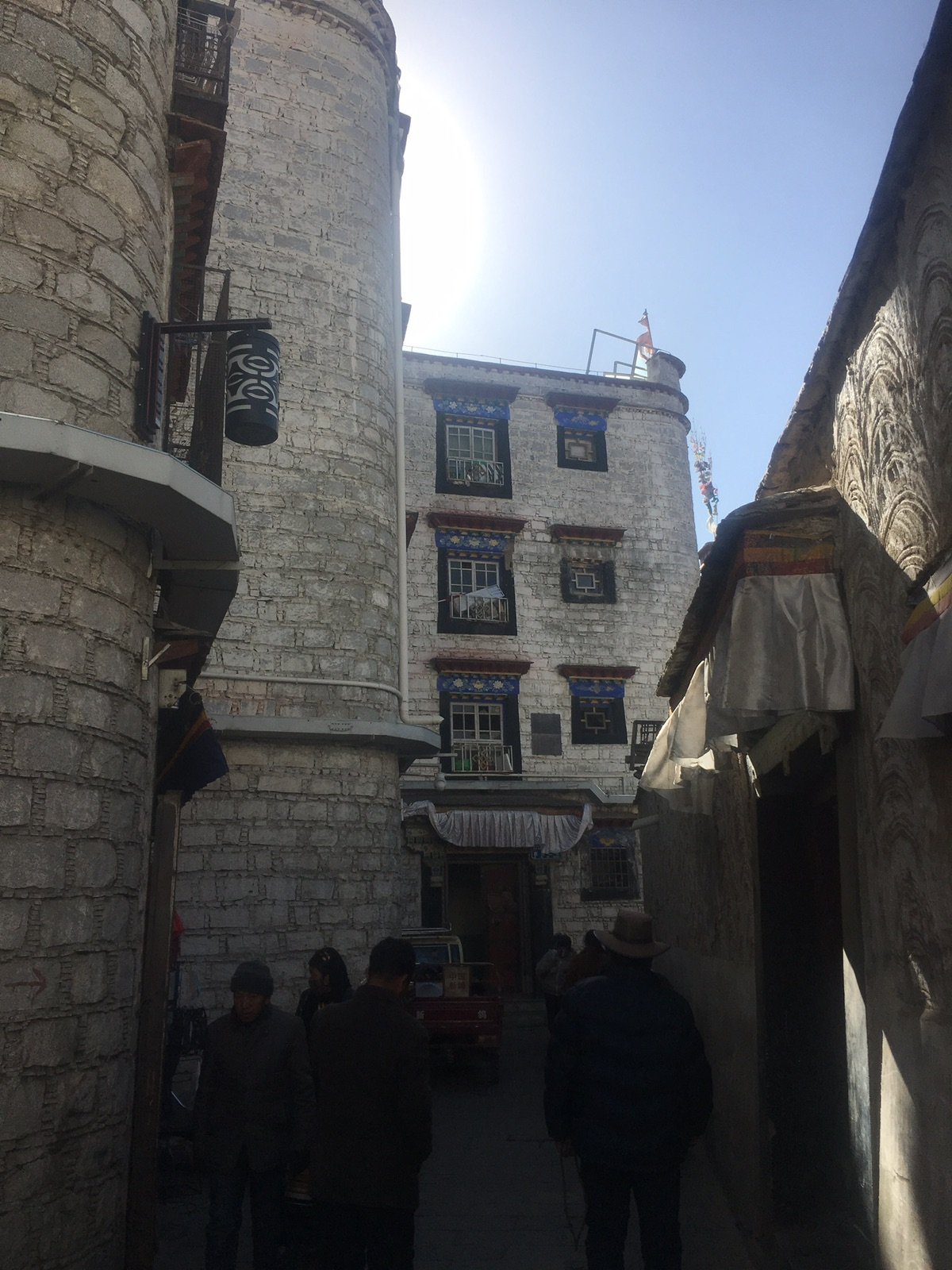
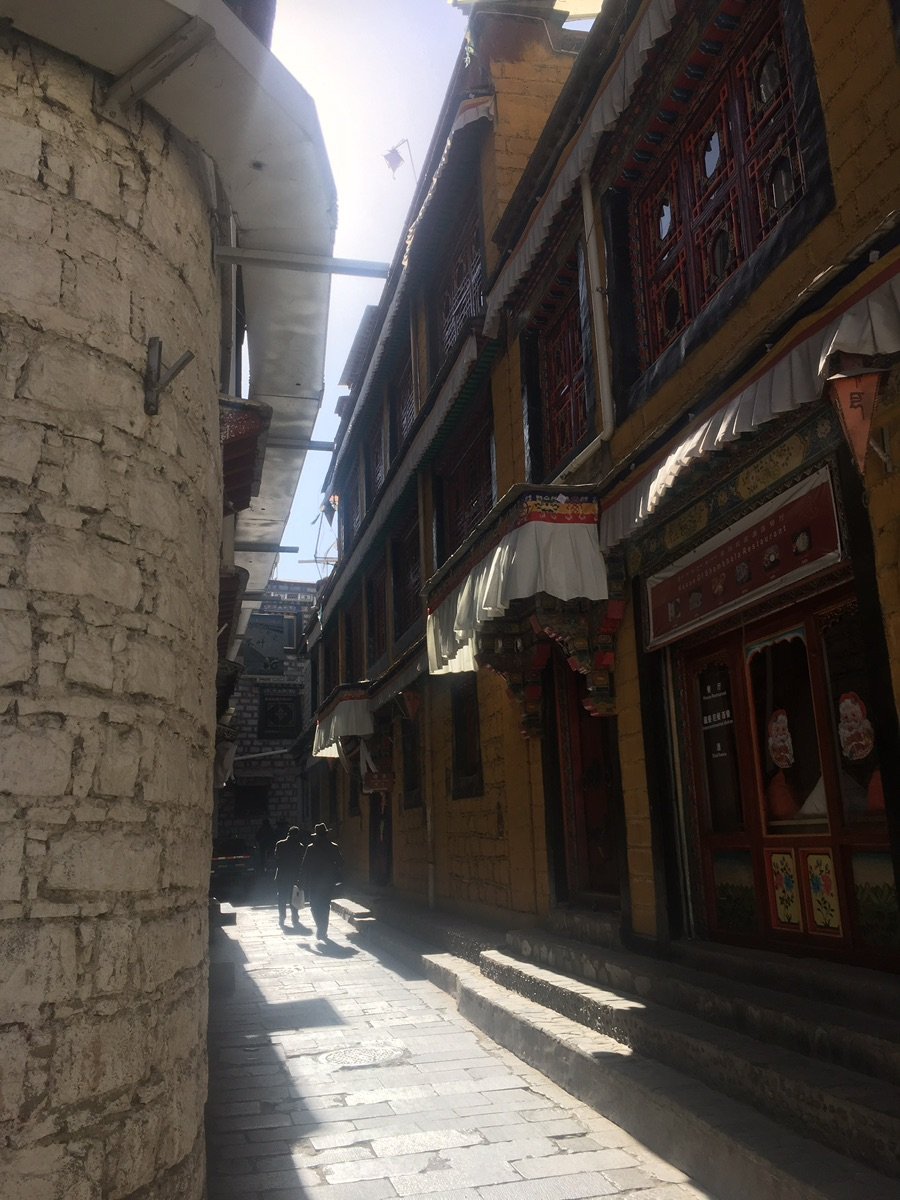
Walking through the narrow lanes of Lhasa, there are moments when time seems to stand still, revealing centuries of history in a single glance. The scene before you captures just such a moment: a vibrant, bustling alleyway within the legendary Barkhor Street. This specific corner, defined by its robust stone buildings and distinctive blue-patterned window frames, offers a true glimpse into the heart of Tibetan culture, just steps away from the revered Jokhang Temple in Tibet.
Where Pilgrims’ Footsteps Echo: The Living History of Barkhor’s Stone Walls
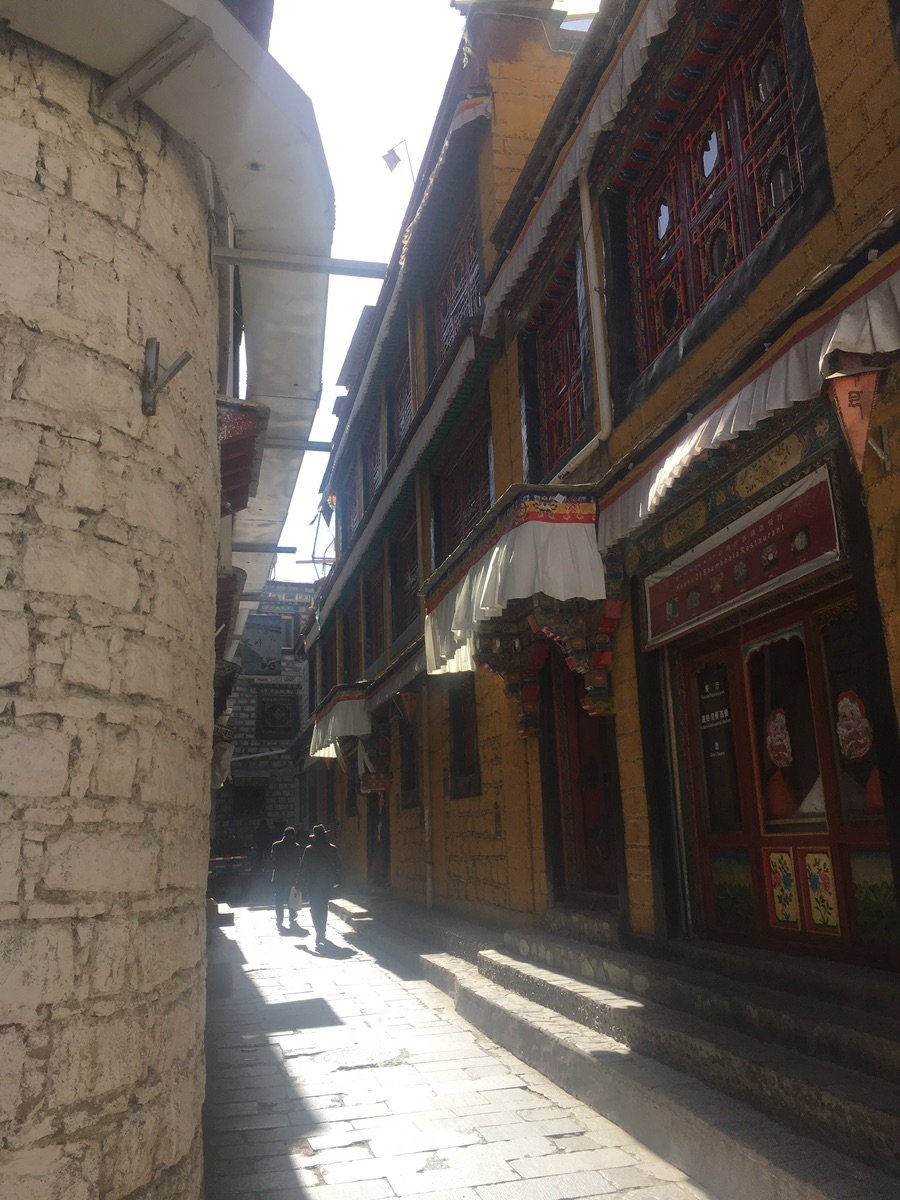
Barkhor Street isn’t just a street; it’s a centuries-old pilgrimage circuit that encircles the sacred Jokhang Temple. Every day, devout Tibetans perform the ‘kora’ (circumambulation), their footsteps worn into the very stones of these ancient paths. The buildings here, with their thick stone walls and ornate window decorations, are not mere backdrops but living witnesses to this continuous devotion. This particular alleyway, with its rounded tower-like structure on the left and a building adorned with striking blue and gold motifs around its windows, embodies the unique architectural heritage of Lhasa. These structures often housed monks, merchants, and local families for generations, each stone bearing silent testament to countless stories.
The Weight of Ages and the Warmth of Devotion
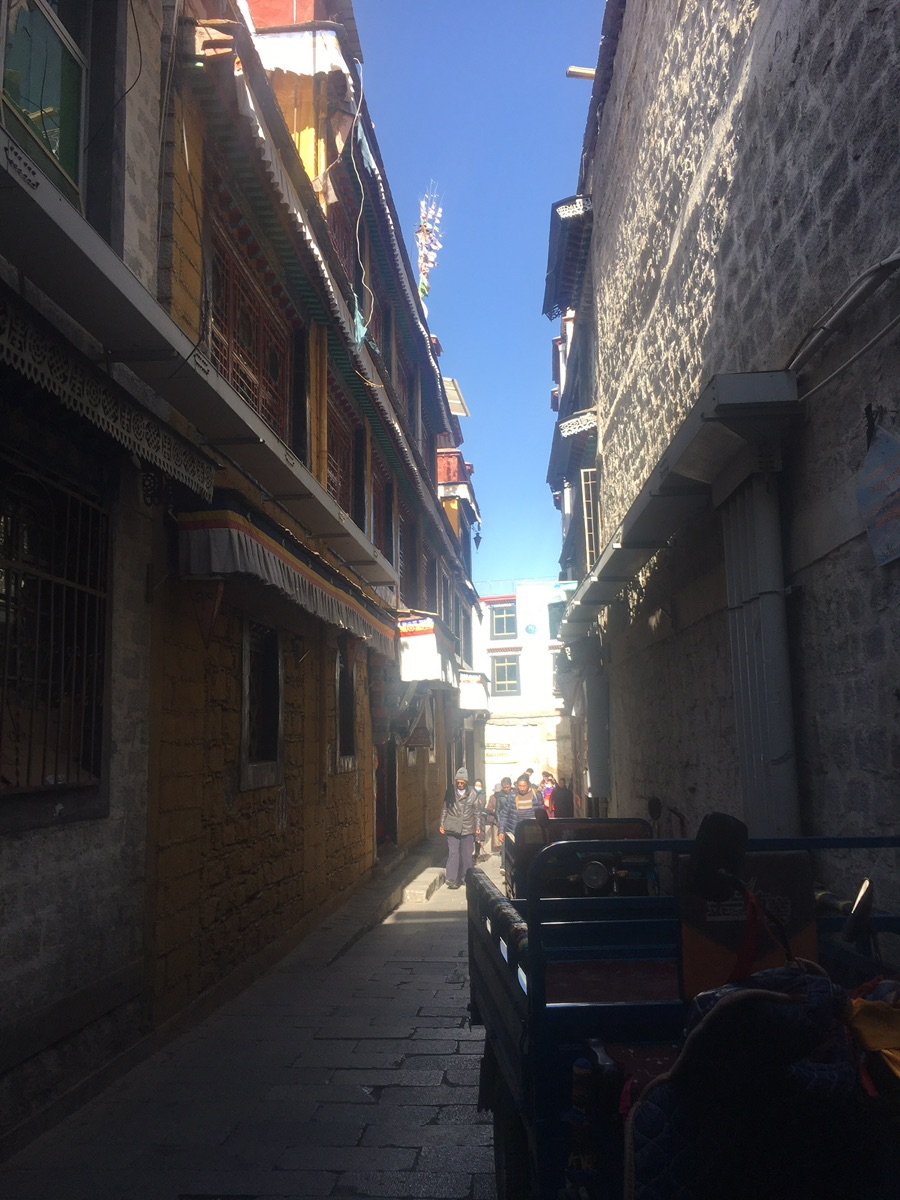
Stepping into this alleyway, you immediately feel a palpable sense of history. The air, often crisp and dry, carries the faint scent of incense and yak butter lamps from the nearby temple. The sun, when it pierces through the narrow opening, dramatically illuminates the rough textures of the stone walls, creating a play of light and shadow that makes the architecture truly come alive. The scale of the buildings, with their sturdy foundations and towering presence, can make you feel small yet deeply connected to something ancient and grand. The vibrant blue patterns above the windows, known as ‘Phagchen’, add splashes of color against the austere stone, representing traditional Tibetan artistic expression and often symbolizing good fortune.
Best Timing
For an authentic experience, aim to visit this part of Barkhor Street in the early morning, around 7:00 AM to 9:00 AM. This is when local pilgrims are most active, performing their kora, and the atmosphere is filled with quiet devotion. The light at this time is also softer, ideal for photography, illuminating the stone without harsh shadows. Alternatively, late afternoon offers a warm, golden glow on the building facades. Pro-tip: Arrive around 8:00 AM to observe the morning rituals and experience the street before the main tourist crowds.
Must-See Details
- The Rounded Stone Tower: Observe the unique construction of the tower-like structure on the left. Its cylindrical shape and rough stone texture are characteristic of older Tibetan defensive or residential architecture.
- The Ornate Blue Window Frames: Pay close attention to the distinctive blue, gold, and red painted designs above and around the windows on the central building. These ‘Phagchen’ patterns are rich in symbolism and vary in intricacy.
- The Hanging Lantern: Notice the traditional cylindrical lantern affixed to the rounded tower. Its black and white patterns are typical Tibetan motifs, adding a unique decorative touch.
- Prayer Flags: Look upwards for the colorful prayer flags (Lungta) fluttering in the breeze. Their presence signifies the spiritual nature of the area and spreads blessings with every gust of wind.
- Pavement Textures: Examine the worn cobblestones and flagstones underfoot. These paths have been trodden by countless generations of pilgrims, and their smoothed surfaces tell a story of enduring faith.
Traveler’s Memo
Access
This specific alleyway is part of the Barkhor Street kora circuit in Lhasa, easily accessible from the city center. From the Potala Palace, it’s about a 15-20 minute walk east. Taxis and local buses also serve the area around Jokhang Temple. Once you reach the Barkhor area, simply follow the clockwise flow of pilgrims.
Budget
Wandering through Barkhor Street itself is free. Entry to Jokhang Temple typically costs around 70-85 CNY. Prices for souvenirs and local snacks vary, but expect to pay 5-20 CNY for street food and 50-200 CNY+ for quality handicrafts. A cup of sweet tea is usually just a few CNY.
Recommended Gourmet
Don’t leave Barkhor without trying some local delicacies. Look for vendors selling hot momos (Tibetan dumplings), savory yak meat skewers, and a cup of traditional sweet tea (buttered tea, or ‘po cha’, is also available for the adventurous). Many small eateries line the street, offering hearty Tibetan noodle soups (thukpa) and fried noodles (laphing).
Nearby Spots
- Jokhang Temple: (0.1 km) The spiritual heart of Tibet, this temple is a UNESCO World Heritage site and the most sacred temple in Tibetan Buddhism.
- Potala Palace: (1.5 km) The iconic former winter palace of the Dalai Lamas, a magnificent architectural marvel perched atop Marpo Ri hill, offering panoramic views of Lhasa.
- Ramoche Temple: (0.8 km) Another important temple in Lhasa, older than the Jokhang, known for its unique architectural style and significant statues.