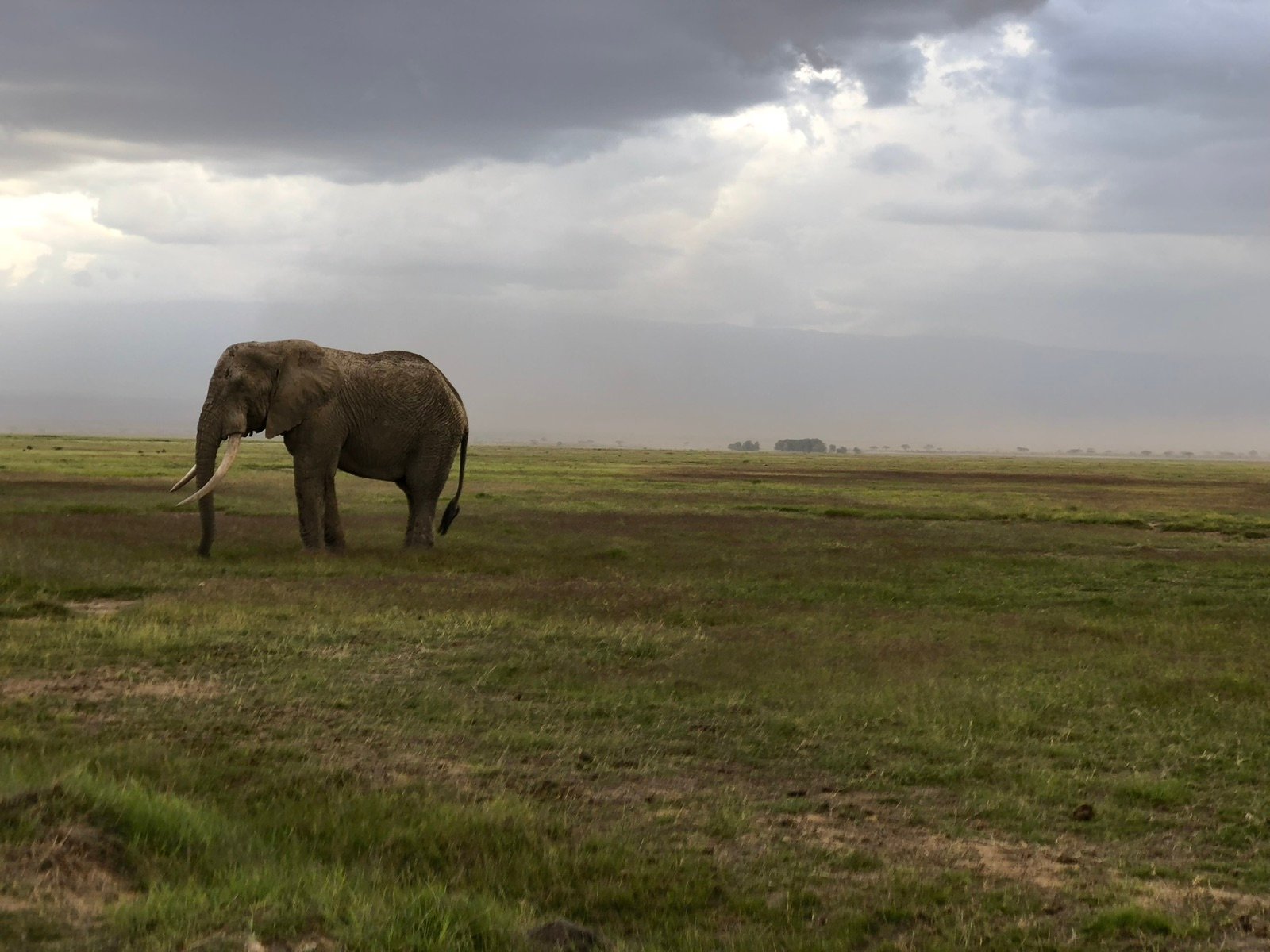
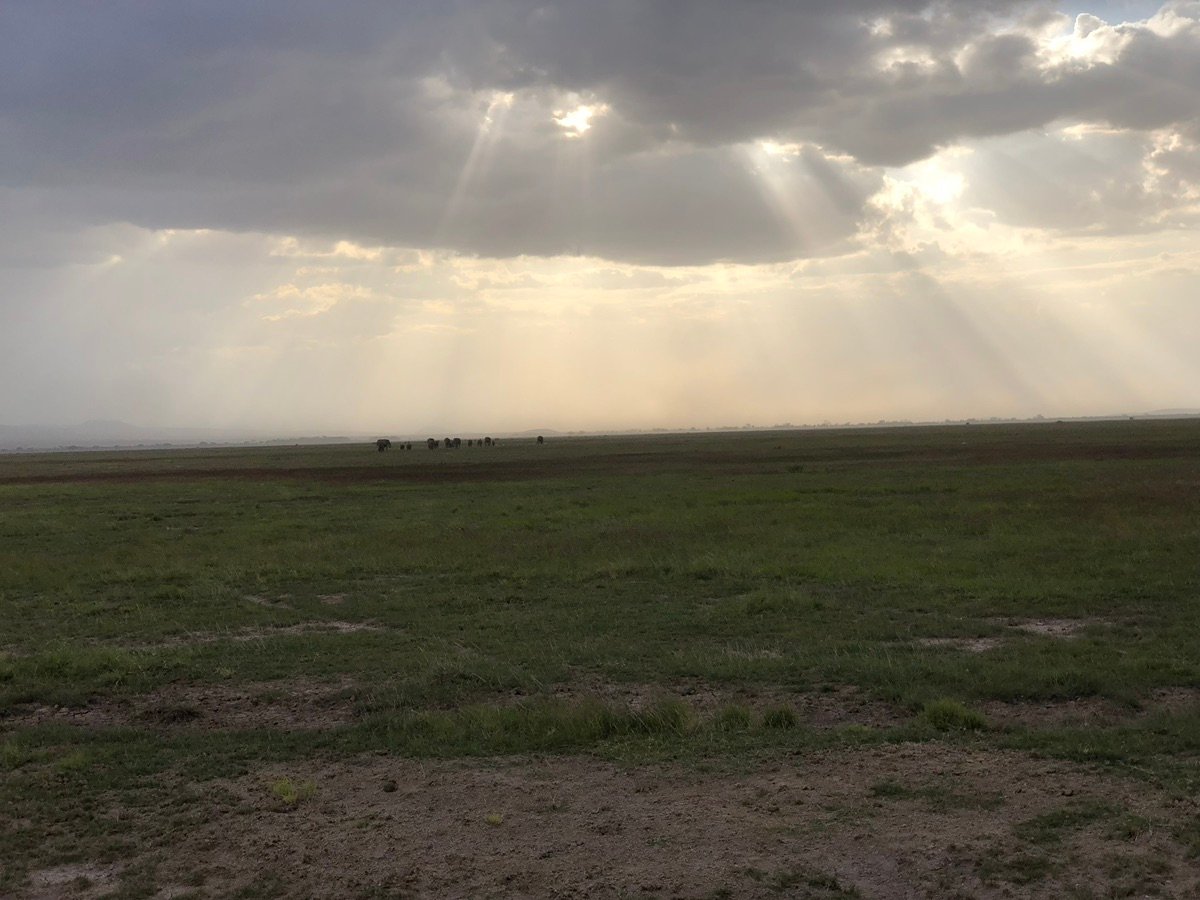
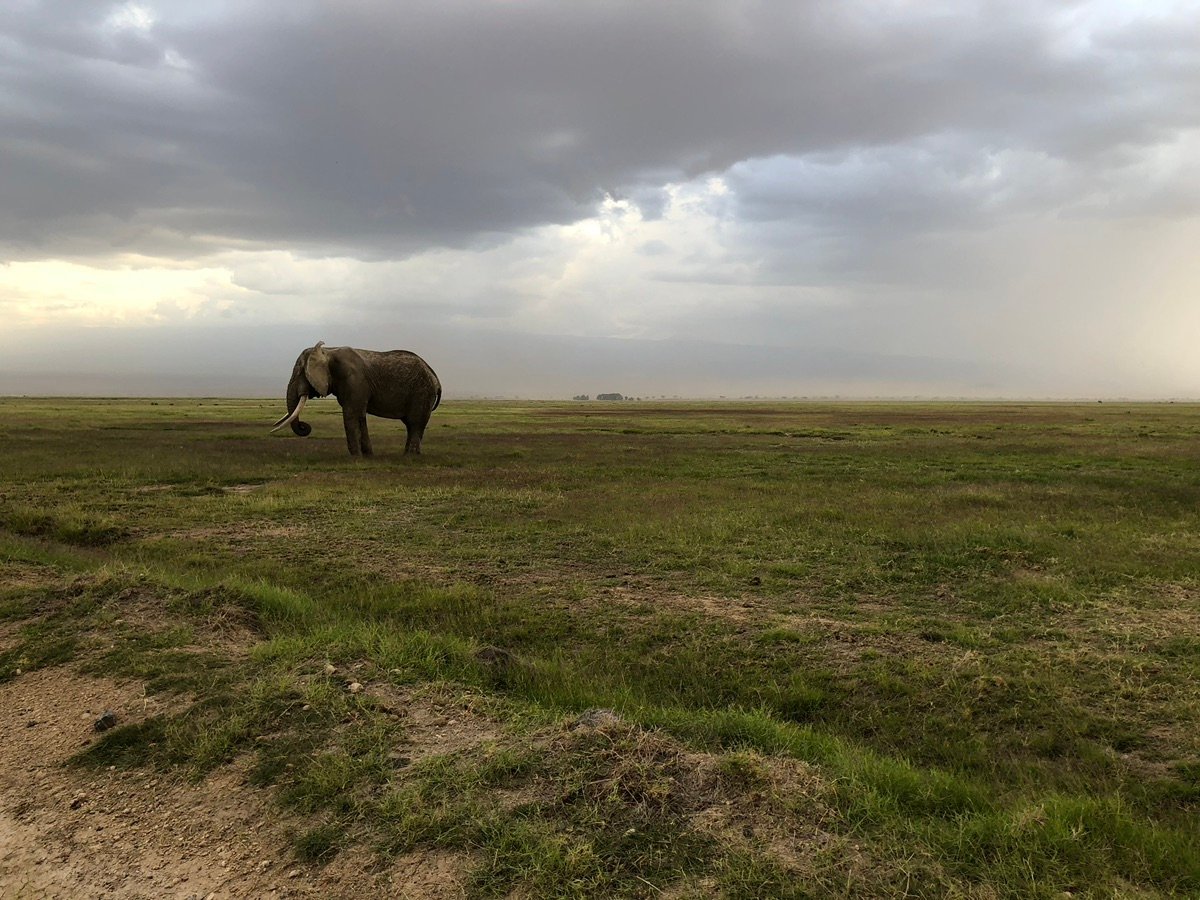
Imagine driving through vast plains, and suddenly, you spot it – the unmistakable silhouette of a giant. That’s exactly what happened when I visited Amboseli National Park in Kenya. This place is famous for its massive elephants, some with tusks so long they almost touch the ground, wandering freely against the backdrop of Mount Kilimanjaro. Even on a cloudy day like this, the sheer scale of the landscape and these incredible animals is something else.
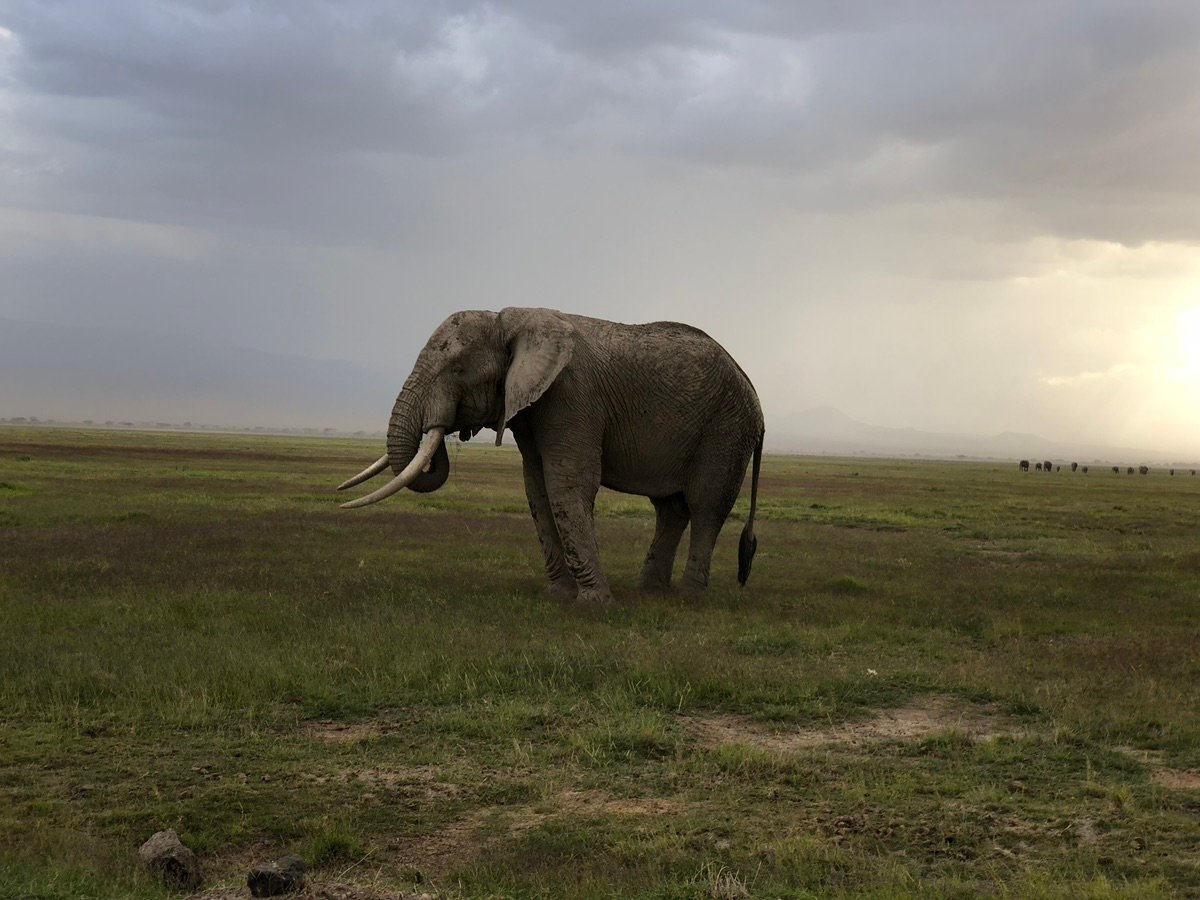
Where Giants Roam Freely
Amboseli isn’t just a park; it’s an ancient migratory route for elephants. Generations have walked these very plains, and the park is a stronghold for some of Africa’s largest tuskers. The sheer number of elephants you can see here, often in large herds, is astounding. It feels less like a zoo and more like you’ve stepped into their world, observing their natural behaviors, from playful sparring to quiet grazing.
Feeling Small in a Big World
The feeling of being in Amboseli is truly unique. The air is often dusty, especially in drier seasons, adding a wild, untamed feel to the vast open spaces. On a day like this, with storm clouds gathering, the atmosphere becomes even more dramatic. You can feel the weight of nature, the silence broken only by the distant calls of birds or the rustle of grass. It makes you feel incredibly small, but also deeply connected to something much larger than yourself.
Best Time to See Them Up Close
The best time to visit Amboseli is during the dry seasons, typically January-February and June-October. The vegetation is sparser then, making it easier to spot animals, and they tend to gather around permanent water sources. However, the shoulder seasons or even a day with dramatic weather, like in this photo, can offer stunning photographic opportunities and fewer crowds. Pro-tip: Go for an early morning game drive right after sunrise. That’s when the animals are most active, and the light is incredible for photos.
Must-See Details You’d Miss
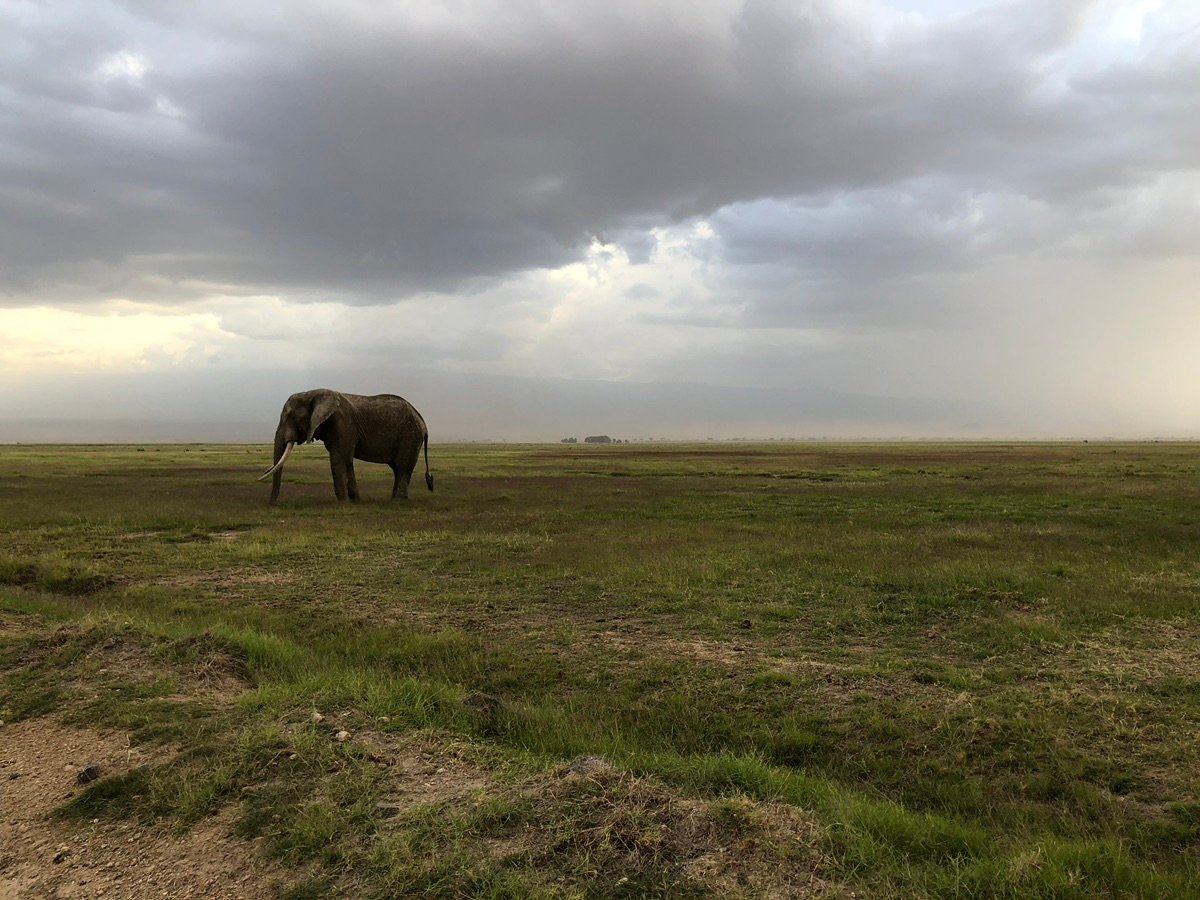
- The Tusks: Pay close attention to the size and curve of the elephants’ tusks. Amboseli is known for its ‘super tuskers,’ and it’s a sight to behold.
- Kilimanjaro Viewpoints: Though hazy in this shot, on a clear day, the snow-capped peak of Mount Kilimanjaro dominates the horizon. Ask your guide for the best spots to capture it.
- Wetlands: The permanent swamps fed by underground springs from Kilimanjaro are crucial for wildlife, especially during dry periods. You’ll often find elephants bathing here.
- Birdlife: Don’t just look for the big animals! Amboseli is a fantastic birding destination with over 400 species, including many water birds in the swamps.
Traveler’s Memo
Access
Amboseli National Park is located about 240 kilometers (150 miles) southeast of Nairobi, Kenya. The easiest way to get there is by road (a 3-4 hour drive from Nairobi) or by scheduled flight into the park’s airstrip. Many safari operators offer packages that include transport and game drives.
Budget
Entry fees for non-resident adults are $60 per person per 24 hours. Accommodation ranges from budget campsites to luxurious lodges, with safari packages varying widely depending on length and inclusions. Expect to budget anywhere from $200-$500+ per person per day for an all-inclusive safari, including park fees, transport, and accommodation.
Recommended Gourmet
While in Amboseli, you’ll mainly be eating at your lodge or camp. Many offer excellent international and local Kenyan cuisine, often served buffet style. Don’t miss trying some local stews, fresh fruits, and the strong Kenyan coffee. Ask if they offer a bush breakfast or sundowner experience – eating in the wild is unforgettable!
Nearby Spots
- Chyulu Hills National Park: Known as “green hills of Africa,” offering stunning landscapes and unique wildlife viewing, often combined with Amboseli.
- Tsavo West National Park: A much larger park adjacent to Amboseli, famous for its red elephants, Mzima Springs, and diverse habitats.
- Ol Pejeta Conservancy: A bit further north but worth it for rhino conservation efforts and guaranteed rhino sightings, including the last northern white rhinos.
FAQ
Is Amboseli National Park safe for visitors?
Yes, Amboseli National Park is generally very safe for tourists, especially when on guided game drives within designated areas. Always follow your guide’s instructions and park rules regarding wildlife interaction.
What kind of clothing should I bring for an Amboseli safari?
Pack light, neutral-colored clothing (khakis, greens, browns) to blend in and avoid attracting insects. Layers are essential as mornings and evenings can be cool, while days are warm. Don’t forget a hat, sunglasses, and comfortable closed-toe shoes.
Can I see Mount Kilimanjaro from Amboseli National Park?
Yes, Amboseli offers some of the best views of Mount Kilimanjaro, Africa’s highest peak. The mountain is often clearest in the early morning or late afternoon, and especially after rainfall.
Are there other animals besides elephants in Amboseli?
Absolutely! While famous for its elephants, Amboseli is also home to lions, cheetahs, zebras, giraffes, buffalo, wildebeest, and a wide variety of bird species, making it a well-rounded safari destination.