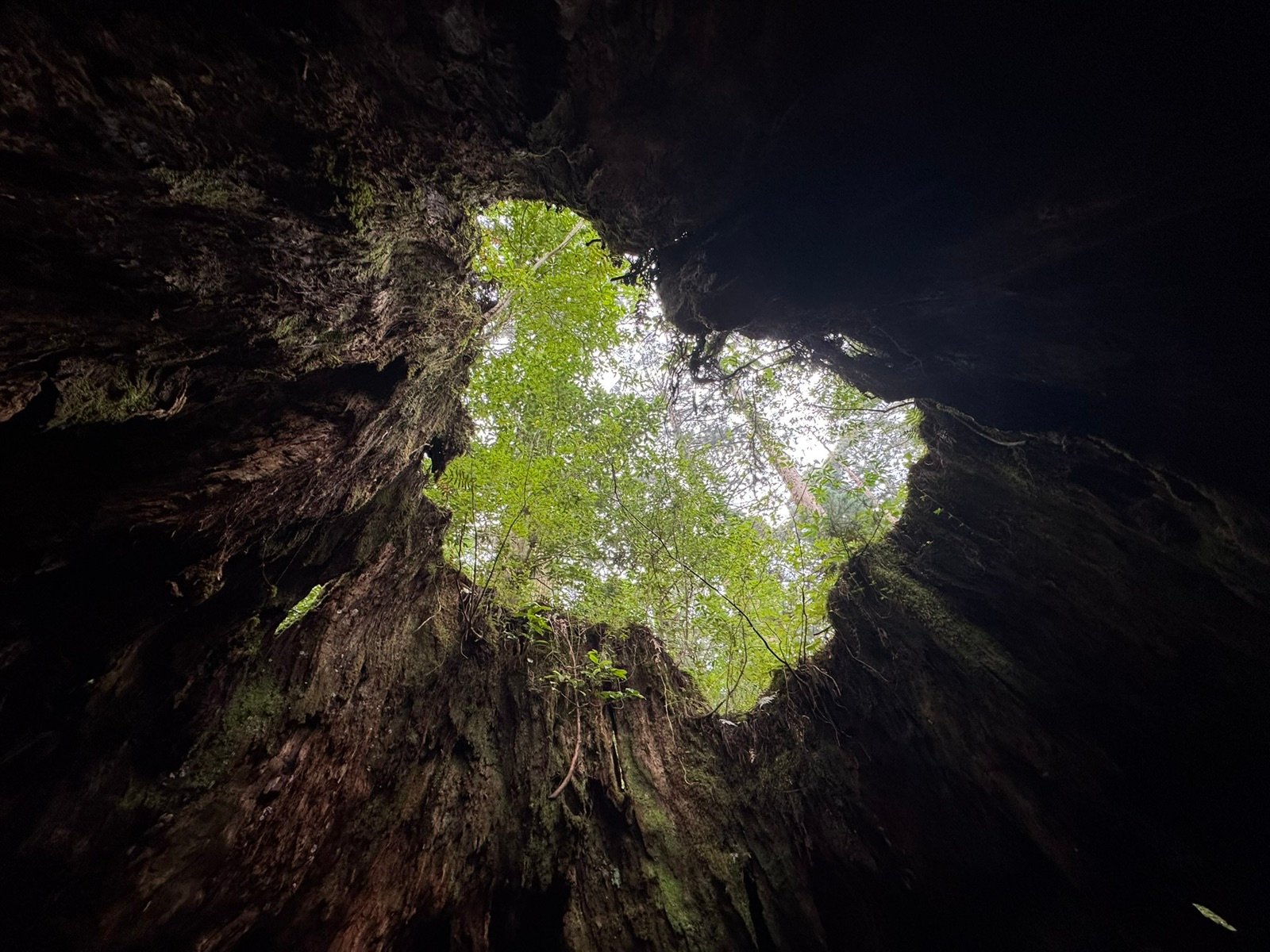
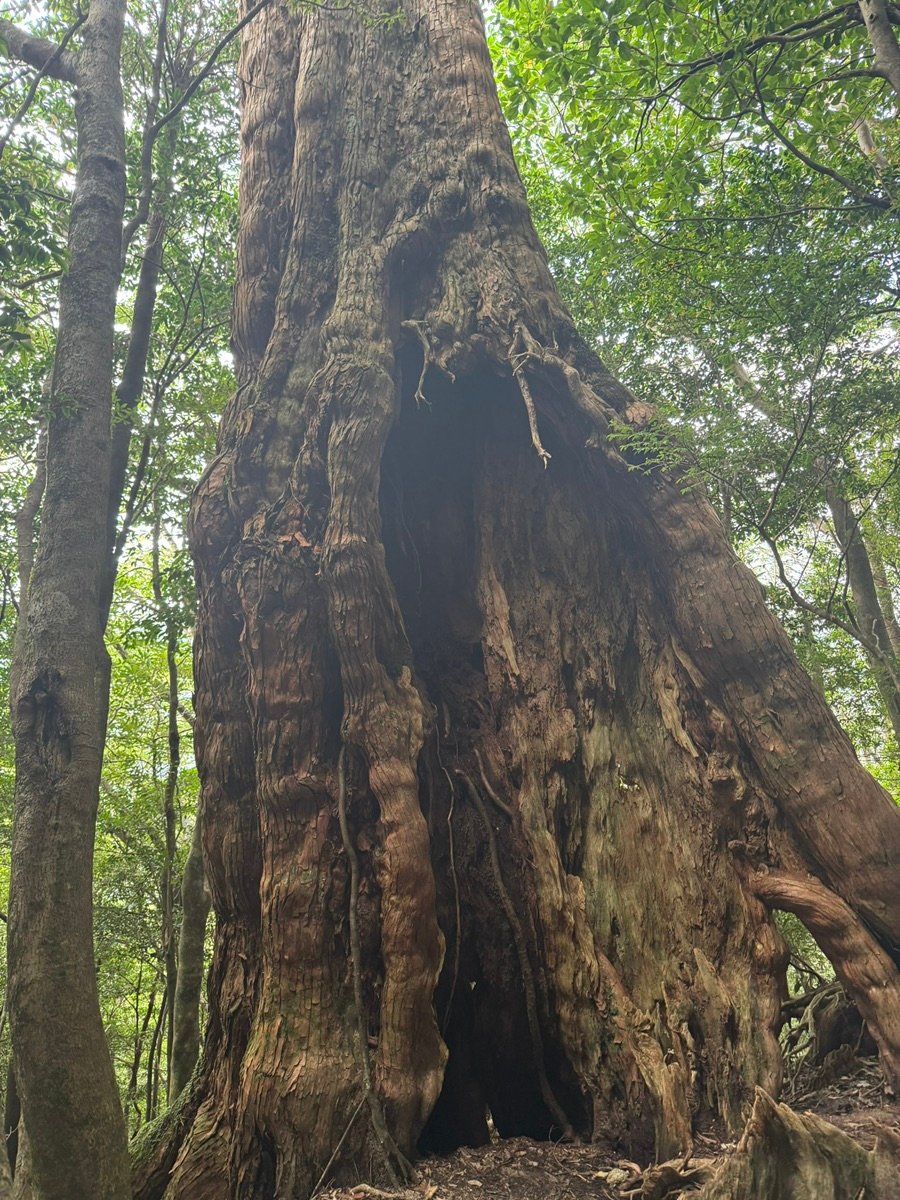
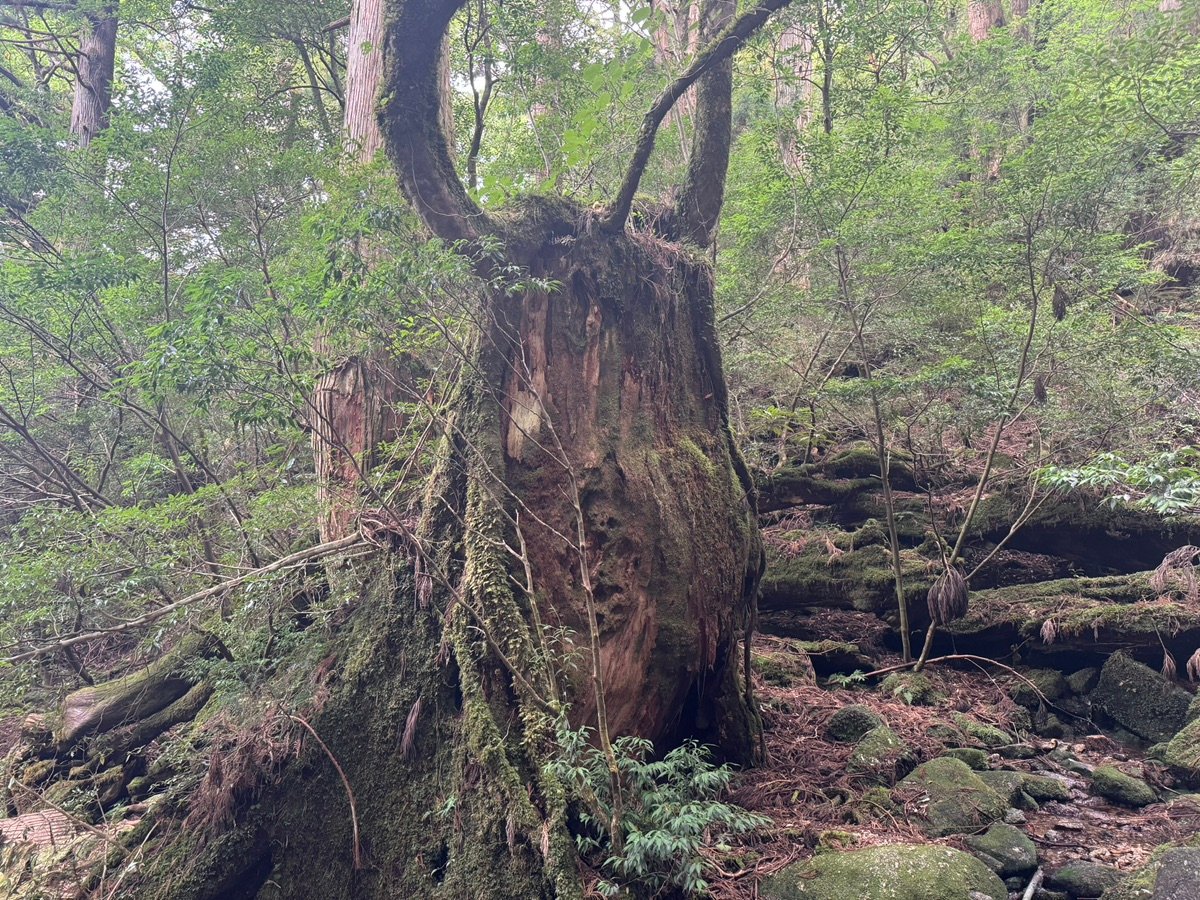
If you stand in the exact right spot inside a massive, hollowed-out tree stump, the sky above opens up in the shape of a perfect heart. This is Wilson’s Stump in Japan, located deep within the moss-covered forests of Yakushima. Named after the English botanist Ernest Henry Wilson, who introduced it to the West, this ancient cedar stump is a popular stop along the legendary Jomon Sugi hiking trail.
A relic of a 400-year-old lumber project
The stump is all that remains of a giant yakusugi cedar tree that was cut down back in the late 16th century, likely on the orders of Toyotomi Hideyoshi to build a temple in Kyoto. Because the trunk was so massive, the interior eventually rotted away, leaving a hollow wooden cave. Today, visitors can actually step inside the spacious chamber, which is about 32 square meters, and find a tiny shrine dedicated to the god of the mountain tucked into the wooden folds.
The cool, damp air inside a giant wooden cave
Stepping inside the stump feels like entering a natural cathedral. The air is cool, carrying the scent of damp moss, wet earth, and ancient cedar. Water slowly drips from the mossy roots above, and the soft, dark interior contrasts sharply with the bright green leaves framing the opening. It is a quiet sanctuary where hikers pause to catch their breath and look up in wonder.
Finding the perfect angle for the heart
You do not see the heart shape the moment you walk in. The opening looks like an irregular circle from most angles. To see the famous heart, you have to walk to the far left corner near the small shrine, crouch down low, and look up towards the light. Finding this specific spot makes the discovery feel like a personal reward after hours of trekking through the forest.
Best Timing
To experience the stump without the crowds, try to reach the trailhead early in the morning. A good pro-tip is to take the very first bus of the day to the trailhead and maintain a steady pace so you can arrive at the stump before the main wave of tour groups catches up. Light conditions are best around midday when the sun is high, casting a bright glow on the foliage framing the heart-shaped opening.
Climate & Best Season
Yakushima has a subtropical, high-precipitation climate where it famously rains “35 days a month.” Coastal areas remain warm with summer temperatures averaging 30°C, while winters are mild at 7–15°C, though the high peaks can get snow. The most stable months for trekking are April to May and October to November, when temperatures are comfortable (around 15–25°C) and rainfall is relatively low compared to the summer monsoons.
Traveler’s Memo
Access
Take the Arakawa Mountain Bus from the Yakusugi Museum near Anbo (about 30 minutes, 1,000 JPY one-way) to reach the Arakawa Trailhead. From the trailhead, you must hike for about 2 to 3 hours one-way along the Jomon Sugi trail to reach the stump.
Budget
Entering the stump is free. However, from March 1 to November 30, private cars are banned on the mountain road. You will need to pay 2,000 JPY for the round-trip Arakawa Mountain Bus, plus a 1,000 JPY mountain conservation donation (3,000 JPY total). Hiring a professional guide for a trekking tour usually costs around 10,000 to 15,000 JPY per person.
Recommended Gourmet
After a long day of hiking, try tobio (flying fish), which is often served deep-fried whole with crispy, edible wings, or fresh as sashimi. Another great local treat is the sweet, juicy tankan orange, which is perfect for refueling. You can find these at cozy local izakayas and diners (teishoku-ya) around Miyanoura or Anbo ports.
Nearby Spots
- Jomon Sugi: The island’s most famous and ancient giant cedar tree, located further up the same hiking trail.
- Shiratani Unsuikyo Gorge: A beautiful forest filled with mossy ravines that inspired the animation style of Princess Mononoke.
- Yakusugi Land: A nature park with well-maintained boardwalk paths of various lengths, ideal for shorter, easier forest walks.
FAQ
Is the hike to the stump difficult?
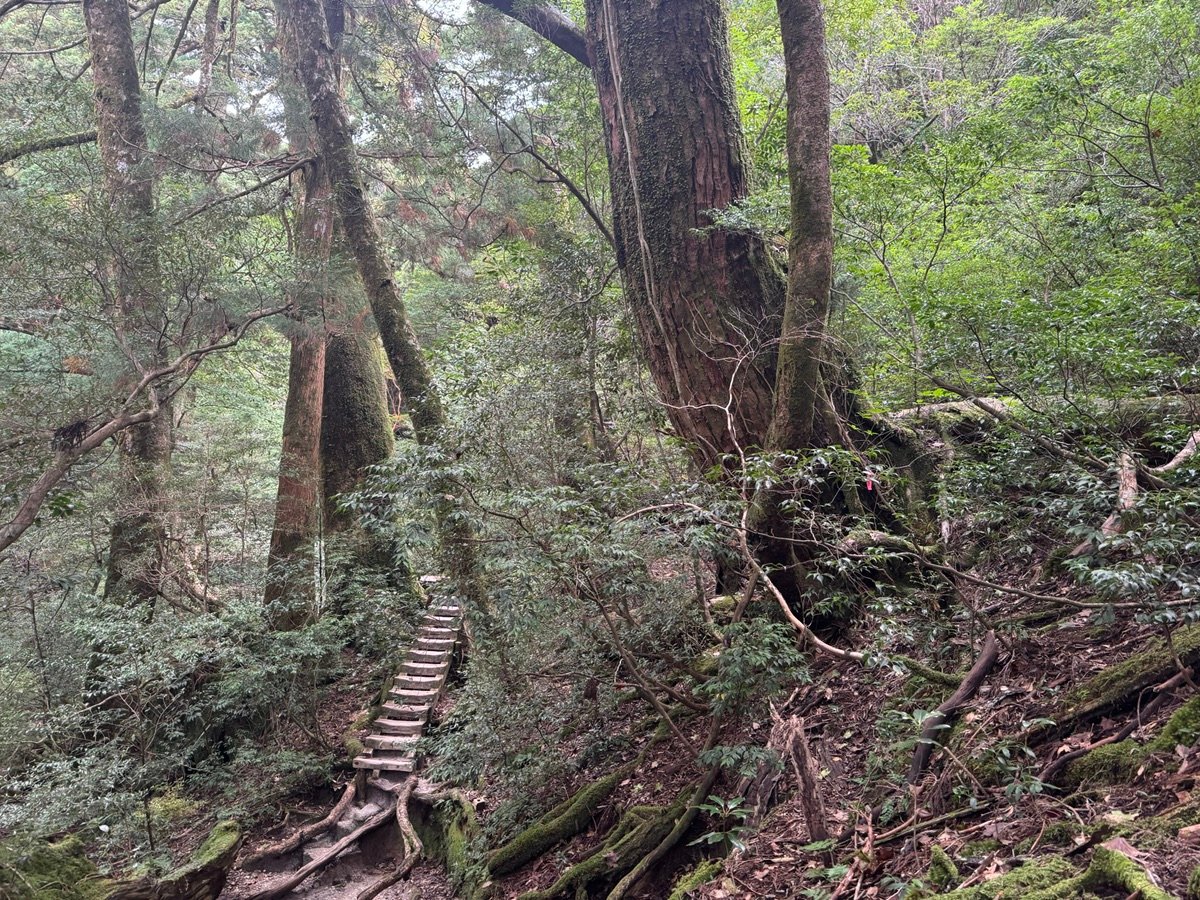
The hike along the Arakawa trail starts with an easy walk along flat, abandoned railway tracks, but becomes a steep mountain climb with tree roots and stairs after the track ends. It is moderately challenging and requires decent hiking shoes.
Can I visit the stump during winter?
Yes, but the mountain peaks can experience heavy snow and sub-zero temperatures from December to February. Check trail conditions and bus availability beforehand, as schedules may change due to weather.
Are there restrooms along the trail?
There are very few restrooms on the trail, mainly at the Arakawa Trailhead and a couple of designated points along the way. It is highly recommended to bring a portable toilet bag (available at local outdoor shops) and use the designated booths.