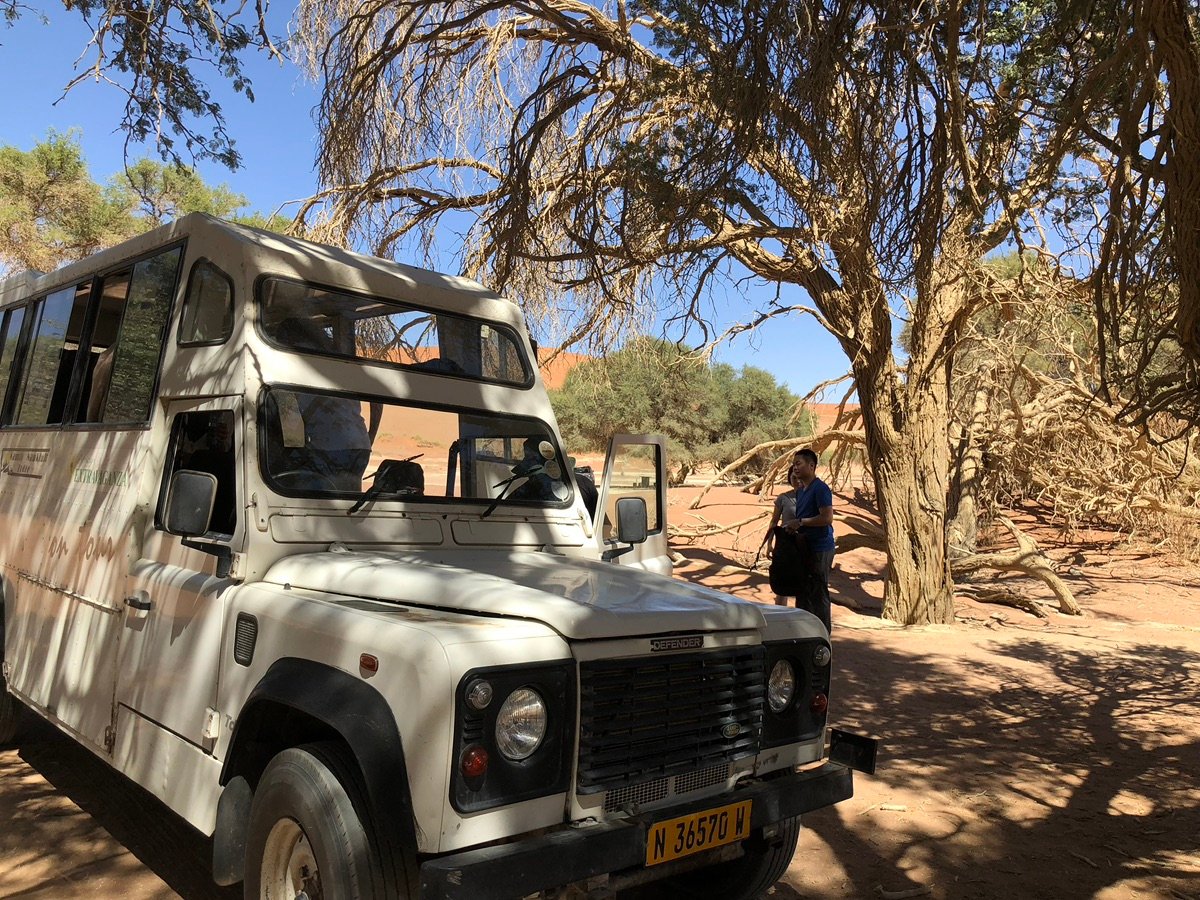
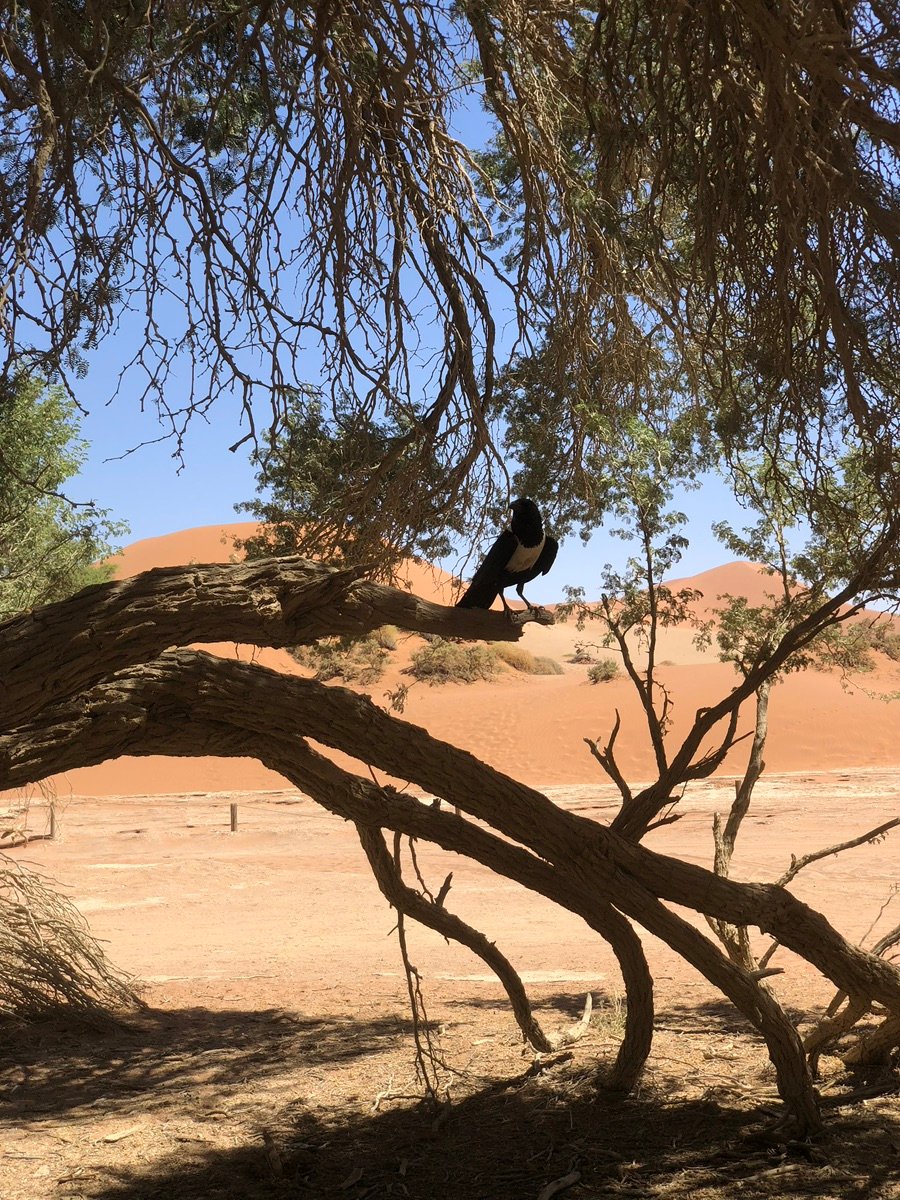
Driving through the towering red dunes of Namibia, one often encounters surprising pockets of life. This image captures the untouched beauty of the desert from the shade of a resilient acacia tree in Sossusvlei. Perched on a branch is a crow, a quiet testament to the resilience of life against the backdrop of a vast sea of sand. This particular spot continues to captivate adventurers and photographers alike with its dramatic contrasts and unforgettable serenity.
Sossusvlei: Where Ancient Life Takes Root in a Sea of Sand
Famous for its towering red dunes, Sossusvlei is one of Namibia’s most iconic landscapes. What makes this particular spot truly special is its ability to host life in such a harsh environment. The tree in the photograph is a type of resilient acacia (likely a Camel Thorn tree), which can live for hundreds of years. They rely on underground water systems, often fed by ephemeral rivers, and are typically found in the otherwise dry clay pans like Deadvlei and other watering points. The crow, perched on its branch, is a common bird in the region, playing a vital role in the desert ecosystem. The combination of the tree, the bird, and the dunes showcases the tough spirit of this region and the incredible adaptation of life within its ever-changing landscape.
Fiery Reds and Brilliant Blues: The Desert’s Serene Embrace
The atmosphere of this spot is one of awe-inspiring tranquility. While the sun can be relentless, the shade of the trees offers a welcome reprieve. The contrast between the fiery red of the dunes stretching out before you and the brilliant blue sky above feels like stepping into a living painting. The only sounds are often the wind sculpting the sand and perhaps the distant call of a bird. The crow in the image further emphasizes the scale of this vast landscape, a silent observer that is very much a part of the scenery. Here, a sense of timelessness pervades, allowing you to absorb the ancient calm. The dry feel of the desert air and the sensation of breathing in this raw, untouched beauty is an unforgettable experience.
Best Timing: Capture the Light and the Cool
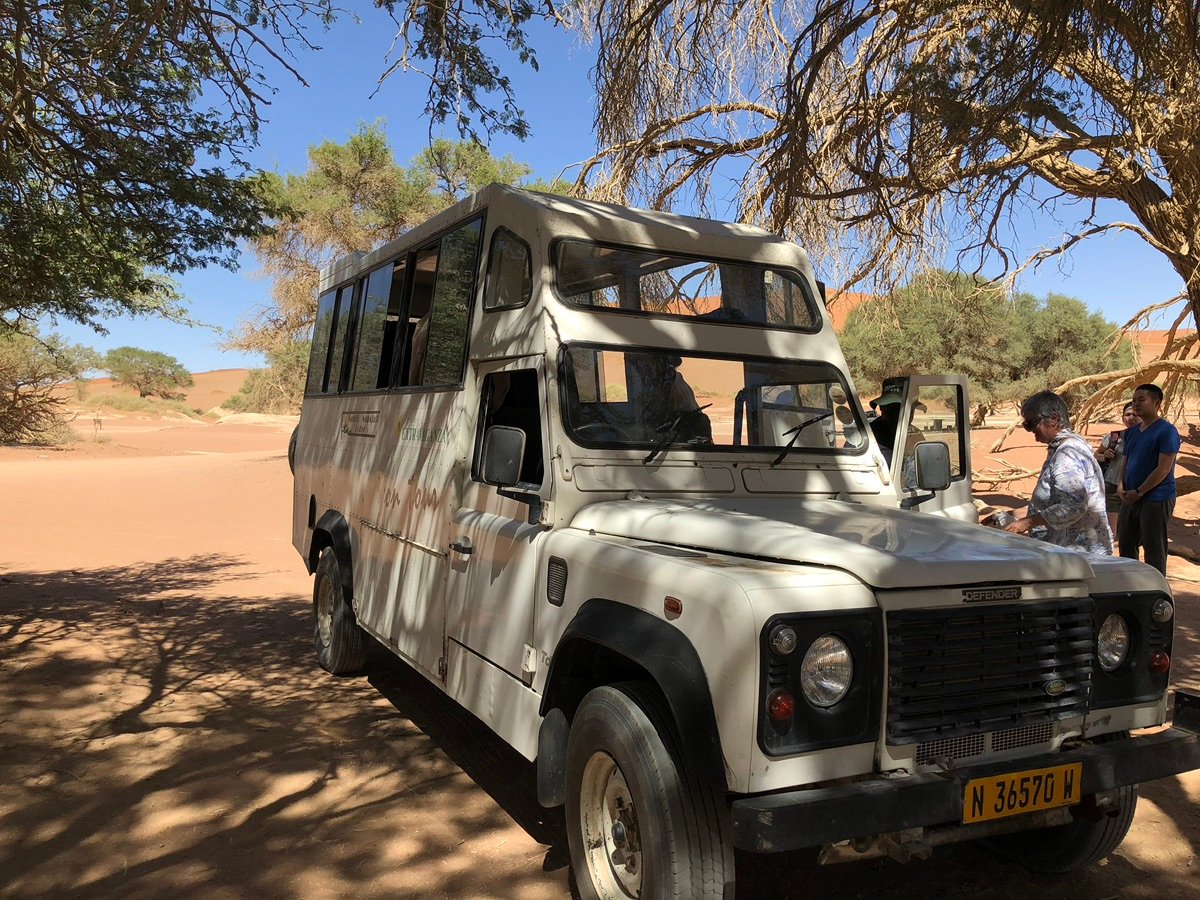
The ideal time to visit this magnificent location is during the early morning or late afternoon. Not only does this help you avoid the intense midday heat, but the sun’s low angle during these hours accentuates the deep red hues of the dunes, creating dramatic shadows and breathtaking photographic opportunities.
Pro-tip: Plan to arrive before dawn, just as the park gates open. This allows you to experience the sunrise over Dune 45 or other key dunes, or simply soak in the serenity of this spot before the crowds arrive. Layers of clothing are essential as temperatures can change dramatically.
Must-See Details: What to Look For
- The Acacia Bark: Observe the deeply furrowed bark on the trunk and branches of the tree in the photo. This texture tells a story of the tree’s age and the harsh desert conditions it has endured.
- The Crow’s Contrast: Note the striking contrast between the black crow, the bright dunes in the background, and the subtle greens of the tree’s foliage. This makes the bird’s silhouette pop, creating a stunning composition.
- Play of Shadows: Pay attention to how the midday sun creates long, stark shadows that highlight even the slightest undulations in the dunes. By noting the fine details of the sand’s surface, you can discern how it has been sculpted by the wind over time.
- Layering of Distant Dunes: See how the colors and shapes of the distant dunes shift and layer against the blue sky. This demonstrates the vast scale and depth of the Namib Desert.
Traveler’s Memo
Access
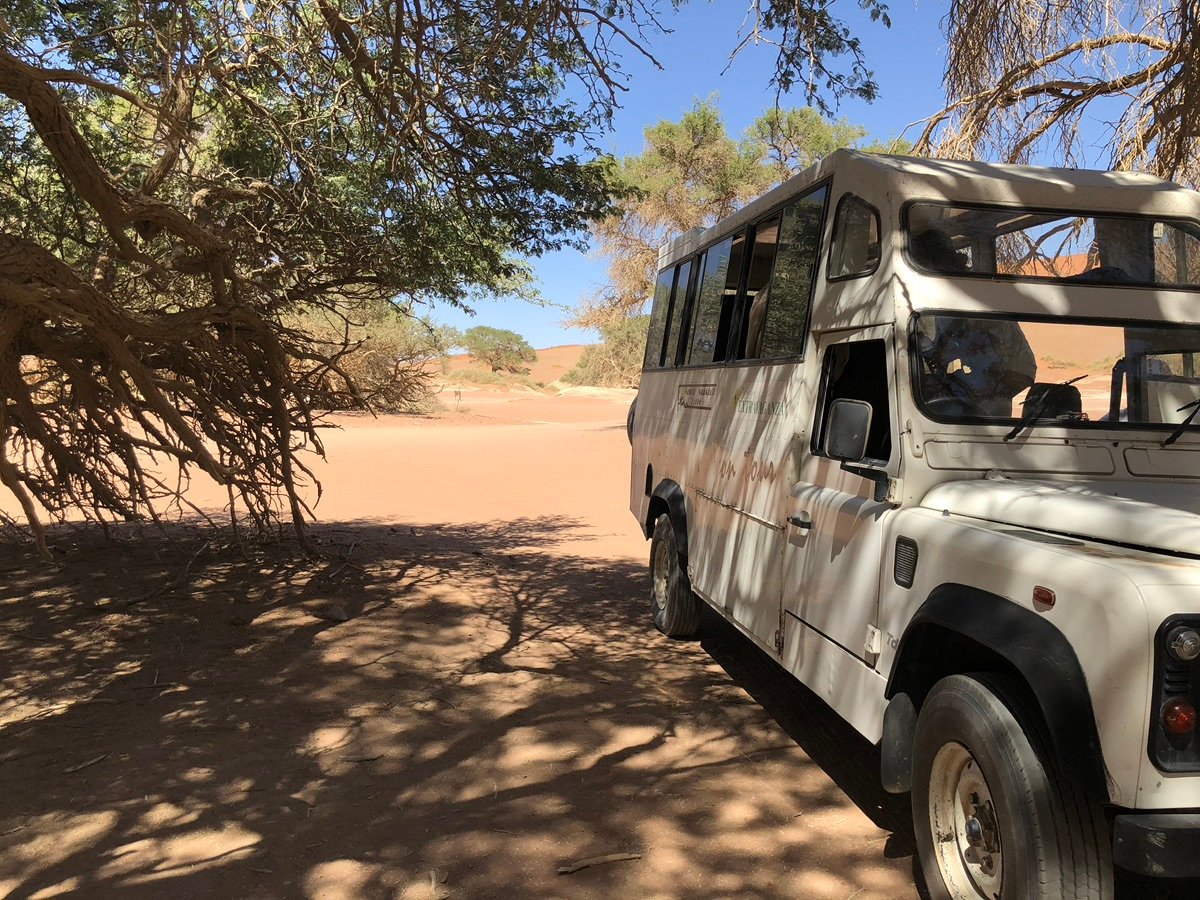
Sossusvlei is located within the Namib-Naukluft Park. The nearest town is Sesriem, which serves as the main gate to the park. You can either rent a 4×4 vehicle from Windhoek or Swakopmund and self-drive to Sesriem, or join a guided tour. The last 5km into Sossusvlei from the main gate generally requires a 4×4, otherwise, a shuttle service is available.
Budget
Entry fees to Namib-Naukluft Park are approximately N$150 (Namibian Dollars) per adult foreign national (at time of writing). Accommodation ranges from affordable campsites in Sesriem to more luxurious lodges. It’s wise to stock up on groceries and fuel in a larger town like Windhoek beforehand. Carrying ample water is highly recommended due to the daytime heat.
Recommended Gourmet
There are very few formal dining options immediately within Sossusvlei itself. Many lodges in Sesriem offer excellent meals. Sossusvlei Lodge is known for its well-reviewed buffet dinners, featuring local and international cuisine. Many tours also include picnic lunches. The key is to bring plenty of your own snacks and drinks.
Nearby Spots
- Deadvlei: A highlight of any Sossusvlei visit, this white clay pan is lined with striking black skeletal trees, dead for over 800 years.
- Dune 45: An iconic and easily climbable dune, known for its picturesque sunrises and sunsets.
- Sesriem Canyon: A small canyon featuring unique rock formations and pools of water (during the rainy season), where you can walk along the canyon floor.
- Big Daddy: The tallest and most challenging dune in Sossusvlei, offering unparalleled views from its summit.