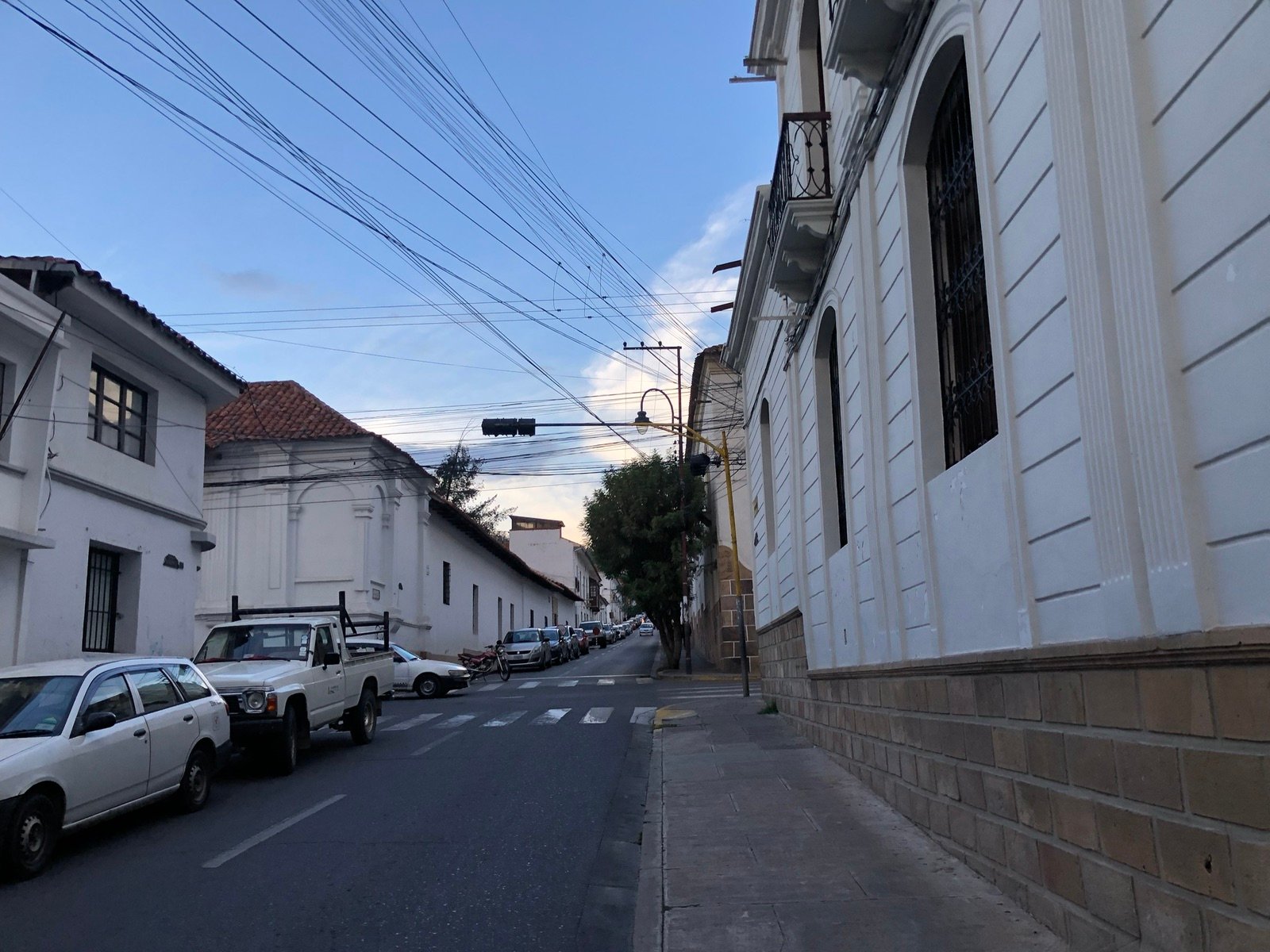
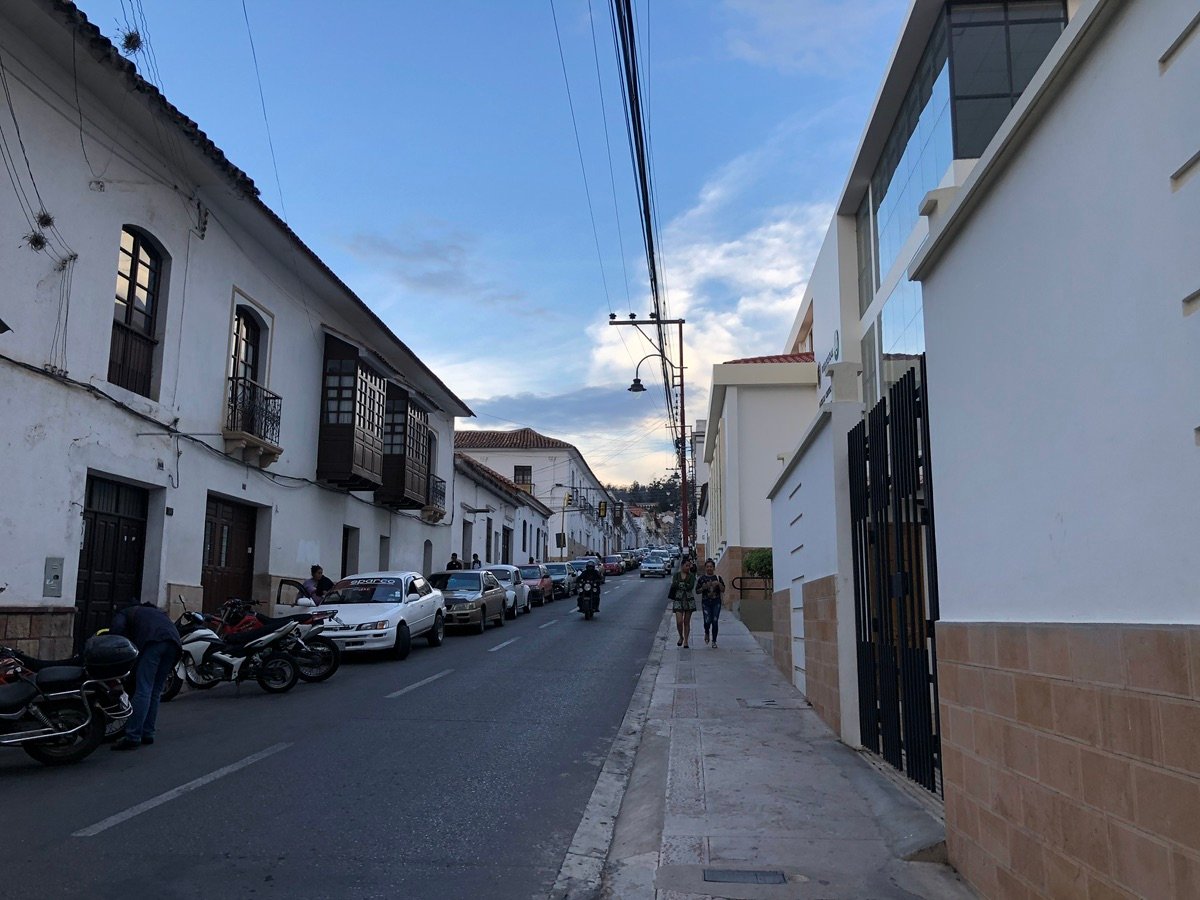
If you’ve ever dreamt of stepping into a postcard from a bygone era, a walk through the historic center of Sucre, Bolivia, will feel exactly like that. The moment you turn onto a street like this, the rows of immaculate white colonial buildings, adorned with intricate details and classic red-tiled roofs, immediately capture your attention. This view, with its charming architecture bathed in the clear Andean light and crisscrossed by the everyday wires of modern life, offers a quintessential glimpse into Bolivia’s constitutional capital and UNESCO World Heritage site.
Sucre’s Enduring Legacy: A City Forged in White
Sucre, often referred to as “The White City,” earned its UNESCO World Heritage status for its exceptionally well-preserved colonial architecture. Founded in 1538, it served as the capital of Bolivia and an important economic hub during the Spanish colonial period. The architecture you witness on this street is a direct reflection of that rich history, characterized by grand facades, robust construction, and a uniform aesthetic that exudes elegance and historical significance. The predominant use of white lime wash on buildings wasn’t just for beauty; it also helped reflect the intense Andean sun, keeping interiors cooler – a practical solution that became an iconic visual identity.
A Timeless Stroll: Experiencing Sucre’s Calm Vibrancy
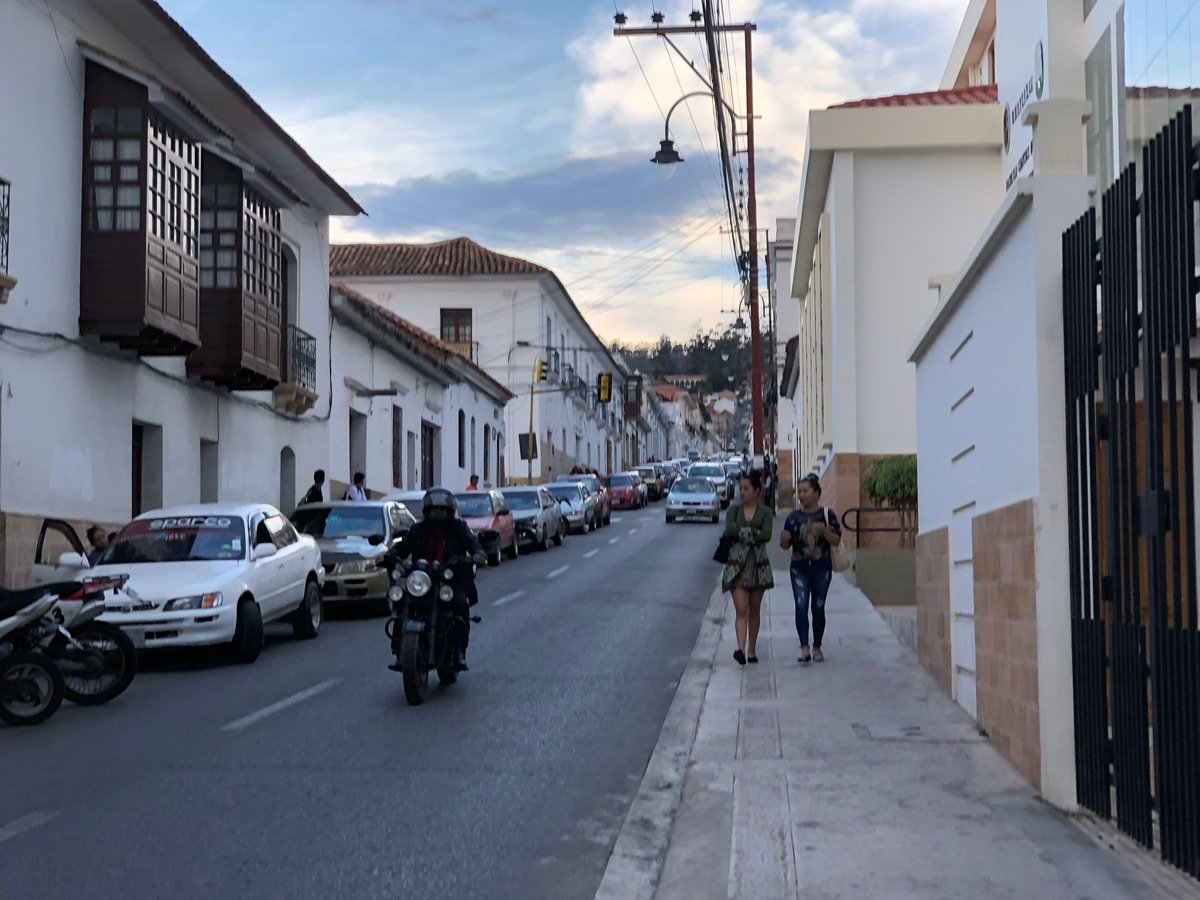
Walking these streets offers a unique sensory experience. The air is typically crisp and clear, a hallmark of Sucre’s high altitude. The bright white buildings create a striking contrast against the often vivid blue sky, making the shadows cast by balconies and decorative moldings incredibly sharp. While the city bustles with daily life – evident in the parked cars and overhead power lines – there’s an underlying sense of calm, a pace that feels more relaxed than many other urban centers. You’ll notice the subtle textures of the walls, the varying patterns of the wrought iron grilles on windows, and the subtle shifts in light as the sun moves across the sky.
Best Timing: Golden Hours for Architectural Grandeur
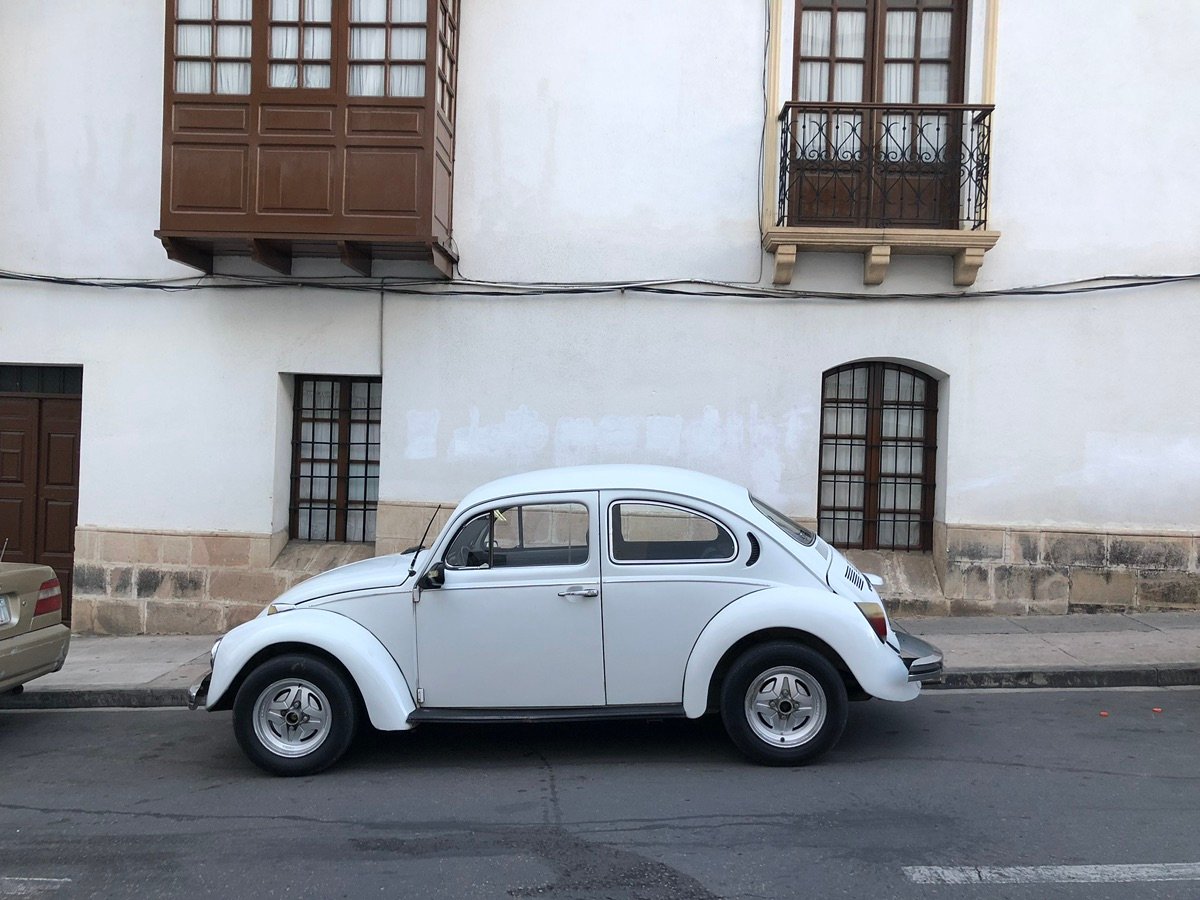
To truly appreciate the architectural details and the enchanting atmosphere of Sucre’s streets, aim for the early morning or late afternoon (golden hour). The softer light during these times highlights the textures and depth of the white facades, making the decorative elements pop. Mornings are generally quieter, allowing for more serene photography and observation, while late afternoons offer a beautiful warmth and a gentle fading of light. Pro-tip: Arrive shortly after sunrise to capture the streets mostly devoid of traffic, allowing you to fully absorb the colonial serenity.
Must-See Details: Beyond the White Facades
- Intricate Moldings and Archways: Take a moment to observe the detailed plasterwork around windows and doors, and the elegant curves of the arched openings, which are typical of colonial Baroque and Neoclassical styles.
- Wrought Iron Balconies and Grilles: Many buildings feature beautiful wrought iron balconies and window grilles, each with unique patterns that add a touch of delicate artistry to the robust architecture.
- Red-Tiled Roofs: The terracotta roof tiles, contrasting sharply with the white walls and blue sky, are a signature feature of Sucre, providing a warm, earthy tone to the cityscape.
- Street-level Details: Don’t forget to look down! The combination of pedestrian paths and the cobblestone-like street surface tells a story of centuries of foot traffic and carriages.
Traveler’s Memo: Navigating Sucre
Access
Sucre has its own airport (Alcantarí International Airport – SRE) with connections from La Paz and Santa Cruz. Overland travel by bus from major Bolivian cities is also common, though it can involve long journeys. Once in the city, the historic center is very walkable, and taxis are readily available and affordable for longer distances.
Budget
Sucre is generally considered one of Bolivia’s more affordable cities for travelers. Expect to find reasonably priced accommodation, food, and local transportation. Many attractions in the historic center, including simply wandering the beautiful streets, are free.
Recommended Gourmet
Indulge in traditional Bolivian cuisine. Try Salteñas for breakfast or a snack, a savory baked pastry often filled with meat, potatoes, and spices. For a heartier meal, seek out Pique Macho, a generous platter of beef, sausage, potatoes, and vegetables. Don’t forget to sample local chocolates, for which Sucre is also well-known.
Nearby Spots
- Casa de la Libertad: The birthplace of Bolivia, this historic building houses a museum detailing the country’s independence.
- Mirador de la Recoleta: Offering panoramic views of Sucre’s white city and surrounding hills, especially stunning at sunset.
- Catedral Metropolitana de Sucre: A magnificent cathedral in the Plaza 25 de Mayo, showcasing impressive colonial religious art and architecture.
- Parque Cretácico Cal Orck’o: A unique paleontological park just outside Sucre, famous for its vast collection of dinosaur footprints.