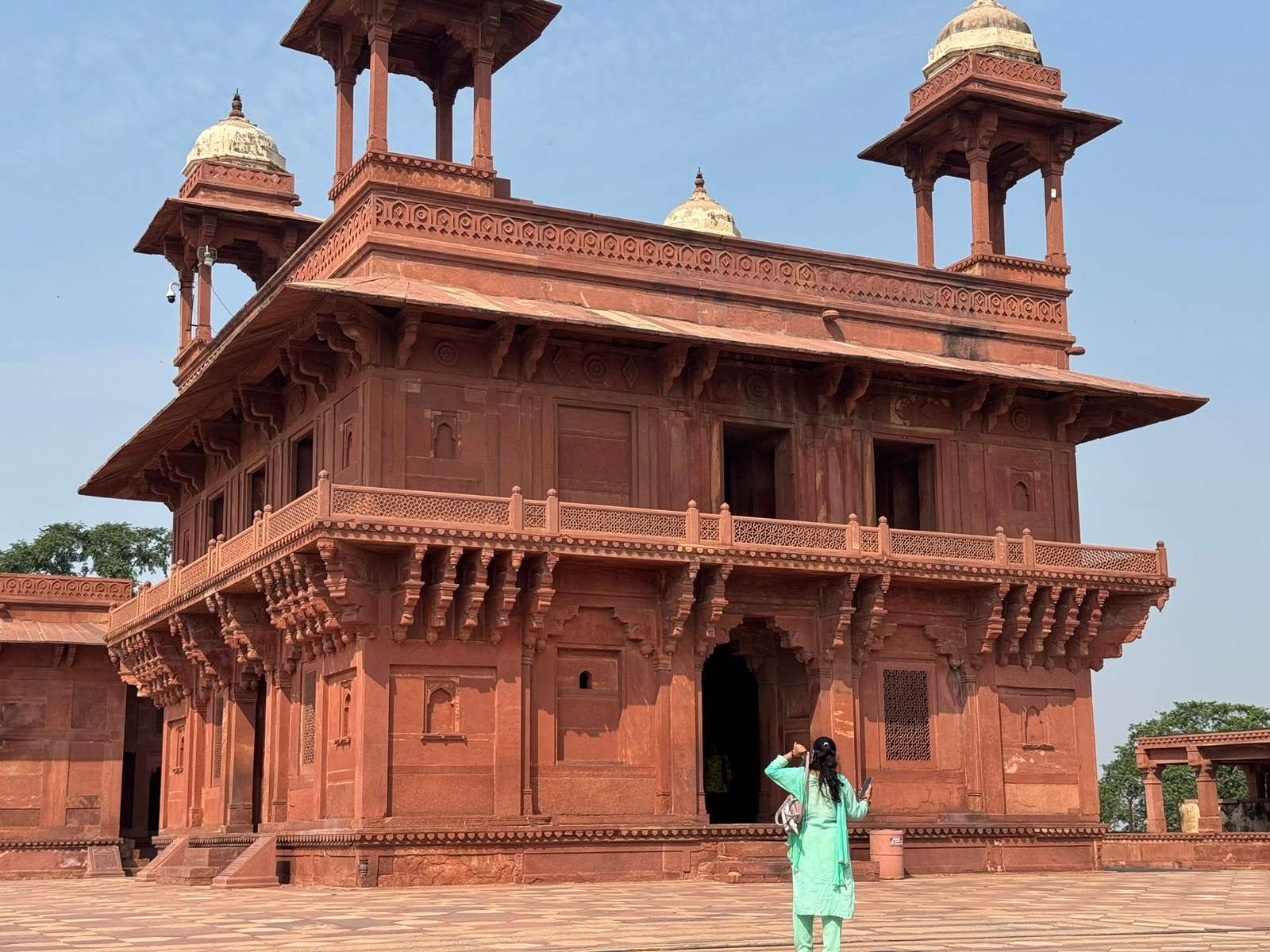
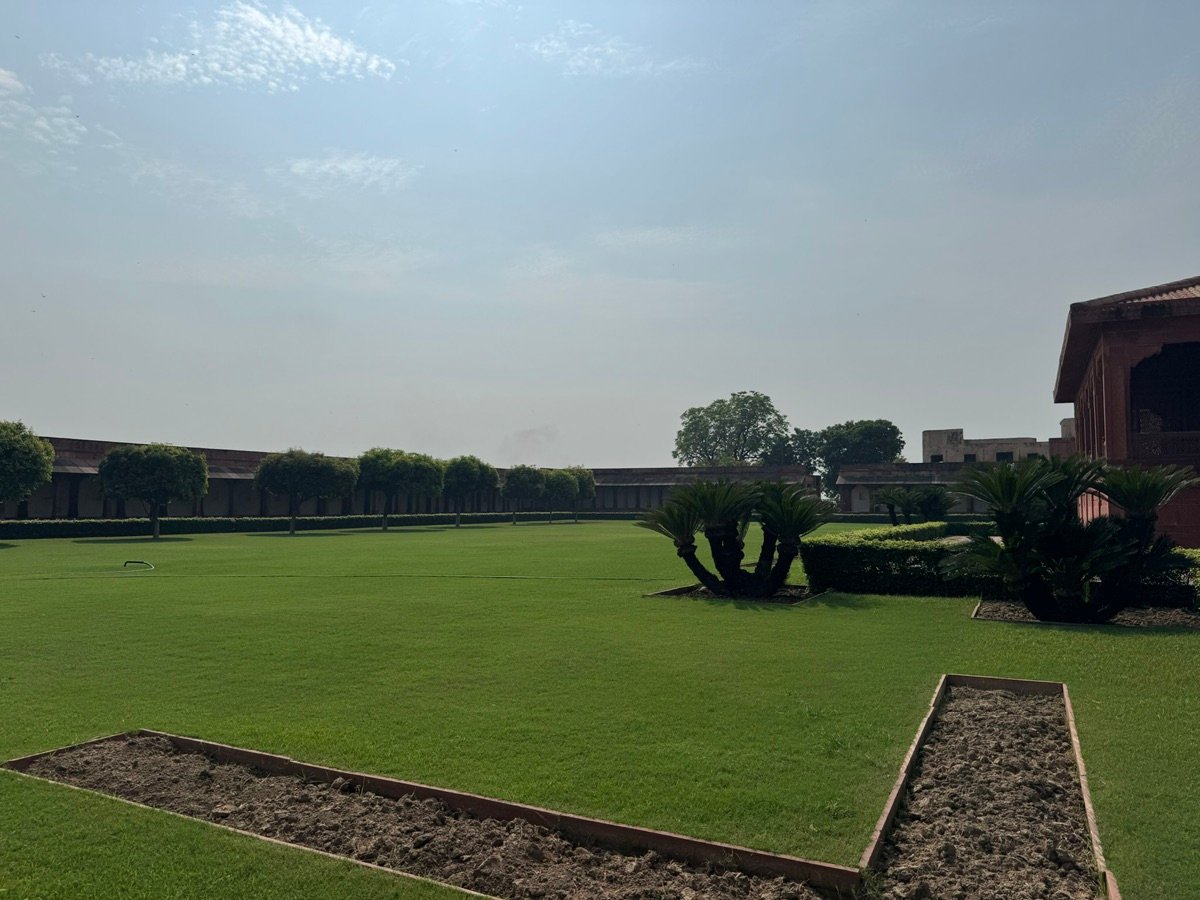
The striking red sandstone building you see here, with its intricate carvings and domed pavilions, is part of one of India’s most fascinating historical sites. This is Jodha Bai’s Palace, located within the sprawling Fatehpur Sikri complex in India. It’s a place that tells stories not just through its grand scale, but through every carved detail. Often overlooked by tourists sticking to the main highlights, this palace is absolutely worth a detour.

A Palace Built on Harmony: Discovering Akbar’s Vision
This palace stands out for its unique blend of Mughal and Hindu architectural styles, a direct reflection of Emperor Akbar’s policy of religious tolerance. While its exterior has distinct Mughal features, the interior reveals elements reminiscent of Hindu temples, such as specific beam and pillar designs. Although the historical identity of “Jodha Bai” is debated among historians due to several women bearing the name, the palace’s design clearly showcases the deep cultural exchange of its era, making it a compelling piece of history.
Walking Through Stone Whispers: The Quiet Grandeur You Feel
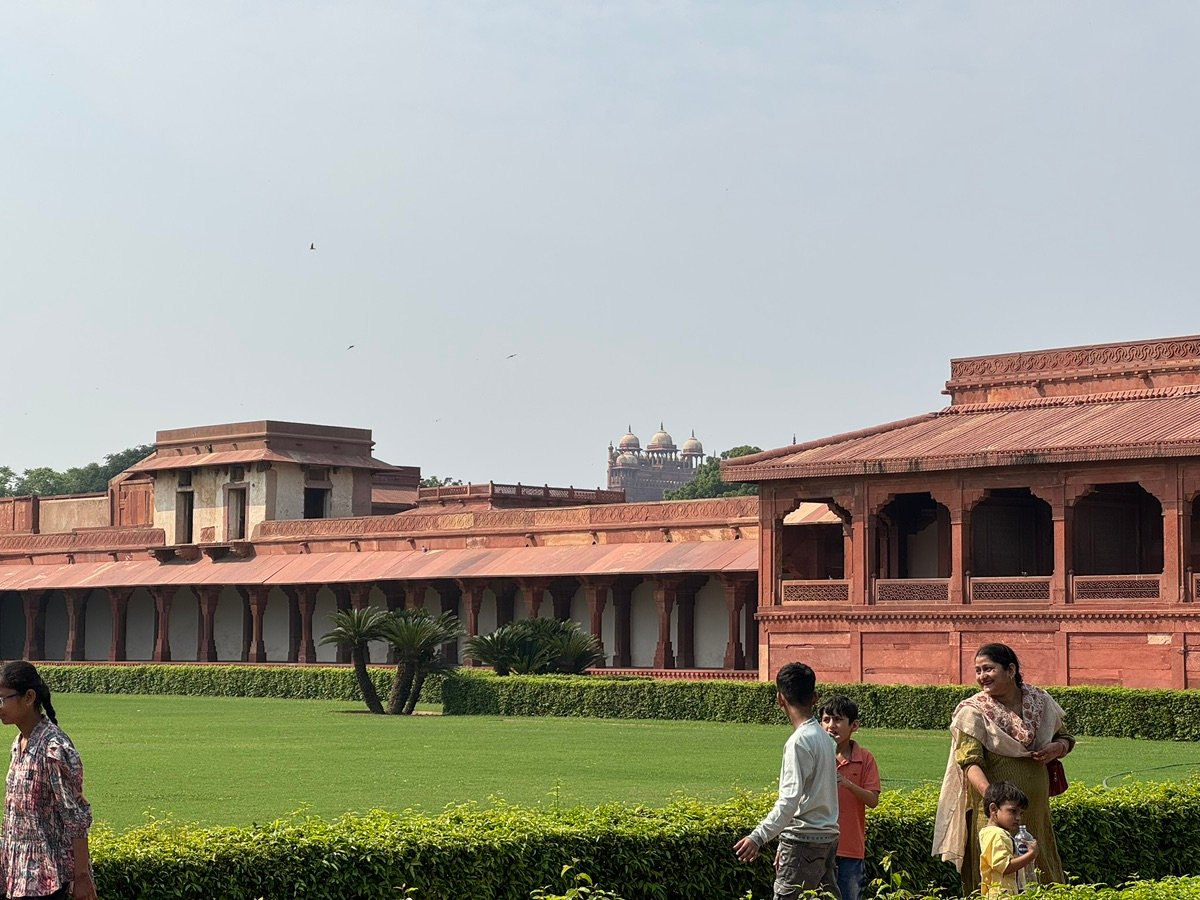
As you walk through the spacious courtyards of the palace, a sense of timelessness washes over you. The delicate carvings on the walls and the thoughtful expanse of the spaces quietly command attention. Away from the main hustle, this spot allows you to deeply appreciate the interplay of light and shadow, the sound of the wind, and the whispers of history. The craftsmanship in every detail is especially worth pausing to admire.
Best Timing
If you’re visiting Jodha Bai’s Palace, early morning or late afternoon is your best bet. You’ll avoid the harsh midday sun, and the soft light beautifully illuminates the red sandstone, making for fantastic photos. Mornings also tend to be less crowded, letting you explore at your own pace. A pro-tip: arrive about 30 minutes before the ticket counter opens to beat the rush and get in smoothly.
Climate & Best Season
The climate in Fatehpur Sikri is characterized by extremely hot summers (April to June), with average temperatures ranging from 30°C to 45°C. It’s best to avoid visiting during this period. The monsoon season (July to September) is hot and humid with occasional heavy rainfall, with temperatures between 25°C and 35°C. The most comfortable season to visit is winter (October to March), when temperatures are pleasant, ranging from 10°C to 25°C. While the peak tourist season is from November to February, consider visiting in October or March for comfortable weather and slightly fewer crowds.
Must-See Details
- Fusion of Hindu and Mughal Styles: Pay close attention to the carvings and pillars throughout the building to see how these two cultures intermingled. It’s fun to look for Hindu architectural elements like elephant or lotus motifs.
- Unique Layout and Ventilation: The interior of the palace was designed with the privacy and comfort of royal women in mind. Notice the clever arrangements for natural ventilation and how windows are placed to bring in light.
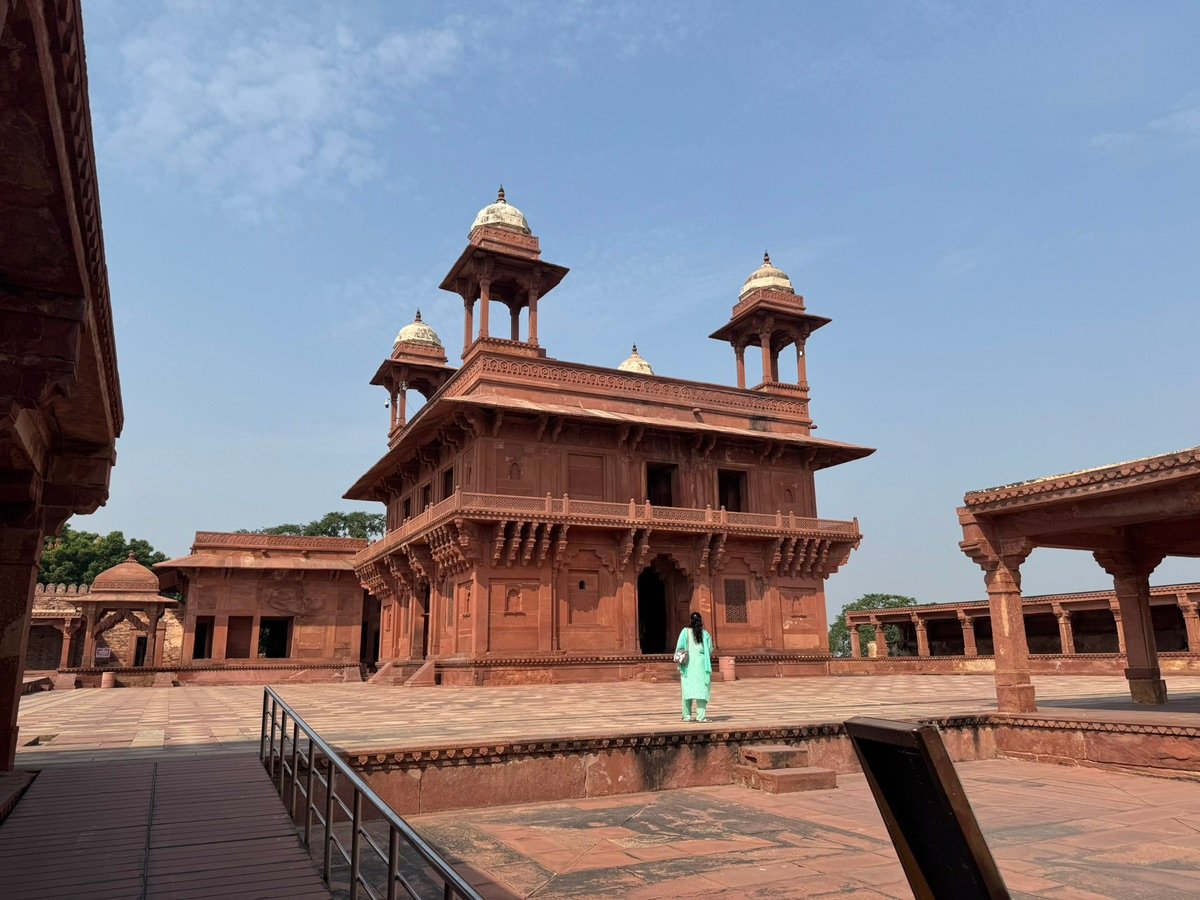
- Multi-story Structure and Courtyards: The palace features multiple levels and spacious courtyards. Explore different viewpoints to fully appreciate the layout and grandeur of the structure.
- Jharokhas and Chhatris: The beautiful jharokhas (overhanging enclosed balconies) and the domed chhatris (kiosks) on the rooftop are iconic elements of Mughal architecture. These decorative details really enhance the palace’s beauty.
Traveler’s Memo
Access
Fatehpur Sikri is located about 40 km west of Agra. From Agra, you can take a taxi, bus, or shared jeep, which takes about an hour. Once you enter the Fatehpur Sikri complex, you can either walk a bit to Jodha Bai’s Palace from the main gate or use an electric rickshaw. Entering through the main tourist gate allows you to efficiently cover other major attractions alongside the palace.
Budget
The entrance fee for the entire Fatehpur Sikri complex is approximately 600 rupees for foreign tourists (as of 2023). There is usually no additional charge to enter specific palaces like Jodha Bai’s Palace within the complex. Electric rickshaws within the complex incur a small fee. If you hire a guide, expect to negotiate, but typically it costs around 1,000 to 2,000 rupees.
Recommended Gourmet
Around Fatehpur Sikri and Agra, you can enjoy delicious Mughlai cuisine. A local specialty and popular souvenir is “Petha,” a transparent candied pumpkin. For breakfast, try “Bedai with Aloo Sabzi” (fried bread with potato curry), a local favorite. For lunch or dinner, explore spiced “Biryani” and various types of “Kebabs.”
Nearby Spots
- Buland Darwaza: The massive southern gate of Fatehpur Sikri, standing at about 54 meters tall, it’s the largest gateway in India and truly impressive.
- Jama Masjid: A grand mosque located right next to the Buland Darwaza, featuring a beautiful courtyard and the tomb of the Sufi saint, Sheikh Salim Chishti (Sikri Dargah).
- Panch Mahal: A unique five-storied columnar palace, offering panoramic views of the entire complex from each level.
- Diwan-i-Khas: The Emperor Akbar’s private audience hall, famous for its elaborate central pillar which symbolizes his religious discussions.
FAQ
Is there an entrance fee for Jodha Bai’s Palace?
While there isn’t a separate fee for Jodha Bai’s Palace specifically, you do need to purchase an entrance ticket for the entire Fatehpur Sikri complex, which includes access to the palace.
What should I wear when visiting Fatehpur Sikri?
There isn’t a strict dress code, but respectful attire that covers shoulders and knees is recommended, especially for the mosque areas. Comfortable walking shoes are also essential as you’ll be covering a large area.
How much time should I allocate for Jodha Bai’s Palace?
You can explore Jodha Bai’s Palace in about 30 minutes to an hour. However, to fully experience the entire Fatehpur Sikri complex, it’s best to allocate 2 to 3 hours.
Is it necessary to hire a guide at Fatehpur Sikri?
Hiring a guide isn’t mandatory, but it’s highly recommended. A good guide can enrich your visit by providing insights into the history, architecture, and stories behind the structures, which can be invaluable.
Are food and water available inside the complex?
Vendors are available outside the main ticketed area, but options inside the complex are limited. It’s advisable to carry your own water, especially during hot weather, as hydration is crucial.