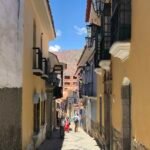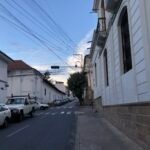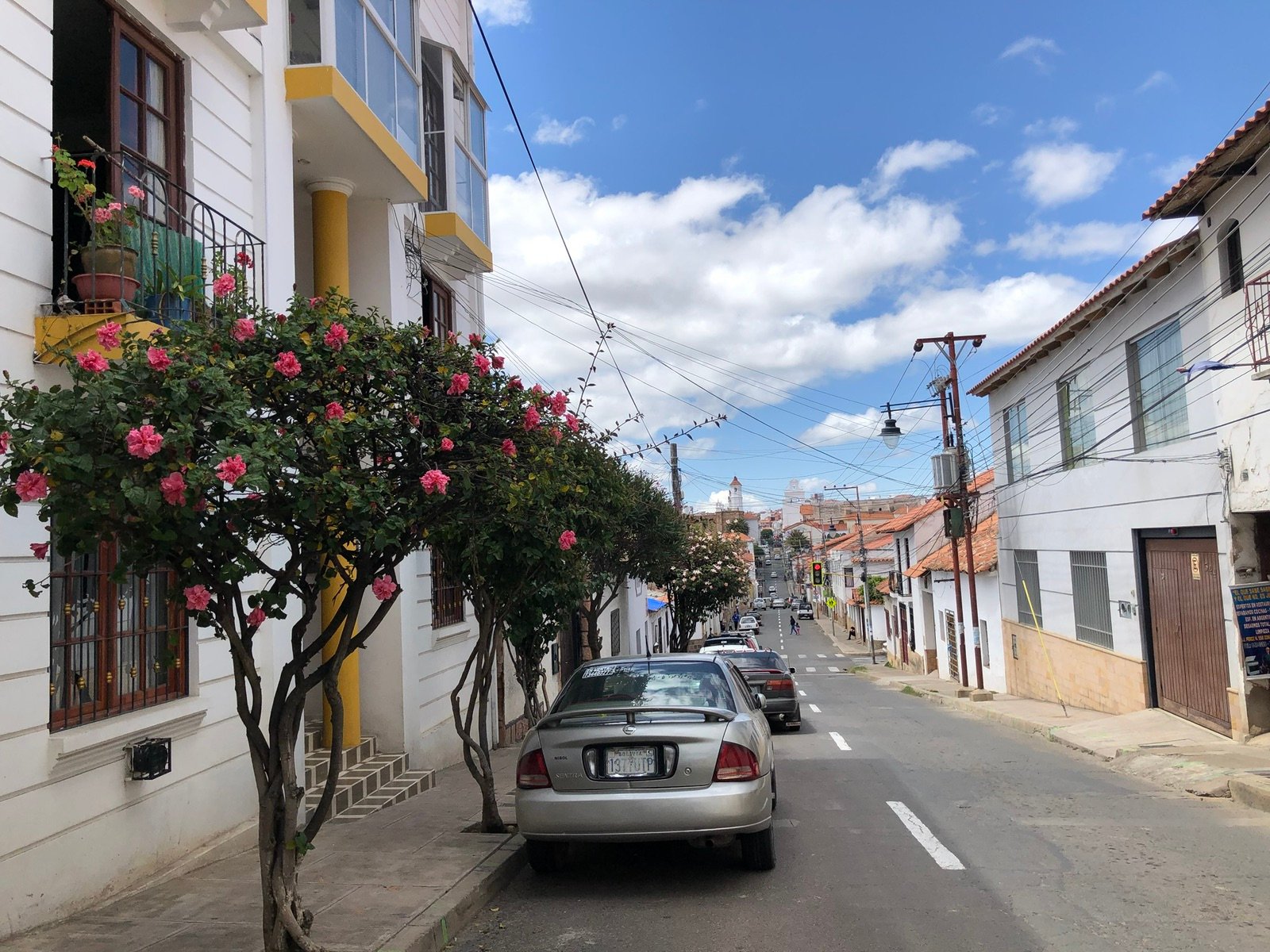
Walking through the old town of Sucre, I unexpectedly found myself on what felt like a postcard-perfect street. This particular lane, lined with trees boasting vibrant pink flowers, is one of the hidden gems in Sucre’s historic center in Bolivia. The white buildings, with their striking yellow window frames and balcony accents, create a beautiful contrast against the blue sky. Cars pass through, but the overall atmosphere is one of serene, unhurried time.
The UNESCO Cityscape’s Calm Atmosphere
Sucre, known as the “White City of the Americas,” is a UNESCO World Heritage site, and the buildings on this street perfectly reflect its historical and architectural beauty. What’s particularly striking are the pink flowering trees lining the street. The white walls of the buildings against the vivid pink of the flowers create a picturesque scene. These trees not only add beauty but also provide shade from the daytime sun for pedestrians. Seeing locals going about their daily lives adds to the genuine appeal of this street.
A Laid-Back Stroll in a Lively, Lived-In Space
Walking along this street, you can feel Sucre’s calm rhythm wash over you. It’s not crowded with tourists, allowing you to quietly observe locals going about their day. The late afternoon, when the sun reflects off the white walls and casts long shadows, is particularly pleasant, inviting you to take a slow walk with a camera in hand. Occasionally, the sound of a passing car or children’s voices reminds you that this place is alive and vibrant.

Best Timing
To best experience the beauty of this street, I’d recommend visiting in the morning or late afternoon when the sun begins to set. The light in the morning is softer, making the white buildings stand out even more. You can avoid the strong midday sun and enjoy a relaxed stroll. If you want to avoid crowds, try to arrive before 9 AM; you might have the street almost to yourself for photos.
Climate & Best Season
Sucre enjoys a mild climate year-round, often referred to as “the eternal spring.” Due to its altitude of 2,800m, the sun is strong, but the low humidity makes it quite comfortable. The average annual temperature is around 15-20°C with little fluctuation. The rainy season is from November to March, with short afternoon showers, but it’s generally sunny otherwise. The dry season is from April to October. I recommend visiting from April to June or September to October for stable weather and fewer crowds.
Must-See Details
- Pink Flowering Trees: The vibrant pink flowers lining the street are iconic. If you visit during their bloom, it’s truly a spectacular sight.
- White Walls and Yellow Accents: The contrast between the white stucco walls, reflecting the sunlight, and the warm yellow paint on window frames and columns is typical of Sucre’s architecture.
- White Churches in the Distance: Looking down the sloping street, you’ll see several white church towers that symbolize Sucre’s historic district. It perfectly illustrates why the city is called “the White City.”
Traveler’s Memo
Access
The street is within walking distance of Plaza 25 de Mayo, Sucre’s central square. Sucre’s historic district is compact, so walking is the best way to explore. This street is a gentle slope, but not particularly difficult to navigate.
Budget
There is no cost to visit this street itself. While there are small shops and cafes nearby, it’s primarily a free attraction to enjoy.
Recommended Gourmet
Around this street, you’ll find more local eateries and bakeries rather than formal restaurants. I recommend trying freshly baked “pan de copa” for breakfast or enjoying Bolivian coffee at a nearby cafe.
Nearby Spots
- Plaza 25 de Mayo: Sucre’s central square, surrounded by important historical buildings and cafes.
- Casa de la Libertad: The historical building where Bolivia’s Declaration of Independence was signed, now a museum.
- Mirador de la Recoleta: A viewpoint offering panoramic views of Sucre, especially stunning at sunset.
FAQ
Is the historic district of Sucre safe?
Yes, Sucre is considered one of the safer cities in Bolivia. It’s generally safe to explore during the day with many tourists around, but always be mindful of your valuables and avoid walking alone at night.
Is this street wheelchair accessible?
The street is paved, but it’s on a gentle slope, which might make wheelchair access a bit challenging. Having assistance would make it smoother.
How much time do I need to explore Sucre’s old town?
To see the main highlights, I recommend allocating at least half a day to a full day. If you want to leisurely soak in the city’s atmosphere, you might want even more time.