
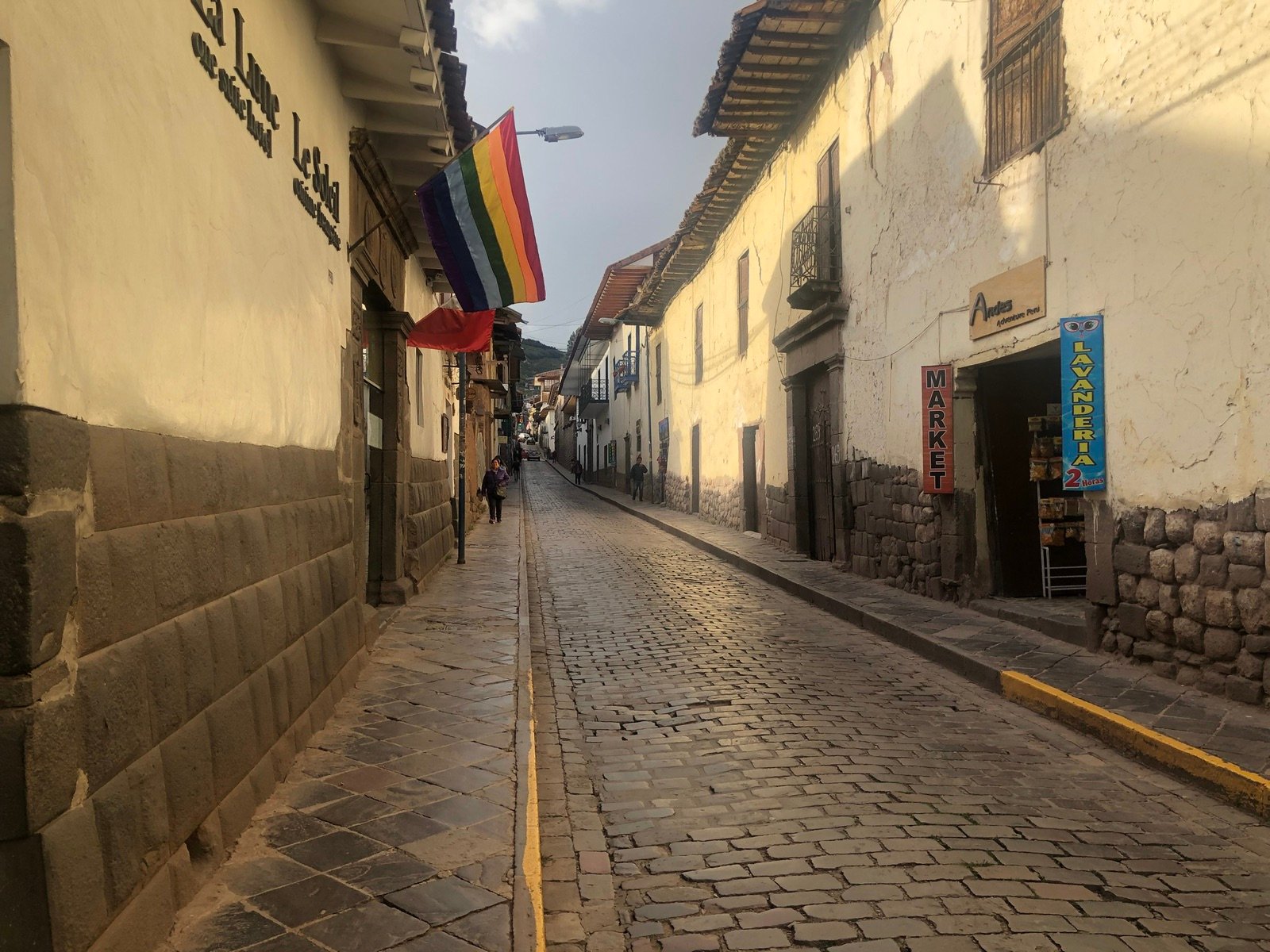
Walking down Suecia Street in Cusco feels like stepping back in time. This charming cobblestone lane is lined with centuries-old colonial buildings, built upon the foundations of Incan stonework, breathing with Andean culture and history. The soft light of the sun casting long shadows on the building walls accentuates the street’s historic texture, creating a picturesque scene at every turn. The vibrant Flag of Cusco (Wiphala) fluttering in the breeze symbolizes the lively spirit of this unique street.
Background & Context
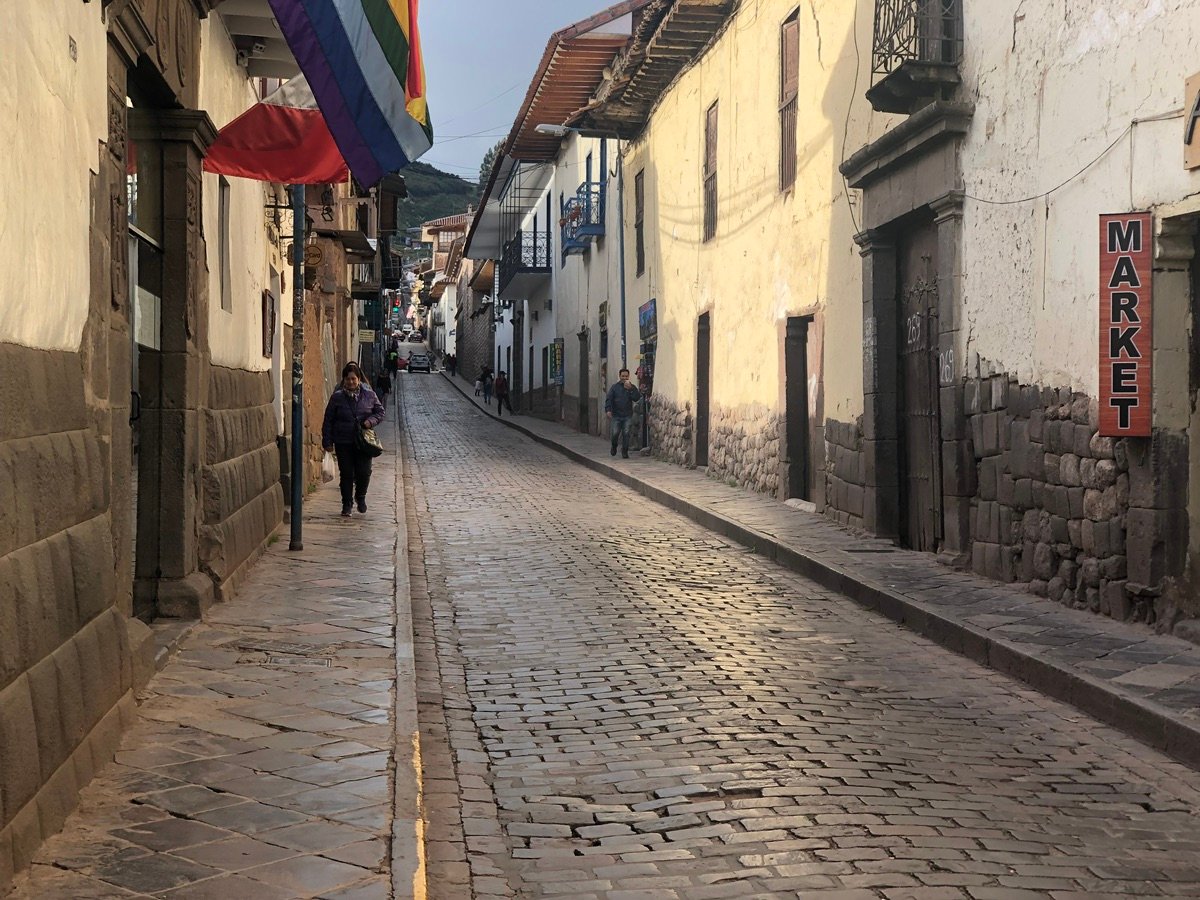
Suecia Street is nestled in the historic heart of Cusco, offering a wonderful example of how the former Inca capital transformed through the Spanish colonial era. The street’s foundations still hold Incan stonework, over which Spanish colonial architecture was built. It’s believed that this path was once part of an important route Incans used to reach major temples and plazas. Today, the street houses a mix of hostels, travel agencies, and local laundromats, catering to both tourists and residents.
Atmosphere
Suecia Street exudes a quiet, calm atmosphere, yet you can still feel the pulse of local life. In the early morning, foot traffic is sparse, and long shadows stretch across the cobblestones, creating a mystical beauty. As the day progresses, tourists and locals pass through, bringing more activity, but it never feels as crowded as the main thoroughfares. The rustic facades of the buildings on both sides have gained character over time, their rough-hewn beauty captivating visitors. Old wooden balconies and doors seem to quietly narrate stories of the past.
Best Timing
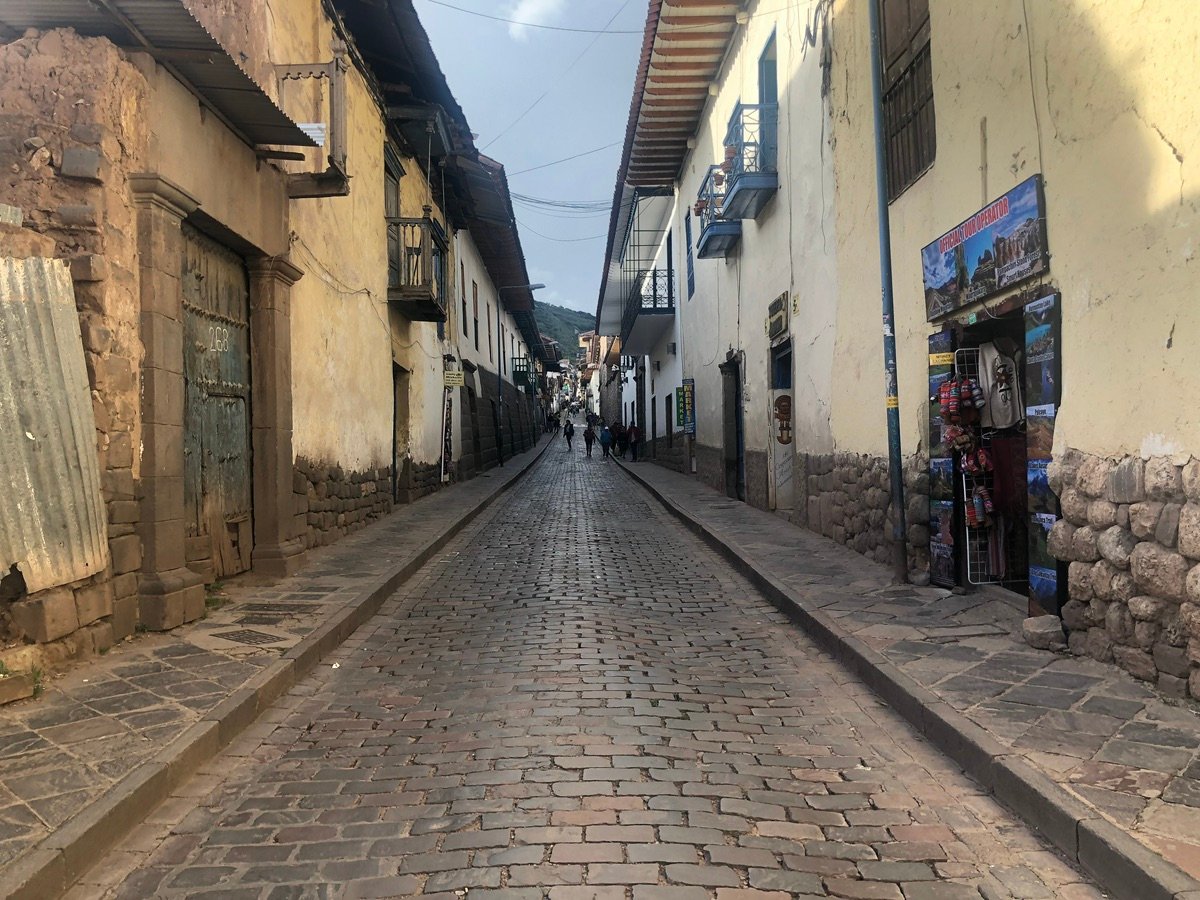
The best times to visit this street are early morning or dusk. In the early hours, you can observe the architectural details in the quiet serenity as Cusco begins to wake. Dusk is particularly picturesque for photography, as the setting sun bathes the entire street in warm, golden light. You avoid the strong midday sun and can enjoy a more dramatic scene.
Key Highlights
- Incan Stonework: The meticulously fitted Incan stonework visible at the base of the street’s buildings is a must-see.
- Cusco Flag: The colorful Flag of Cusco (Wiphala) displayed on the street symbolizes the region’s identity and pride.
- Colonial Architecture: The humble yet beautiful colonial buildings with their wooden balconies and heavy doors.
- Local Shops: You can catch glimpses of local life at travel agencies, laundromats, and small markets along the street.
Traveler’s Memo
Access
Suecia Street is just a few minutes’ walk from Plaza de Armas, Cusco’s main square. Be aware that many streets in Cusco are steep, so comfortable walking shoes are highly recommended.
Budget
The street itself is free to explore. If you buy snacks or drinks from small shops along the way, a few soles will suffice. Hostels and travel agencies will have varying prices.
Recommended Gourmet
While there aren’t many direct restaurants on this street, the surrounding area boasts many fantastic Peruvian eateries. Be sure to try Lomo Saltado (stir-fried beef and vegetables) or Aji de Gallina (creamy chicken stew). For the adventurous, Cuy (guinea pig) is also available.
Nearby Spots
- Plaza de Armas (Main Square): The heart of Cusco, featuring the Cathedral and Inca Museum.
- San Blas Neighborhood: A bohemian artist quarter with steep, charming streets and great views.
- Qorikancha (Temple of the Sun): One of the most important Inca temples, now fused with a Spanish church.