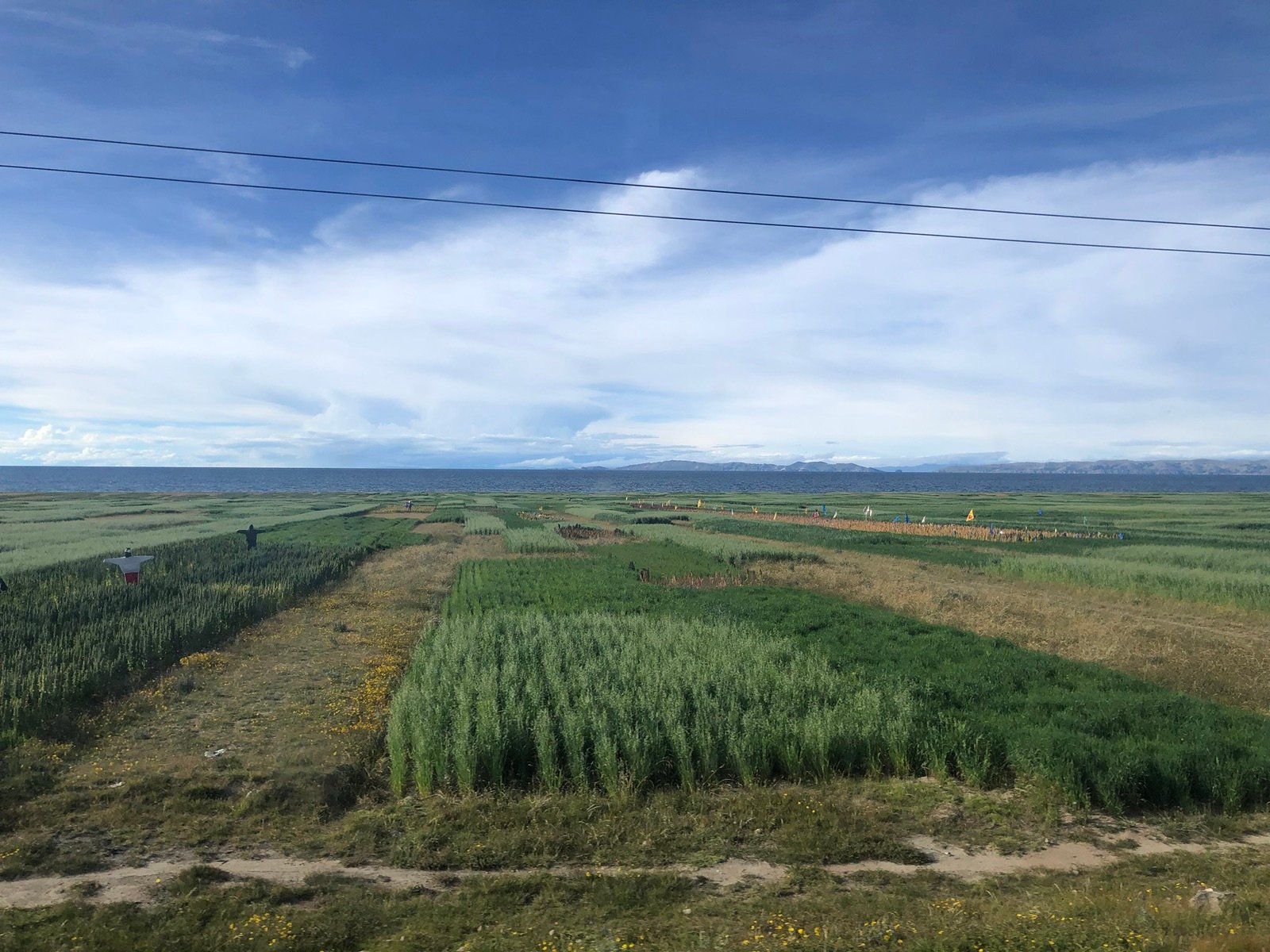
Nestled amidst the majestic Andes, Lake Titicaca, the world’s highest navigable lake, presents a breathtaking spectacle. The vibrant green fields stretching along its shores tell a story of a rich ecosystem and centuries of human life sustained in this remarkable place. The clear blue sky, fluffy clouds, and distant mountains further enhance the serene and expansive vista.
This location is more than just a pretty picture; it’s a living testament to ancient Inca culture and traditions, showcasing how local communities have thrived sustainably in this challenging environment. Particularly striking are the scarecrows and colorful flags erected to protect the crops from birds, hinting at the simple wisdom and aesthetic sense embedded in daily life.
Story: Andean Bounty and Ancient Wisdom
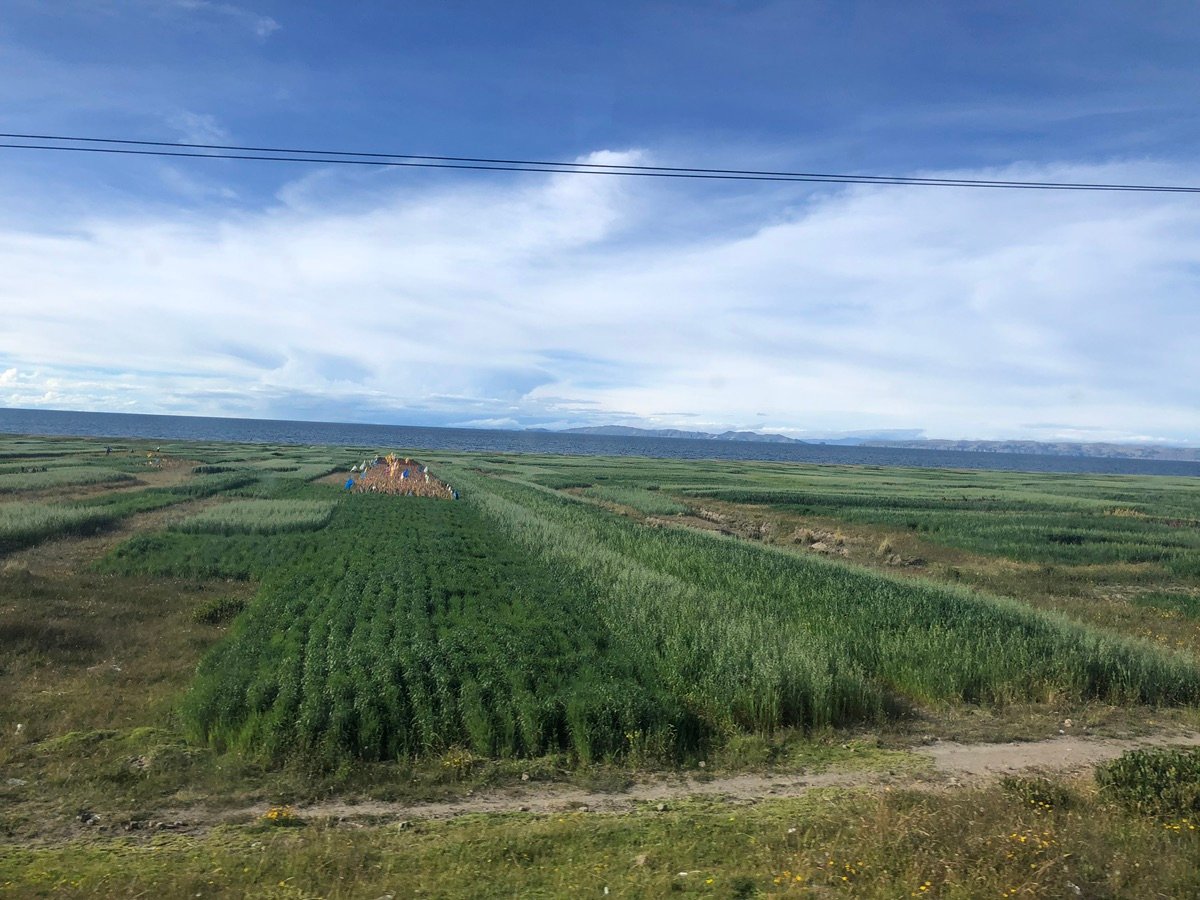
Despite the harsh environment at an elevation of approximately 3,800m (12,500 ft), the fields around Lake Titicaca have nourished local communities for thousands of years. These fields primarily cultivate Andean staples such as potatoes, quinoa, and corn. Traditional agricultural techniques, like terraced fields and artificial islands, continue to be employed to adapt to changes in the lake’s water level and ensure efficient cultivation.
The silhouettes of distant mountains and the expansive sky beyond the lake silently narrate the land’s ancient history and the stories of people who have lived in harmony with nature. Each small plot of land is a testament to the lives sustained by families and communities for generations, serving as a spiritual backbone of the Andes.
Vibes: Serenity and the Pulse of Life
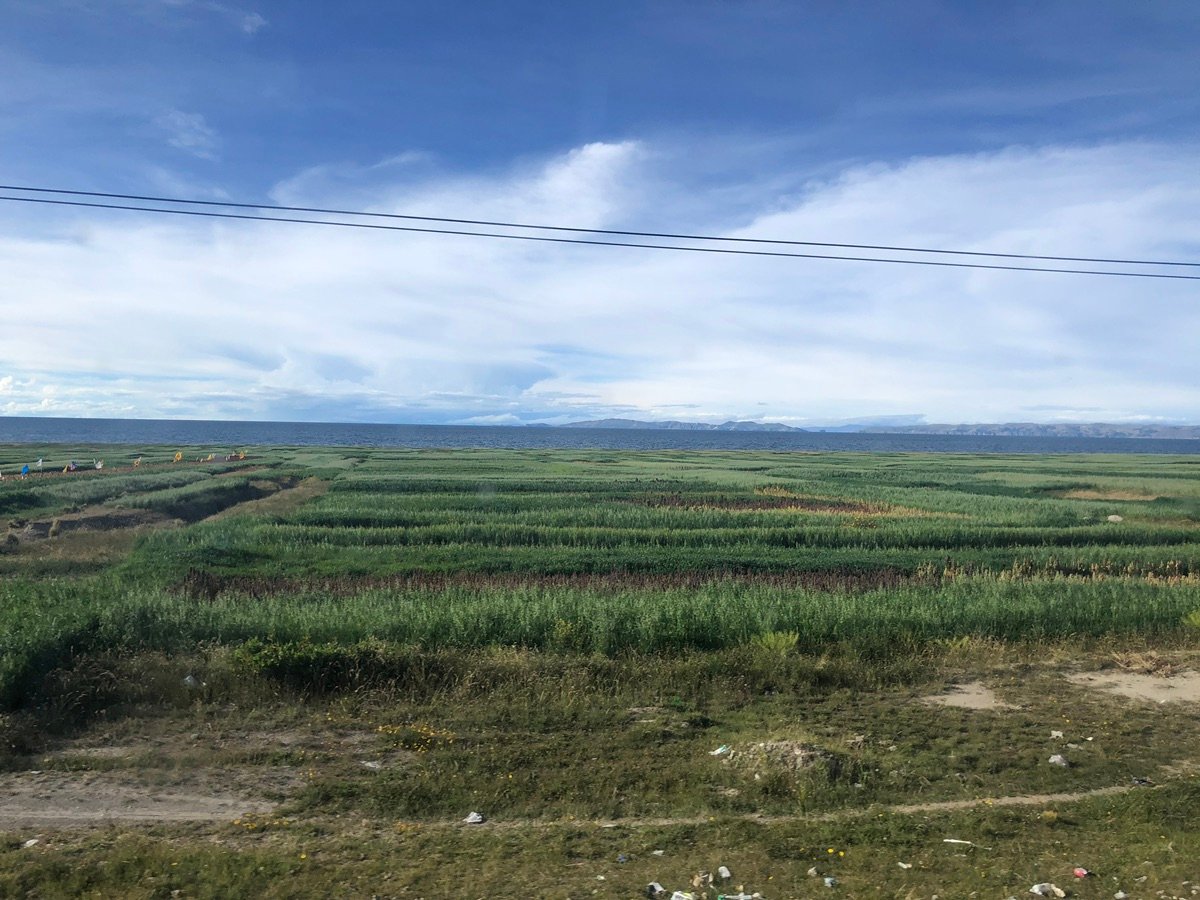
The atmosphere around Lake Titicaca is filled with an indescribable tranquility and peace. The blue sky reflected on the vast lake surface, the rustling sound of crops in the wind, and the distant chirping of birds all merge into one, calming the soul and allowing you to feel the pulse of the earth. The colors are vibrant yet blend into a rustic, subdued palette.
Watching the clouds slowly drift across the sky during the day makes time feel incredibly slow. This place is an ideal retreat for travelers seeking to escape urban hustle and connect with the roots of nature and culture.
Best Timing: Under the Clear Dry Season Sky
The best time to visit Lake Titicaca is generally during the dry season, from May to October. During this period, sunny days are frequent, highlighting the lake’s stunning blue and making distant mountains clearer. Low rainfall ensures comfortable exploration of the lakeside and boat tours. Early mornings and evenings are particularly recommended for photography, as the soft light creates a magical landscape.
However, due to the high altitude, even with strong sun during the day, mornings and evenings can be quite cold. Remember to pack warm clothing.
Key Highlights
- World’s Highest Navigable Lake: Be awestruck by its unique geographical status.
- Traditional Andean Agriculture: Experience ancient farming methods along the lake and the rich crops they yield.
- Scarecrows and Colorful Flags: Symbols of local life where simple wisdom and aesthetic sensibility coexist.
- Vast Natural Panorama: The magnificent blend of lake, sky, and mountains offers a refreshing escape.
- Cultural Depth: Engage with ancient Andean culture and the warm hospitality of the local people.
Traveler’s Memo
Access
Access to Lake Titicaca is primarily from Puno on the Peruvian side, or Copacabana on the Bolivian side. Bus travel is available between the two cities. From Puno, numerous boat tours depart to explore the surrounding islands.
Budget
Accommodation typically ranges from $20-40 per night for guesthouses and $50-100 for mid-range hotels. For food, local eateries may cost $5-10 per meal, while tourist-oriented restaurants might be $15-30. Lake tours generally cost $10-50, depending on the itinerary.
Recommended Gourmet
Around Lake Titicaca, fresh trout dishes are renowned. Available in various preparations, the Aji de Trucha (trout stew with chili sauce) is particularly exquisite. Also, be sure to try dishes made with locally grown quinoa and the wide variety of Andean potatoes. Aromatic coca tea is also recommended for altitude sickness prevention.
Nearby Spots
- Uros Floating Islands: Discover the unique culture of the Uros people, who live on islands made from totora reeds.
- Taquile Island: Known for its traditional textiles and distinct community culture, where men are famously seen knitting.
- Isla del Sol (Island of the Sun): Considered the birthplace of the Inca creation myth, featuring beautiful scenery and ancient ruins.