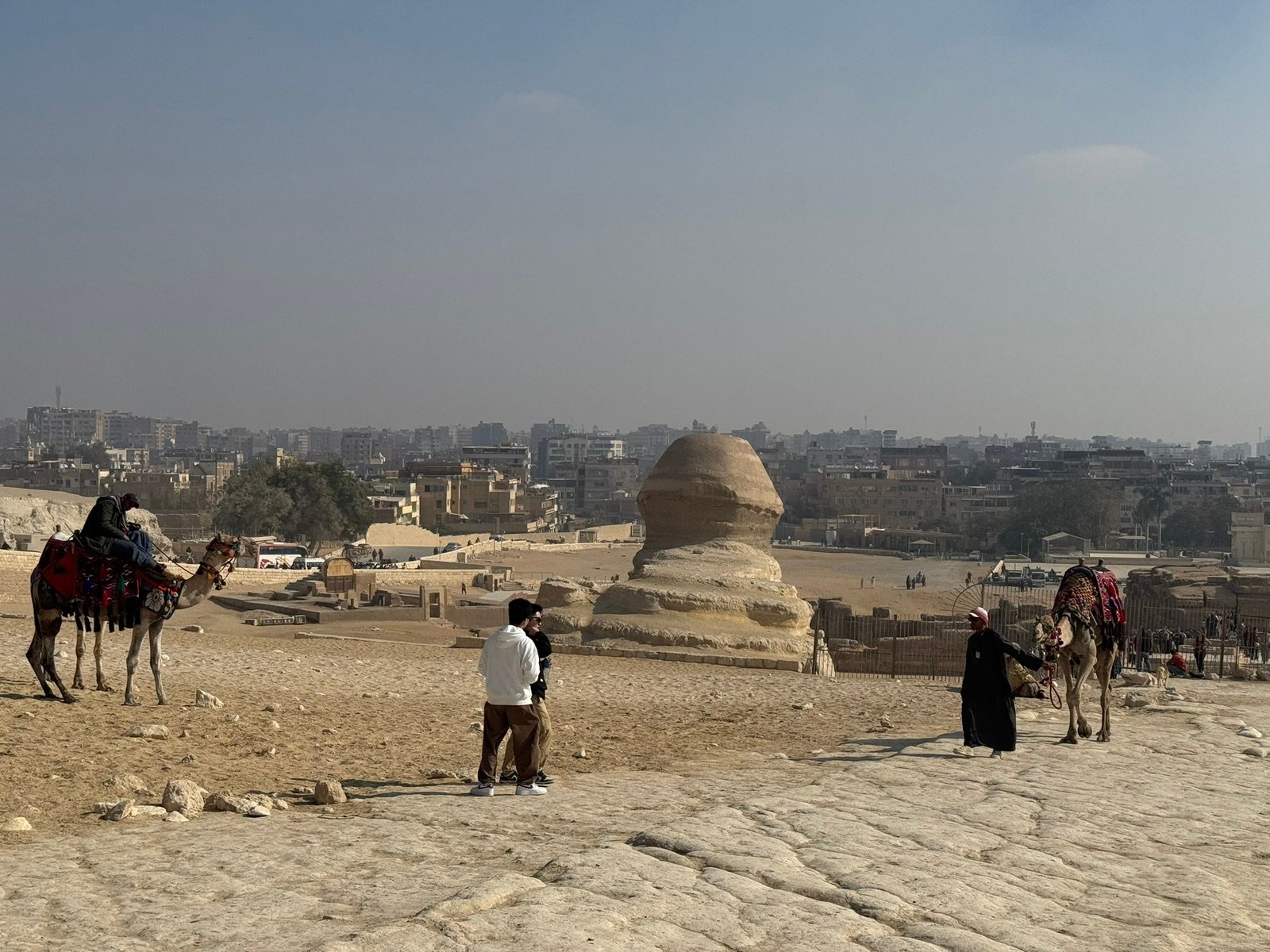
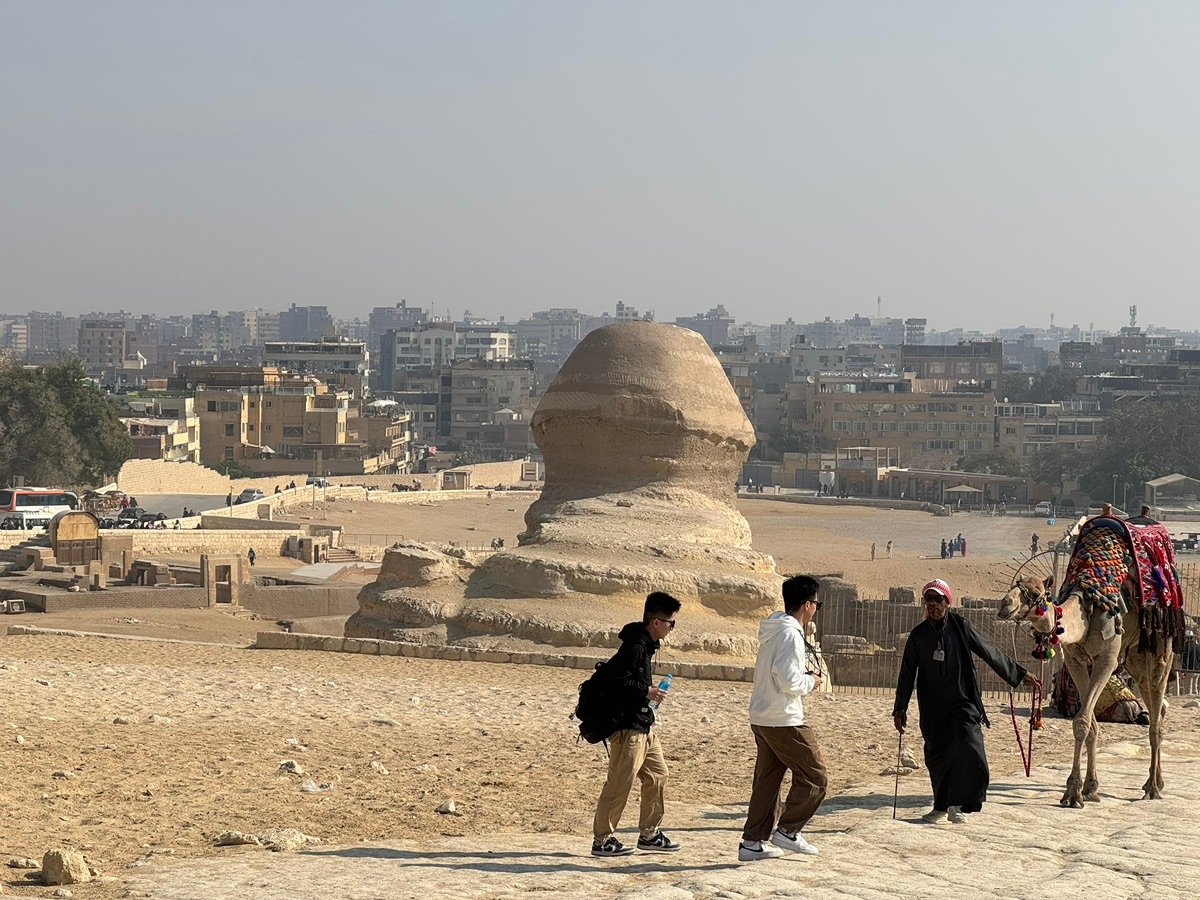
When you think of the Pyramids and Sphinx in Giza, it’s definitely an Egypt travel highlight, right? But what many people miss is this slightly elevated view from the Giza Plateau. You can see the Sphinx’s face, the sprawling Cairo skyline behind it, and the desert’s edge all at once. It’s a place where you truly feel the “living history” of the area.
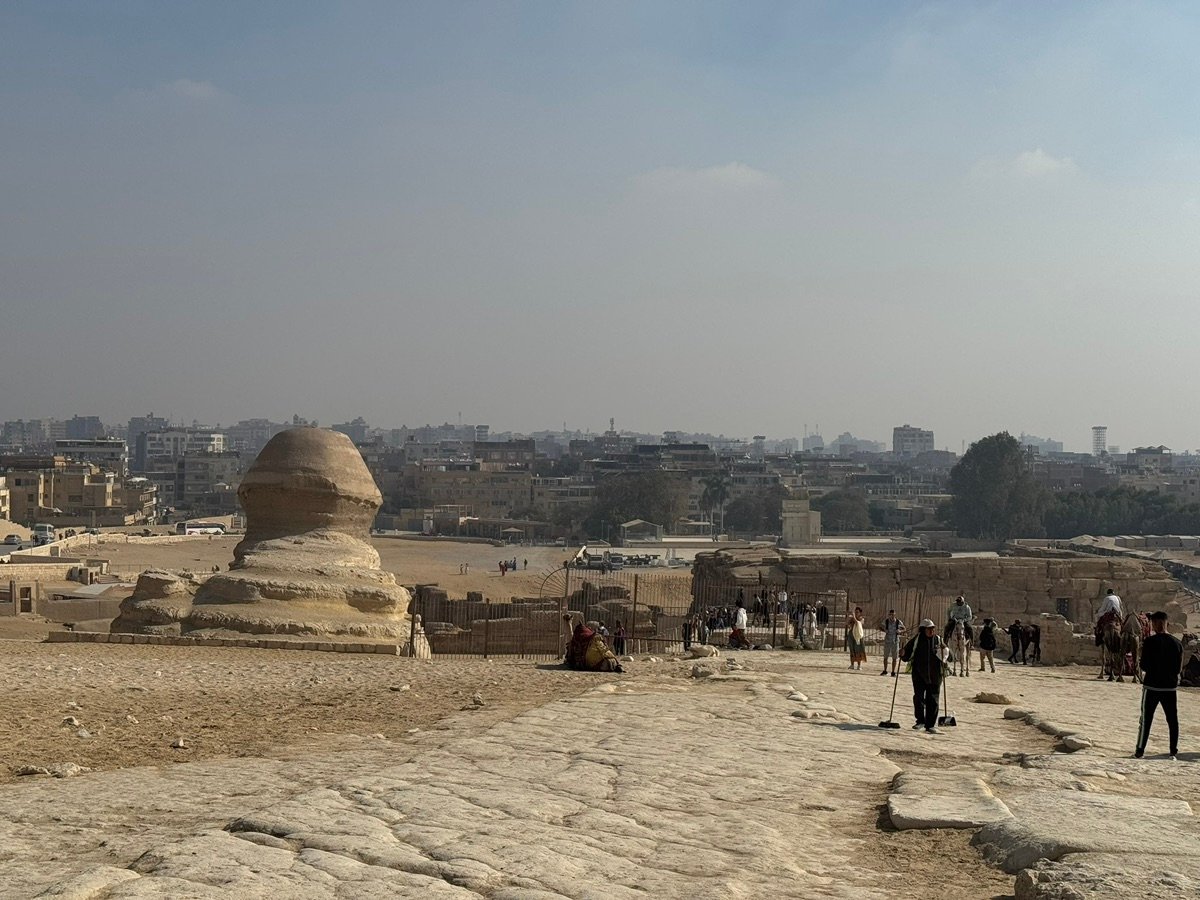
The Ancient Guardian’s Mystery Against a Modern Backdrop
The Great Sphinx, the oldest and largest stone statue in the world, looks just as majestic as in history books. But from this specific spot, you gain a deeper appreciation for its immense scale and the sheer “weight of history” it carries, having watched over the desert and the evolving city for centuries. The contrast between the desert sand and the bustling modern city of Cairo looming so close creates a uniquely Gizan spectacle. The Sphinx’s face clearly bears the marks of millennia of erosion, each telling a story of time gone by.
The Desert Breeze and a Sense of Timeless Scale
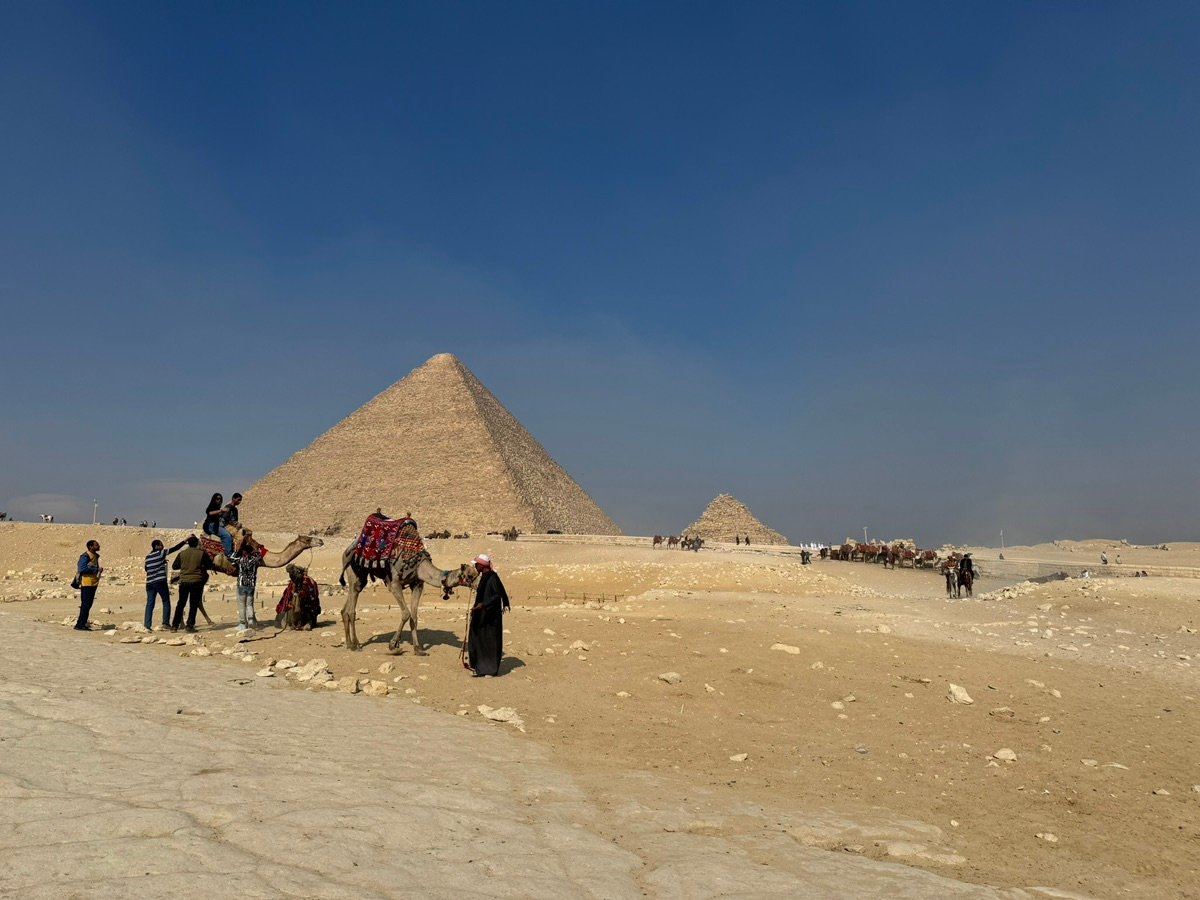
Standing on the Giza Plateau, the first thing that hits you is the sheer vastness. Then, the overwhelming scale of the Sphinx and Pyramids takes your breath away. Cairo, distant and hazy, seems to emphasize the temporal gap with the ancient monuments right before your eyes. The feeling of the sandstone ground beneath your feet and the dry wind brushing your cheeks truly makes you feel like you’re “in the middle of the desert.” Even with the sounds of tourists and camel ride hawkers, the inherent tranquility of this place remains.
Best Timing
If you’re going to visit this spot, I highly recommend going in the early morning. Aim to arrive right after opening, and you’ll find fewer tourists, allowing the soft, pre-sunrise light to beautifully illuminate the monuments. This not only helps you avoid the harsh midday sun and heat but also makes the Sphinx’s expression appear even more serene. Pro-tip: Arrive about 15 minutes before opening to get a head start on the ticket queue.
Must-See Details
- The Sphinx’s Expression and City Backdrop: From this elevated position, you get a unique angle that captures both the Sphinx’s face and the modern cityscape behind it. It’s a powerful blend of ancient and contemporary.
- The Texture of the Weathered Stone: Get close enough (or zoom in) to appreciate the natural textures of the Sphinx’s rock surface, shaped by millennia of exposure to wind and sand.
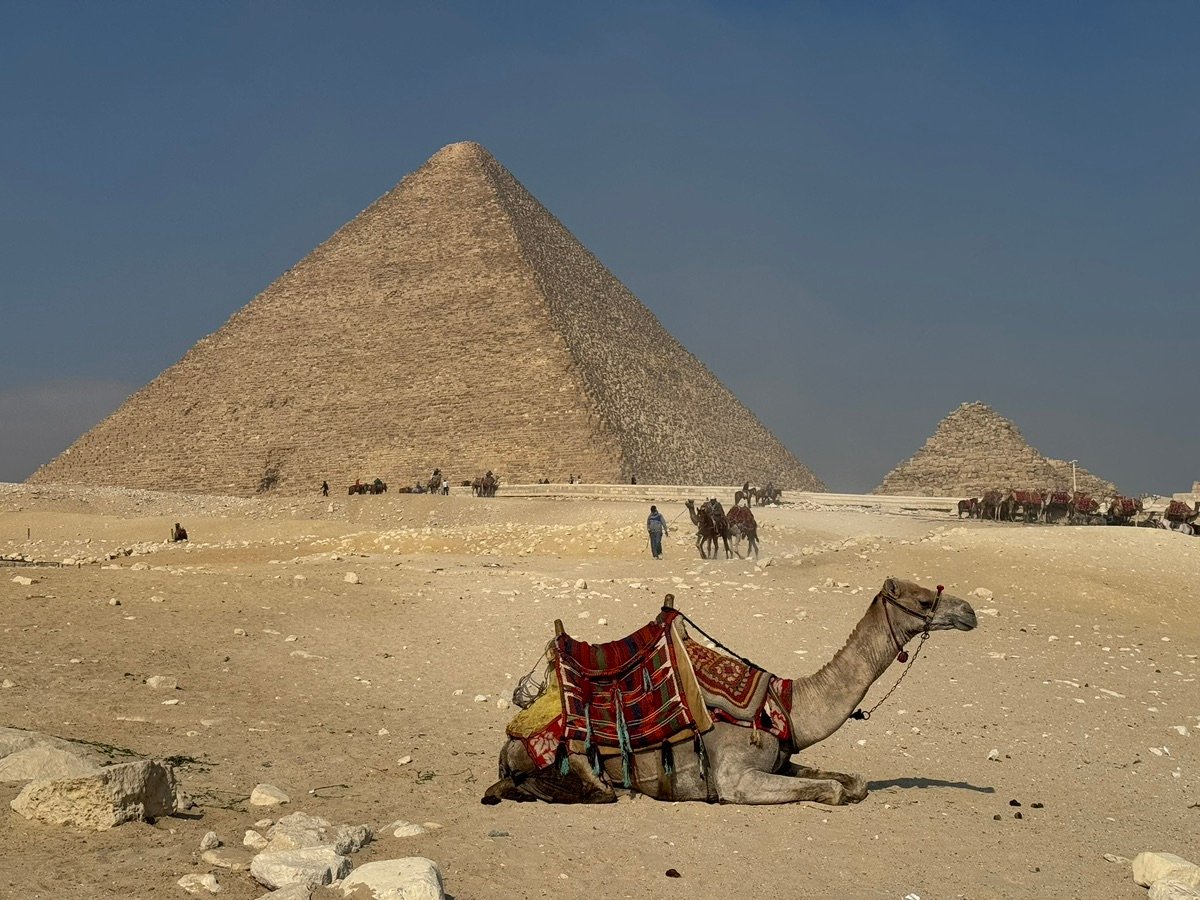
- The Scene of Camels and People: The sight of camel caravans and the mix of tourists and locals creates a scene straight out of a movie.
- A Glimpse of the Pyramids: Shift your gaze slightly to the right, and you’ll catch a view of the famous pyramids. It’s fascinating to see their overall arrangement from here.
Traveler’s Memo
Access
From downtown Cairo to the Giza Plateau, a taxi or ride-sharing app (Uber or Careem) is the most convenient option. Travel time can vary depending on traffic, but usually takes around 30 minutes to 1 hour. There are several entry gates; choosing one that offers good access to the “Sphinx viewpoint” is advisable.
Budget
The entrance fee for the Giza Pyramids and Sphinx area is approximately 540 EGP (Egyptian Pounds) for foreigners. Camel rides cost extra, and it’s crucial to negotiate the price beforehand. While prices vary for tourists, you can often negotiate for around 200-500 EGP per person. Don’t forget a tip (baksheesh).
Recommended Gourmet
Around the Giza Plateau, you’ll find many tourist-oriented restaurants. However, for a more local experience, try some street food like Ful Medames (stewed fava beans) or Ta’ameya (Egyptian-style falafel) from stalls frequented by locals. Back in central Cairo, you’ll find numerous Koshary shops, a quintessential Egyptian dish.
Nearby Spots
- Pyramids of Giza: Of course, this is a must-visit alongside the Sphinx. Prepare to be awestruck by their colossal size.
- Solar Boat Museum: Located near the pyramids, it houses Khufu’s solar boat. It’s an incredible display of ancient Egyptian engineering.
- Pyramids Panorama Viewpoint: The Giza Plateau also has an excellent panoramic spot where you can capture all three pyramids in a single shot.
FAQ
Is it safe to walk around the Giza Plateau alone?
During the day, with many tourists around, it’s relatively safe. However, persistent hawkers are common, so be mindful of your belongings and maintain a firm demeanor.
What should I be aware of when taking a camel ride?
Always negotiate the price beforehand and confirm if tips are included. There have been reports of tourists being asked for excessive extra fees when dismounting.
Are there any photography restrictions at the Giza Plateau?
Generally, personal photography is allowed, but some specific areas or exhibits might have restrictions. Drone usage is strictly prohibited.
What’s the best attire for visiting the Sphinx?
Since it’s a desert area, the sun is strong, and the ground is uneven. Comfortable, sun-protective clothing and walking shoes are recommended. A hat and sunglasses are essential, especially in summer.
How much time should I allocate for visiting the Giza Plateau?
To thoroughly explore the Pyramids and Sphinx, I recommend allocating at least 2-3 hours. If you plan on a camel ride or visiting museums, it could take up to half a day.