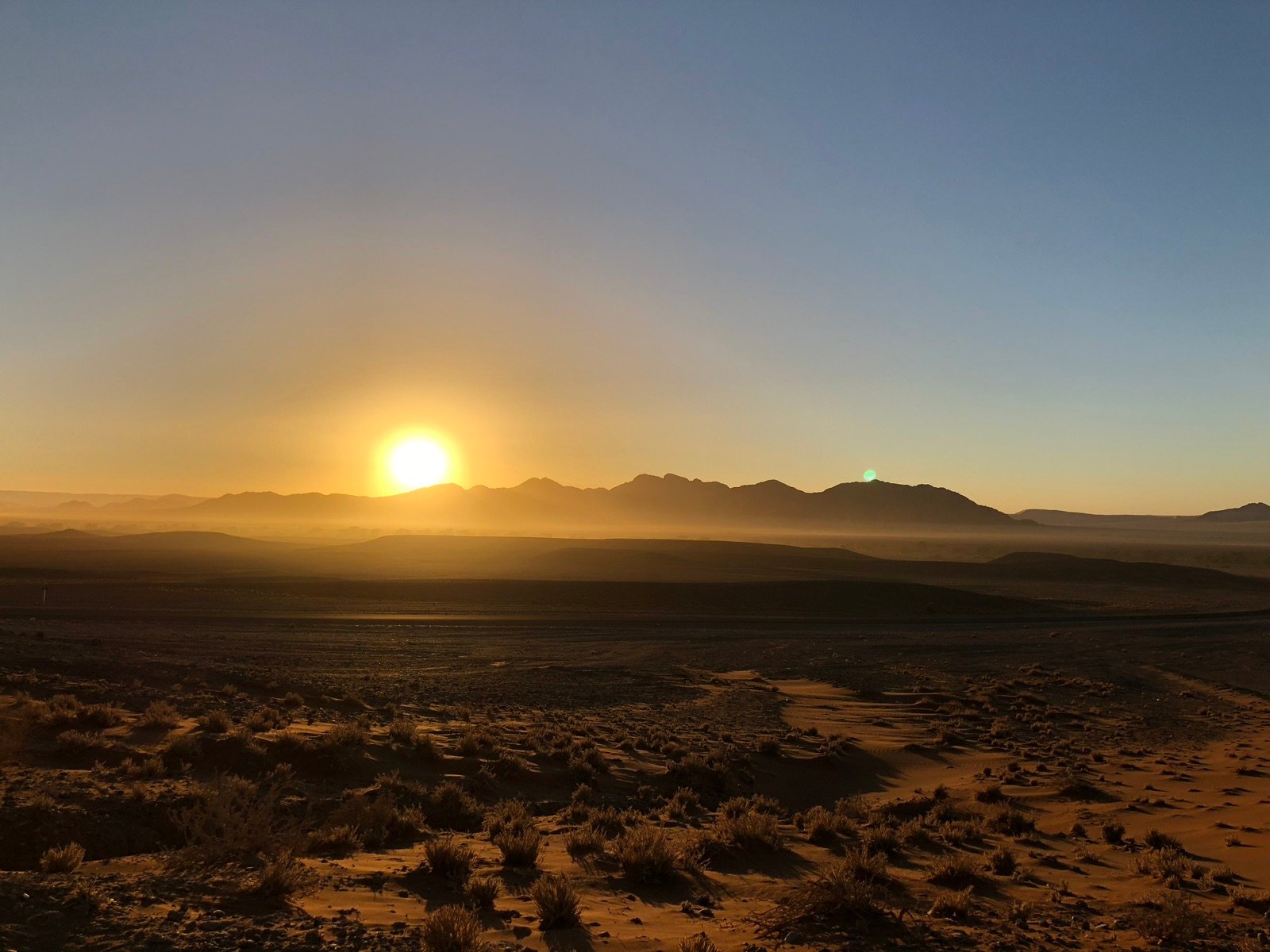
I stumbled upon an incredible sunrise in the Namib Desert, Namibia. The sun, as it emerged from behind the distant mountains, painted the entire landscape in vibrant oranges and golds. From the sky to the sandy ground, the sheer expanse of that light was breathtaking. This specific spot, where the mountains are prominent, is perfect for soaking in the quiet grandeur.
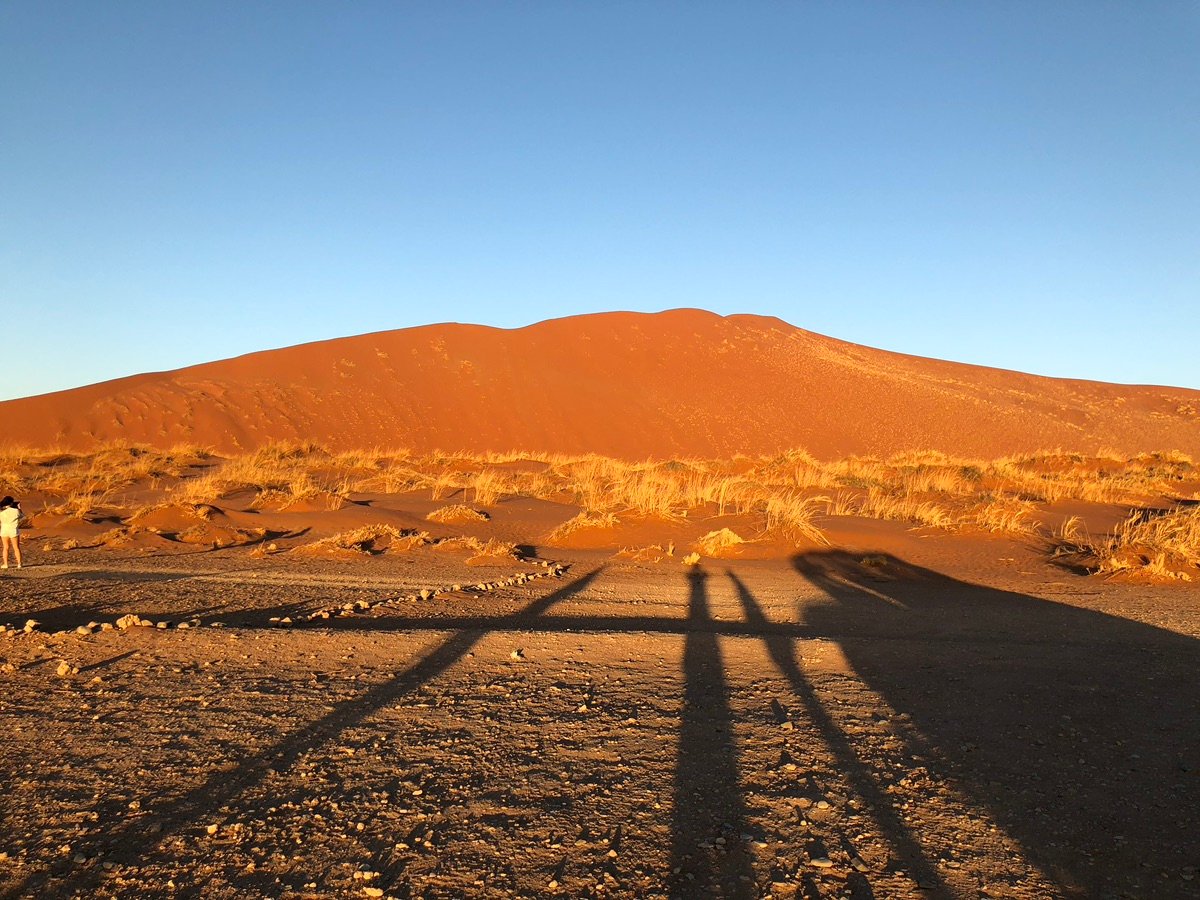
The Morning Light on Ancient Sands
This particular area is part of the vast Namib Desert, formed over millions of years, with its distinctive eastern mountain range. Because it’s so deep in the desert, there’s zero artificial light, which means clear starry nights and unobstructed sunrises. The unique geological formations of the dunes and the silhouettes of the distant mountains hint at the desert’s ancient history. Watching the sky slowly shift from deep indigo to vibrant orange and then pure gold is just stunning. You can feel the desert gently coming alive in the crisp morning air.
The Immense Scale of Morning
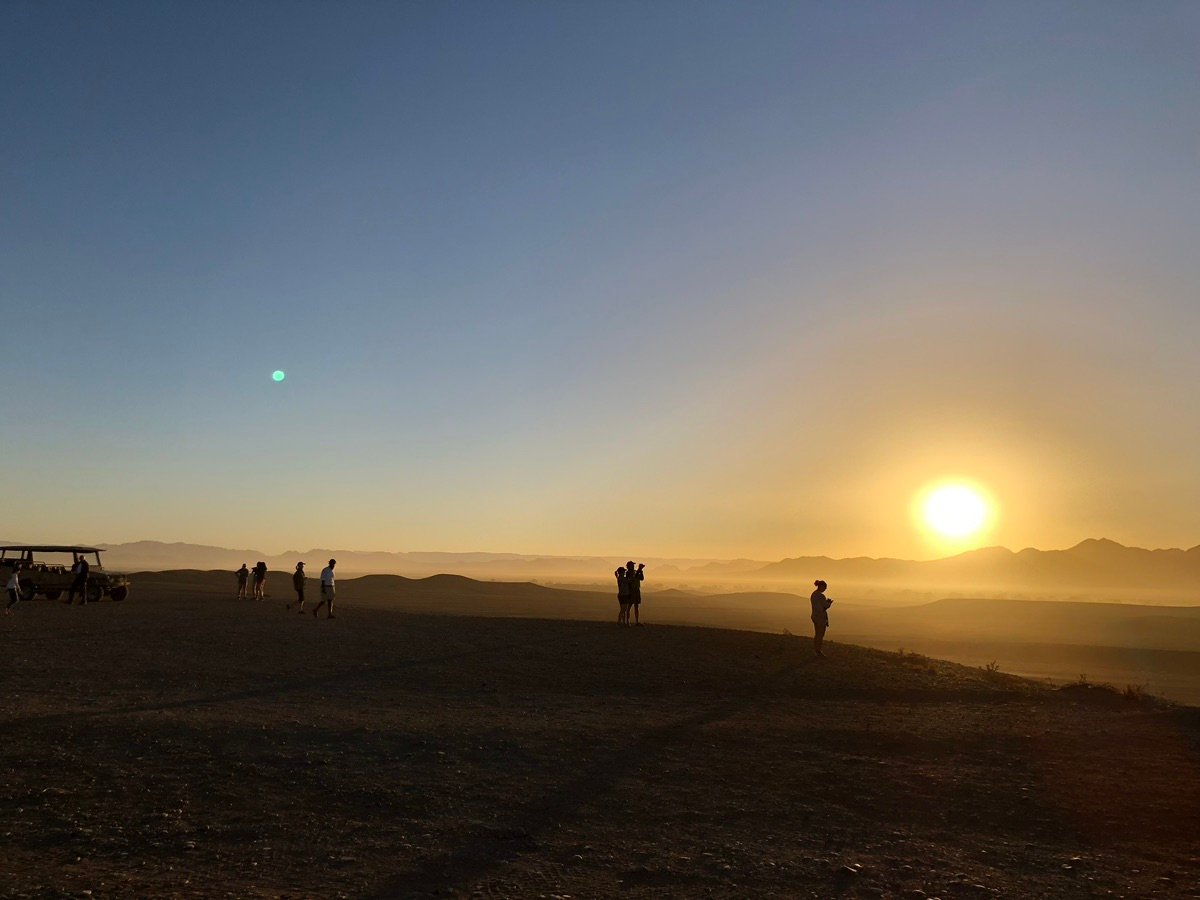
Standing in the Namib Desert at sunrise, you really get a sense of its incredible scale. There’s no sound, just the occasional whisper of the wind, as an endless sea of sand and rock stretches out before you. As the sun climbs, the colors of the sky and the desert blend into a painting-like gradient. The early morning air is still cool, adding to the refreshing feel of this unique experience. Seeing the horizon stretch so far makes you feel small in the best way, and completely reconnected to the raw power of nature.
Best Timing for Golden Hues
If you’re visiting this sunrise spot, I highly recommend arriving about 15 minutes before the actual sunrise. The ‘magic hour’ before the sun fully appears, when the sky shifts from deep blue to orange, is absolutely essential viewing. The most vibrant and dramatic scene unfolds in the few minutes immediately after the sun completely clears the mountain peaks. Pro-tip: Confirm sunrise times with your lodge or guide and plan to leave early. It gets extremely hot during the day, so enjoying the cooler morning hours is key.
Details to Catch Your Eye
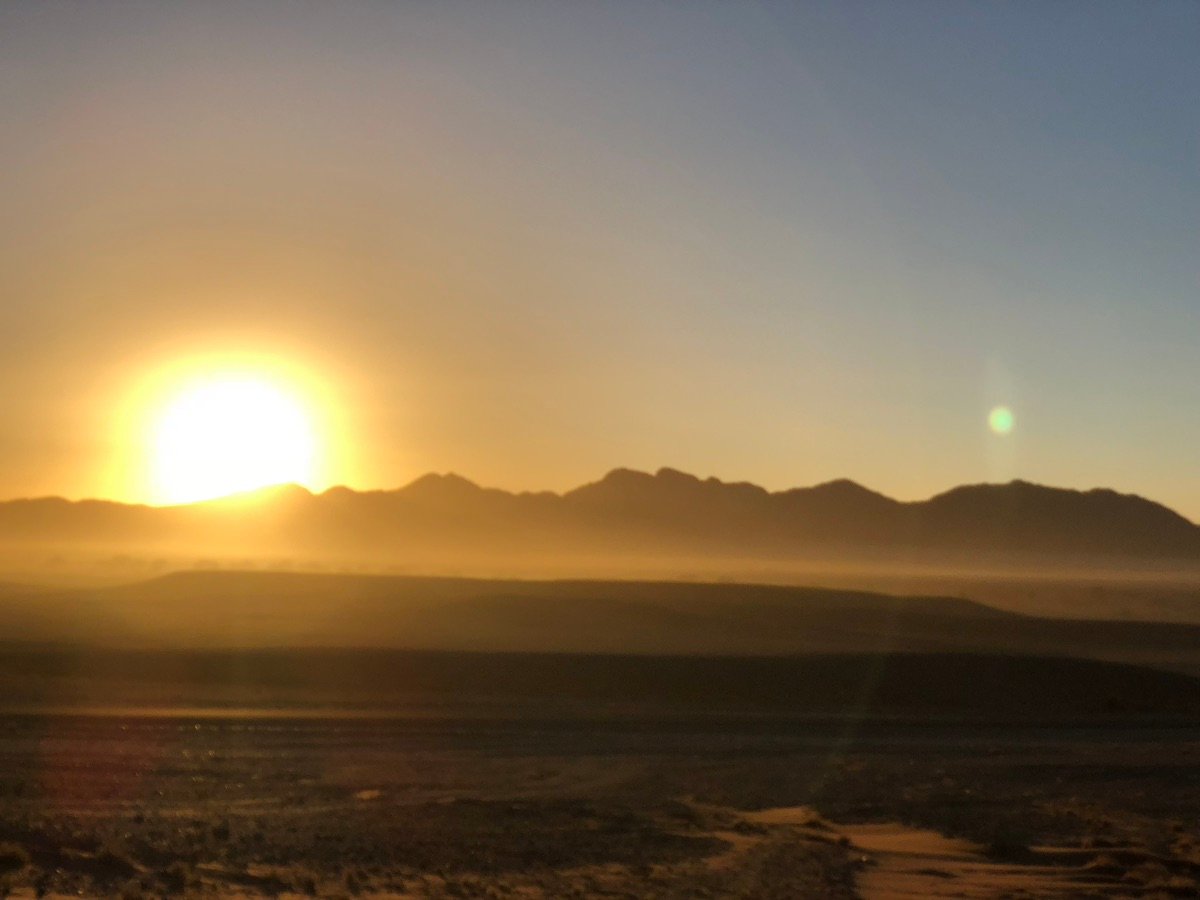
- The Evolving Sky: The gradients in the sky just before and after sunrise are a natural masterpiece. Take your time to watch the colors change from blue to purple, pink, orange, and gold.
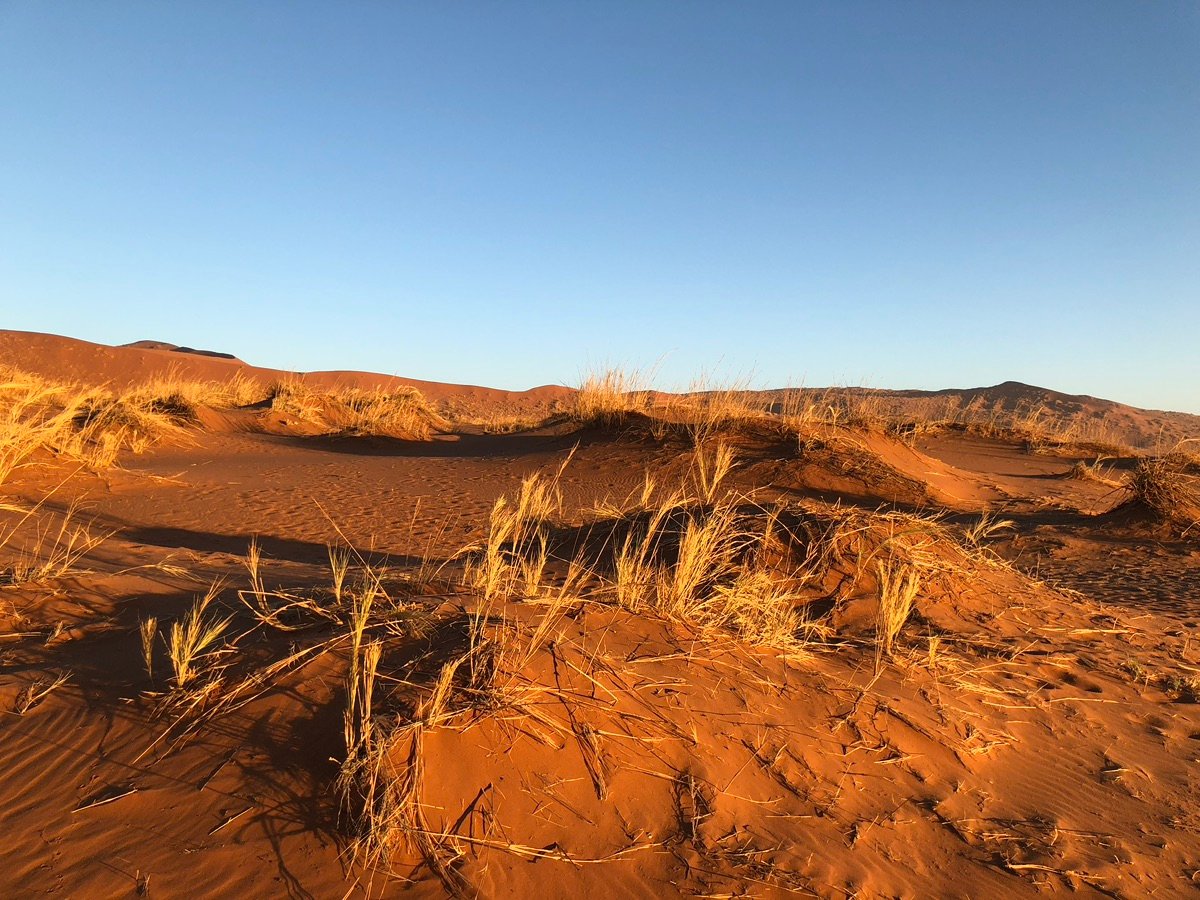
- Desert Shadow Play: As the sun rises, the shadows cast by the dunes and mountains constantly shift and change length. This movement gives the desert terrain a dynamic, three-dimensional quality.
- Distant Mountain Silhouettes: The mountain range stretching across the horizon looks like a grand, painted screen. On misty mornings, this view becomes even more ethereal.
- Tiny Life Below: Even in this arid desert, resilient shrubs and grasses thrive. Catching these small plants glistening with morning dew in the sunlight is a beautiful detail often overlooked.
Traveler’s Memo
Access
The Namib Desert is vast, so most visitors fly from Windhoek to Sesriem Airport, then access via rental 4×4 vehicle or guided tour. A 4×4 is often essential for reaching spots like this sunrise viewpoint, so check in advance. Lodges around Sesriem are the most common accommodation option.
Budget
Airfare and accommodation in Namibia vary by season, but desert tours typically cost around US$100-200 per day. If renting a car, 4×4 vehicles are more expensive than regular cars, and fuel consumption should be considered. National park entrance fees are also separate.
Recommended Gourmet
There are no dining facilities at the sunrise spot itself, but lodges around Sesriem offer Namibian cuisine. I recommend trying bush meat (wild game) and dishes made with fresh local ingredients. For early morning sunrise viewing, bringing a breakfast box and warm drinks provided by your lodge is a great idea.
Nearby Spots
- Dune 45: An iconic sand dune in the Namib Desert, especially popular for sunrise viewing.
- Deadvlei: A white clay pan dotted with ancient, dead acacia trees creating a hauntingly beautiful landscape.
- Sesriem Canyon: A narrow canyon formed by millions of years of erosion, perfect for a short hike.
FAQ
What’s the best time of year to see the sunrise in the Namib Desert?
The dry season from May to September is ideal, as temperatures are more moderate, and nights are cool.
Do I need warm clothes while waiting for the sunrise?
Yes, desert mornings can be quite cold, so it’s advisable to bring a warm jacket and perhaps a blanket.
Are the roads to the sunrise spot paved?
Most roads to sunrise viewpoints are unpaved and often require a 4×4 vehicle. Consider joining a tour or renting an appropriate vehicle.
Are there restrooms available at the sunrise viewing spots?
Generally, there are no restroom facilities at the sunrise spots. Plan to use facilities at your lodge before departing or bring portable options.
Any tips for photographing the sunrise?
Use a wide-angle lens to capture the expansive view, bring a tripod for stability, and start shooting during the magic hour before the sun appears.