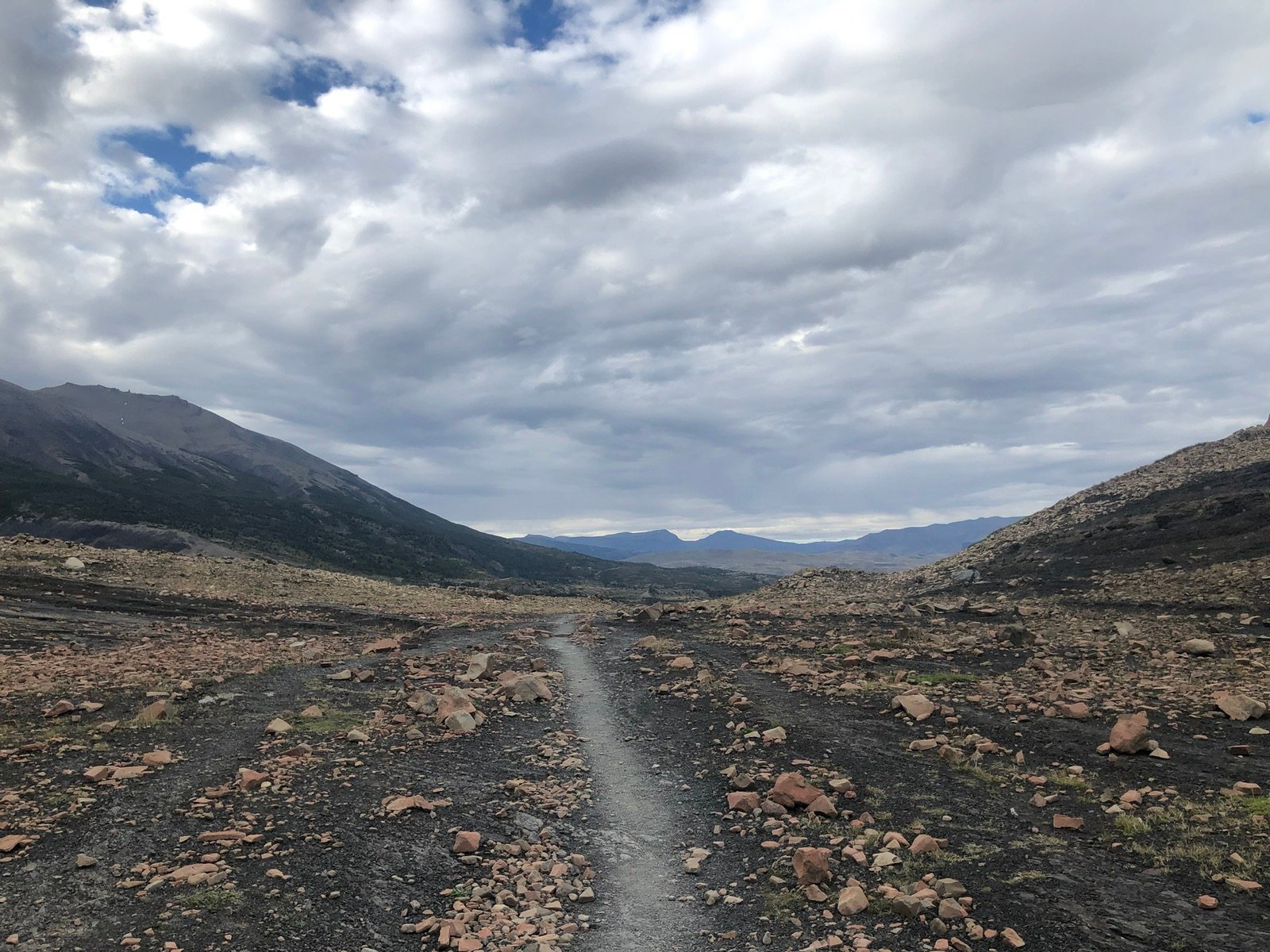
For anyone who dreams of experiencing Patagonia’s raw beauty, the winding path seen here is an iconic invitation. This specific stretch is part of the legendary W Trek within Torres del Paine National Park in Chile, a journey that promises dramatic mountainscapes and a deep connection with nature.

Where Ancient Glaciers Carved a Path for Modern Wanderers
This landscape tells a story of immense geological forces. Millennia ago, powerful glaciers sculpted these valleys, leaving behind the dark, rocky soil and scattered boulders. The distinct reddish hue of some rocks is a testament to the mineral composition, hinting at the earth’s ancient past. Even the seemingly barren slopes on the right might bear the marks of past natural events, like fires or heavy erosion, continually reshaping this dynamic environment. Today, this path, meticulously maintained by park authorities, guides adventurers through a wilderness that has largely resisted human alteration, offering a profound sense of stepping back in time.
The Grandeur of Silence and Sky
Standing on this trail, the overwhelming feeling is one of vastness. The sky, often a dramatic canvas of shifting clouds as seen here, feels expansive, making you feel small yet incredibly present. The air is crisp, carrying the scent of earth and sometimes, if you’re lucky, the distant freshness of melting snow. The crunch of gravel underfoot is often the only sound, punctuated by the wind whispering through the valleys. The scattered red rocks against the dark ground create a striking contrast, a natural mosaic underfoot that keeps your eyes engaged even as the towering mountains dominate the horizon.
Best Timing for the Patagonian Wilderness
The best time to trek the W Trek is during the Patagonian summer, from November to March. This period offers the longest daylight hours and the most stable weather, though Patagonia’s weather is famously unpredictable year-round. While summer brings more visitors, the sheer scale of the park ensures moments of solitude.
Pro-tip: Start your day’s hike early, ideally before 8 AM. This allows you to avoid peak crowds on the narrower sections of the trail and gives you more flexibility to navigate any sudden weather changes or simply take your time enjoying the views.
Must-See Details Along the Trek
- The Trail’s Texture: Pay attention to the variety of the path itself – from compacted earth to loose scree and rocky sections. Each step connects you directly to the raw geology.
- Geological Diversity: Observe the contrasting colors of the rocks and soil. The reddish boulders are often granite or metamorphic rocks, distinct from the darker, sometimes volcanic, ground.
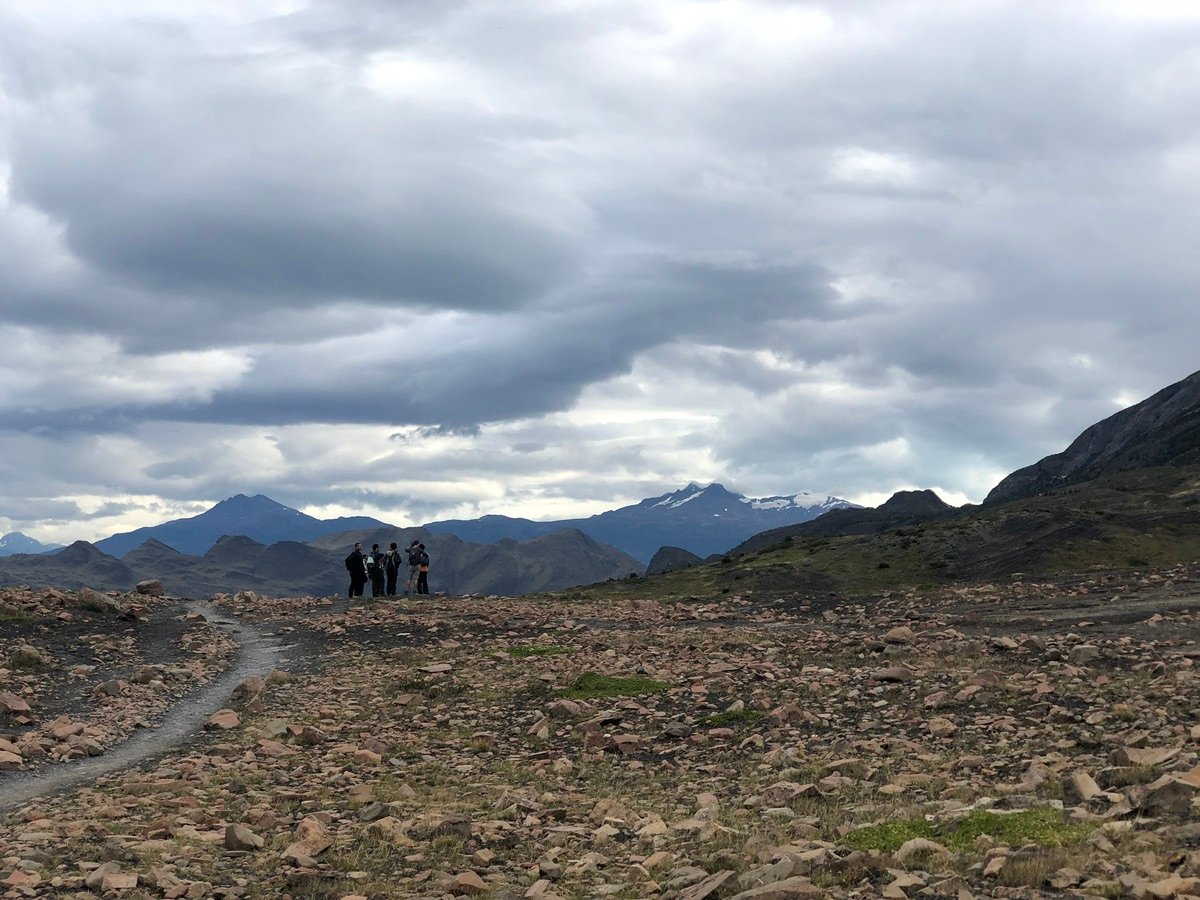
- Cloud Formations: The Patagonian sky is a constant spectacle. Watch how the clouds play across the mountain peaks, creating ever-changing light and shadow.
- Distant Peaks: Even on a cloudy day, glimpses of distant peaks, often snow-capped, offer a sense of the immense scale of the Andes mountain range.
- Resilience of Life: Notice the sparse, hardy vegetation clinging to life among the rocks. These plants are survivors, adapted to extreme conditions.
Traveler’s Memo
Access
The primary gateway to Torres del Paine National Park is Puerto Natales, Chile. From there, public buses or private transfers operate regularly to the park’s various entrances, such as Laguna Amarga or Pudeto. The W Trek requires several days, typically 4-5, staying in refugios (mountain lodges) or designated campsites along the route. Reservations for both accommodation and park entry are mandatory and must be made well in advance, especially for peak season.
Budget
Trekking the W Trek can be expensive due to park entry fees, transport, and accommodation. Park entry is around CLP $35,000 (approx. USD $45) for foreigners. Refugio beds can range from USD $40-100 per night, while campsites are cheaper, about USD $20-40 per night (without gear rental). Food in refugios is also costly; many trekkers save money by carrying their own supplies. Expect a total budget of USD $500-1000+ for a 5-day trek, depending on your choices.
Recommended Gourmet
While on the W Trek, gourmet experiences are limited to what you carry or what’s available at the refugios. However, don’t miss the chance to try a hearty “Estofado de Cordero” (lamb stew) or a simple but satisfying “Cazuela” (Chilean stew) at one of the refugios if they offer it. After your trek, back in Puerto Natales, indulge in fresh Patagonian seafood or a traditional “Asado al Palo” (spit-roasted lamb), a true regional specialty.
Nearby Spots
- Mirador Las Torres: The iconic viewpoint for the three granite towers themselves, often the grand finale or starting point of the W Trek.
- Grey Glacier: A stunning blue glacier at the western end of the W Trek, offering boat trips or kayak excursions among icebergs.
- Lago Pehoe: Famous for its incredibly vibrant turquoise waters and dramatic views of the Paine Massif.
- Punta Arenas: A larger city further south, offering connections to other parts of Patagonia and opportunities to visit penguin colonies.