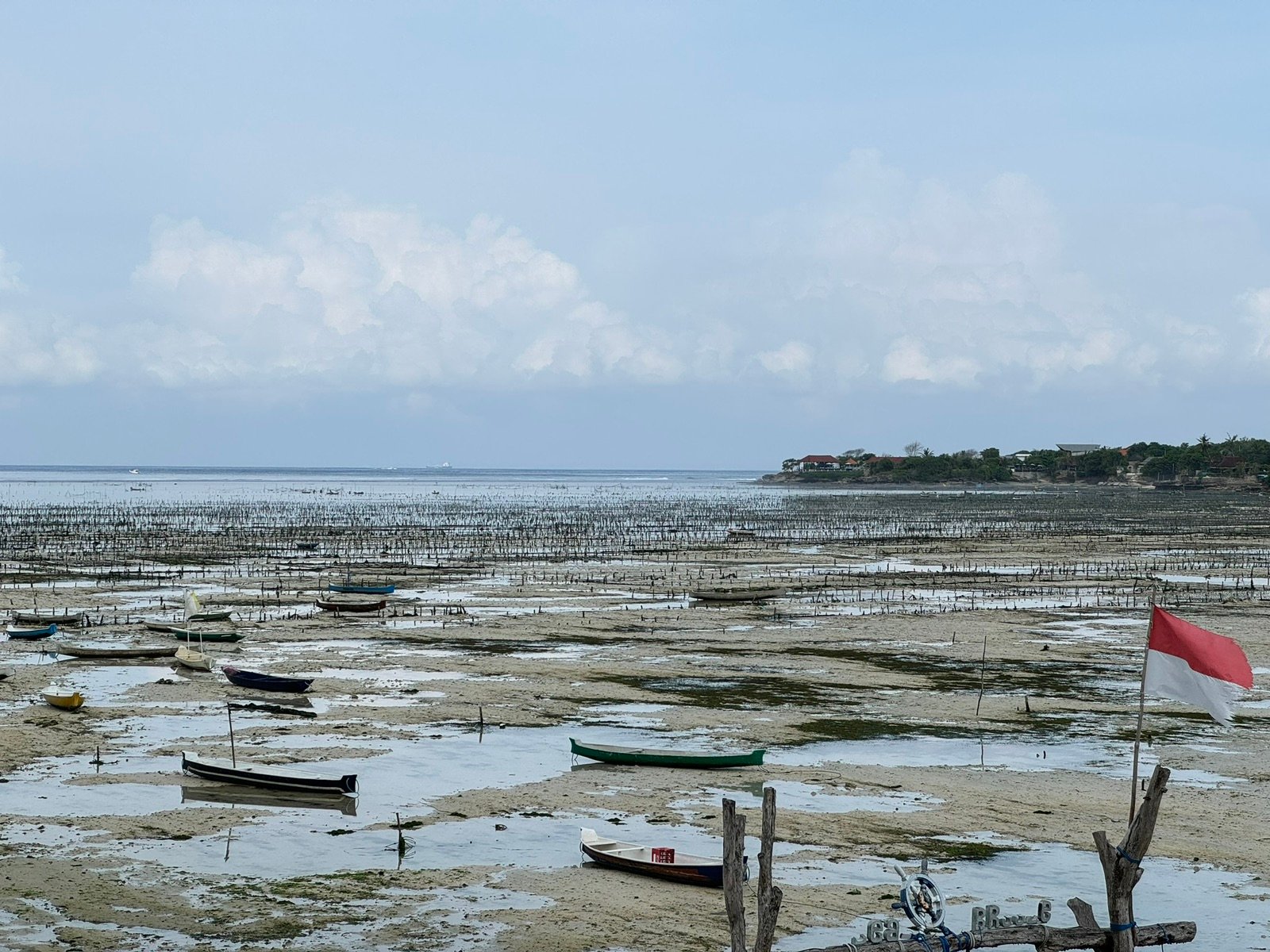
Ever seen a landscape that changes completely with the tide? That’s exactly what you’ll find at the Nusa Lembongan Seaweed Farms in Indonesia. What looks like a vast, watery field at high tide transforms into an intricate pattern of poles and stranded boats during low tide, revealing the island’s most iconic industry.
The Island’s Green Gold: A Timeless Tradition
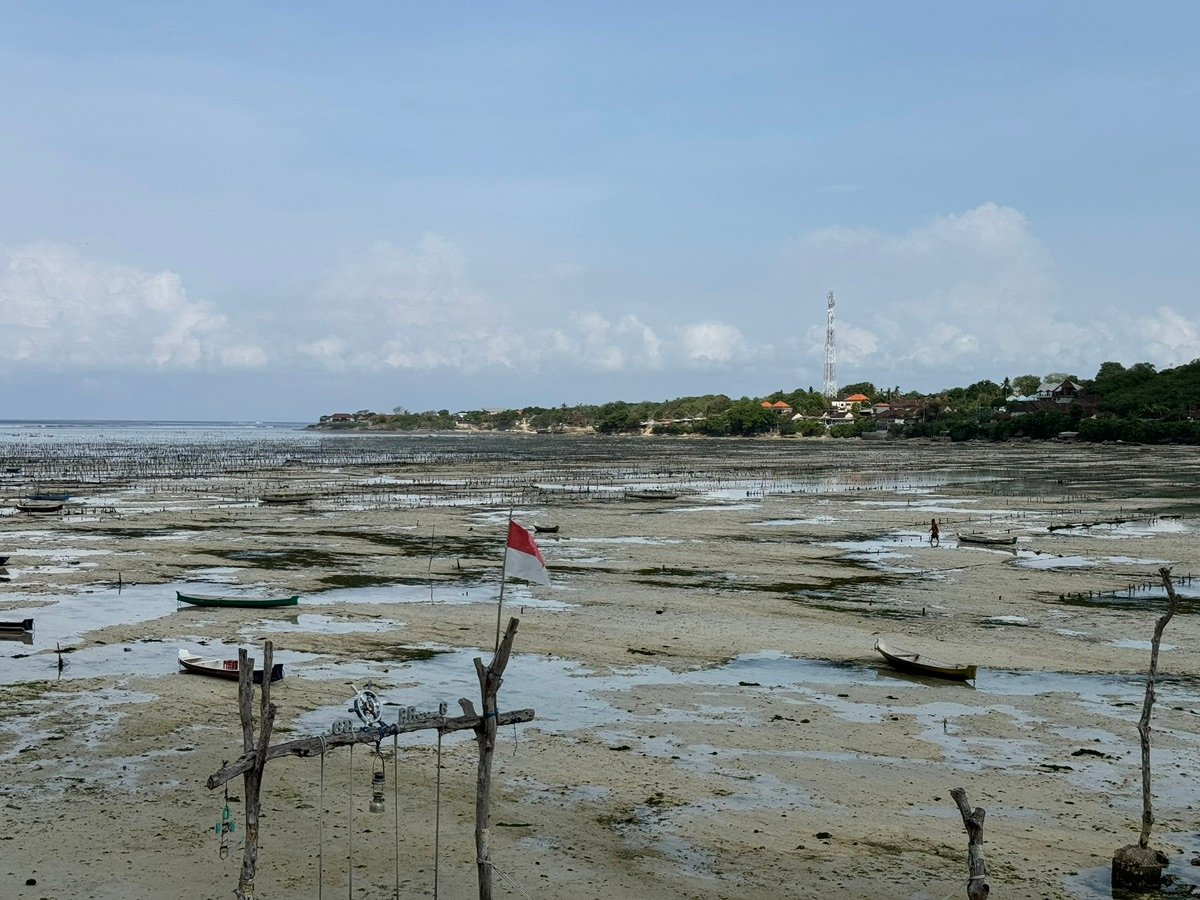
Long before tourism became a major draw, seaweed farming was the backbone of Nusa Lembongan’s economy. The local villagers have been cultivating seaweed for generations, using traditional methods passed down through families. They plant the seaweed on lines tied to wooden poles, waiting for the low tide to tend to their crops. It’s not just a livelihood; it’s a way of life that dictates the rhythm of the island, deeply connecting the community to the ocean.
The Quiet Hum of a Working Coastline
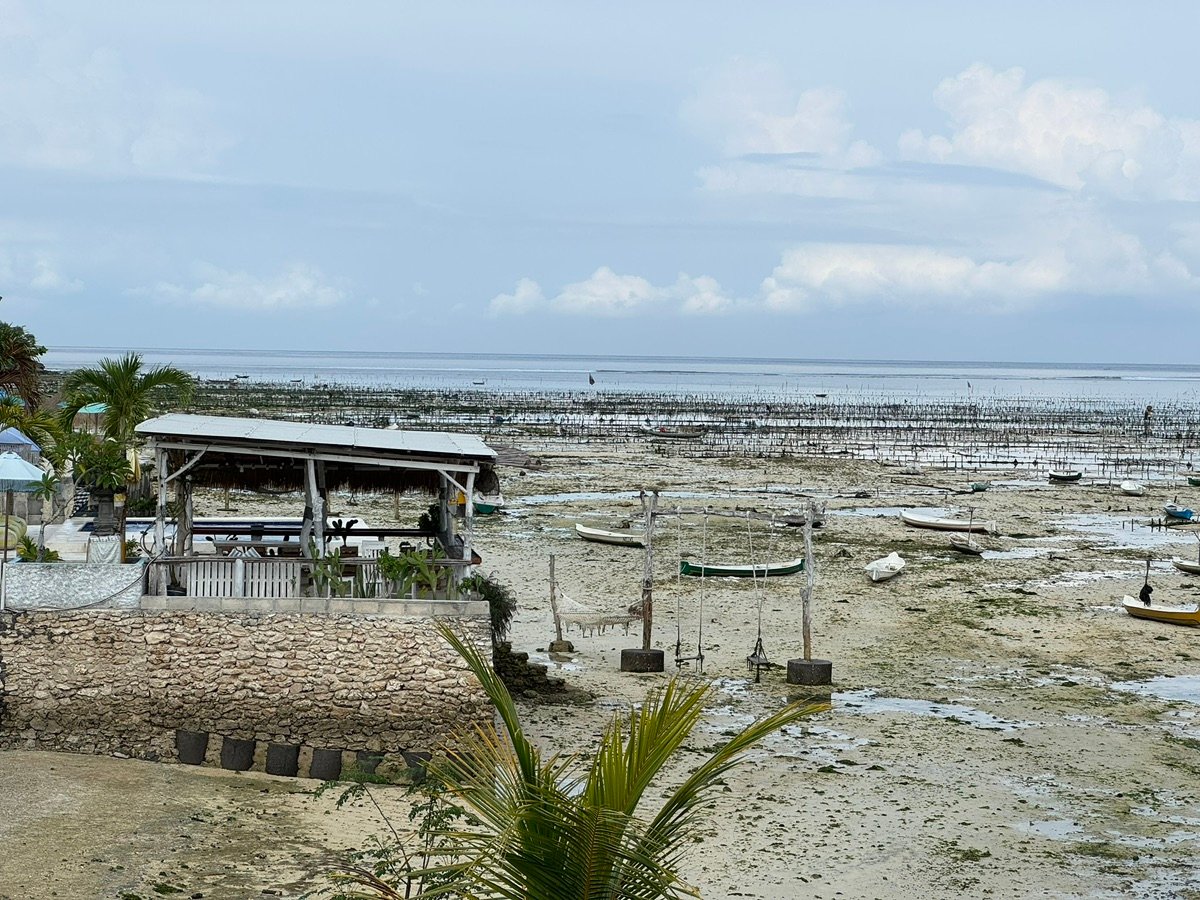
Standing at the edge of the farms, especially during low tide, you feel an incredible sense of calm mixed with the subtle energy of a living ecosystem. The air smells salty and fresh, and the only sounds are the gentle lapping of the remaining water and maybe a distant motorboat. The vastness of the mudflats, dotted with countless wooden poles, creates a mesmerizing, almost abstract pattern. It’s a place where you can really slow down and appreciate the simple, hardworking beauty of island life.
Best Times to Visit
The best time to experience the Nusa Lembongan seaweed farms is during low tide. This is when the farms are fully exposed, and you can see the intricate network of poles and the boats resting on the sand. You can check local tide charts, but generally, early morning or late afternoon often offer the best light for photography too. Pro-tip: Aim for sunrise if you want to see the farmers at work, though the low tide schedule is the most important factor.
Don’t Miss These Details
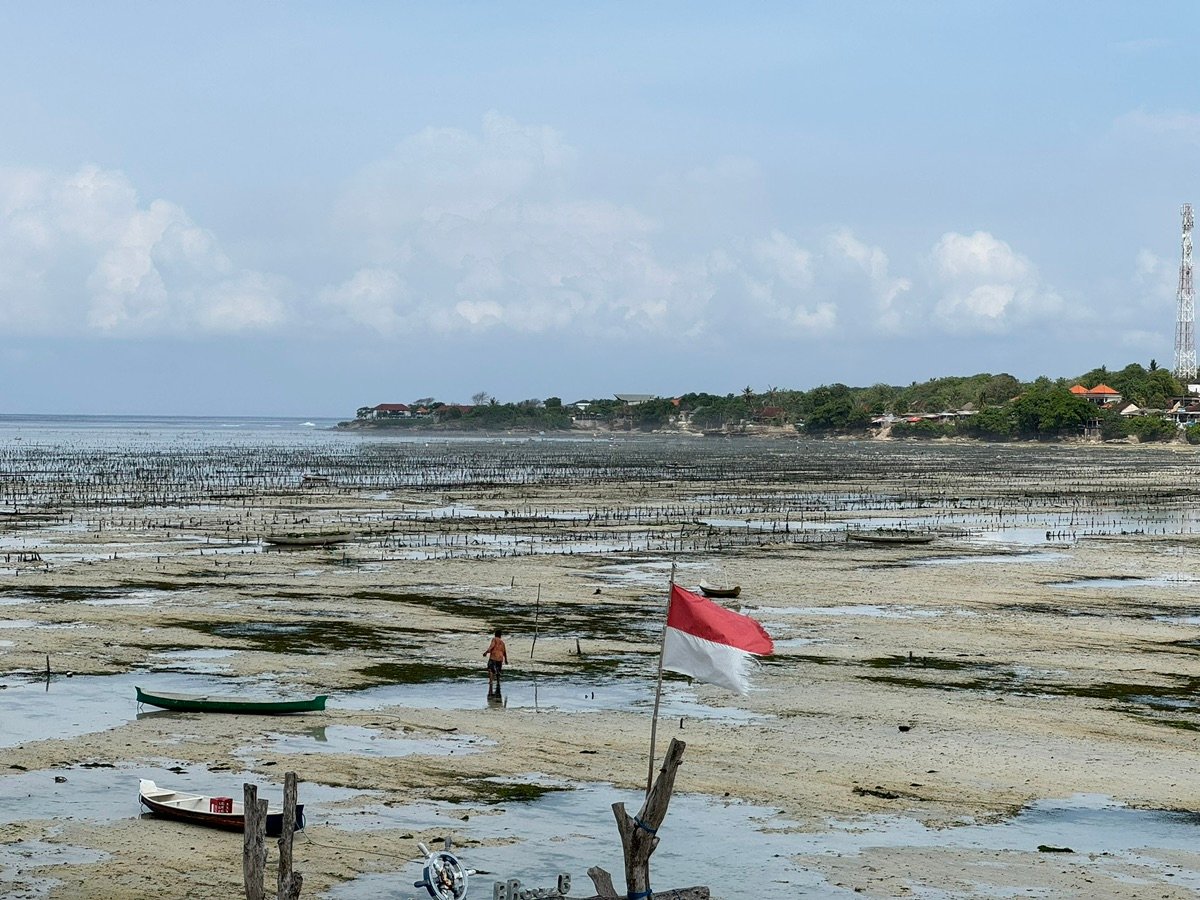
- The Indonesian Flag: Look for the prominent red and white flag proudly waving, a simple but powerful symbol of the nation’s presence and identity on these working shores.
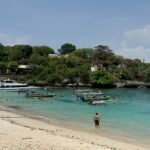
- The Colorful Boats: The traditional fishing boats, often painted in bright colors, add a beautiful contrast against the muted tones of the mudflats. Each one tells a story of the island’s fishing and farming culture.
- The Seaweed Patterns: Observe the geometric patterns formed by the wooden poles and seaweed lines stretching across the vast area. It’s an unexpectedly artistic sight.
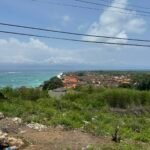
- The Coastal Panorama: Take in the wide view of the ocean meeting the distant green coastline, often dotted with local houses. It’s a quintessential Indonesian island scene.

Traveler’s Memo
Access
To reach Nusa Lembongan, you’ll typically take a fast boat from Sanur Beach in Bali. The journey takes about 30-45 minutes. Once on Lembongan, you can rent a scooter (around IDR 80,000-100,000 per day) to explore the island and easily get to the seaweed farms, which are mainly located on the eastern side, facing Nusa Ceningan.
Budget
Beyond your fast boat ticket (typically IDR 150,000-200,000 one-way), your main costs will be scooter rental and food. There’s no entrance fee for the seaweed farms, so it’s a very budget-friendly attraction if you’re already on the island. Local warungs offer delicious meals for around IDR 30,000-70,000.
Recommended Gourmet
After exploring, grab a meal at one of the many local warungs along the coast. Look for fresh seafood dishes or traditional Indonesian fare like Nasi Goreng or Mie Goreng. Many spots offer incredible views of the ocean and the neighboring islands, perfect for a relaxing lunch or dinner.
Nearby Spots
- Yellow Bridge: This iconic bridge connects Nusa Lembongan and Nusa Ceningan, offering great photo opportunities and a charming crossing.
- Devil’s Tear: A dramatic rocky cove where waves crash against the cliffs, creating spectacular sprays and a natural ‘devil’s tear’ effect.
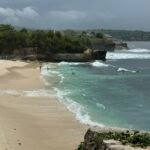
- Dream Beach: A beautiful, secluded white-sand beach with turquoise waters, perfect for swimming and sunbathing.
FAQ
What is seaweed farming?
Seaweed farming is the practice of cultivating seaweed, usually in shallow coastal waters, for various purposes like food, cosmetics, and industrial products. On Nusa Lembongan, it’s a traditional livelihood for many locals.
Can I walk through the seaweed farms?
While you can often walk along the edges or on exposed parts during low tide, it’s best to observe from a respectful distance to avoid disturbing the farmers’ livelihood and potentially damaging the crops or the fragile ecosystem.
Is there an entrance fee for the seaweed farms?
No, there is no official entrance fee to simply view the seaweed farms. It’s an open coastal area where you can observe the local activity freely.
Are the seaweed farms always visible?
The visibility of the farms depends entirely on the tide. They are most exposed and visible during low tide, when the water recedes to reveal the sandy bottom and the seaweed lines.
What kind of seaweed is grown here?
The primary type of seaweed cultivated in Nusa Lembongan is typically Eucheuma cottonii, which is used for carrageenan production, a common ingredient in food, cosmetics, and pharmaceuticals.