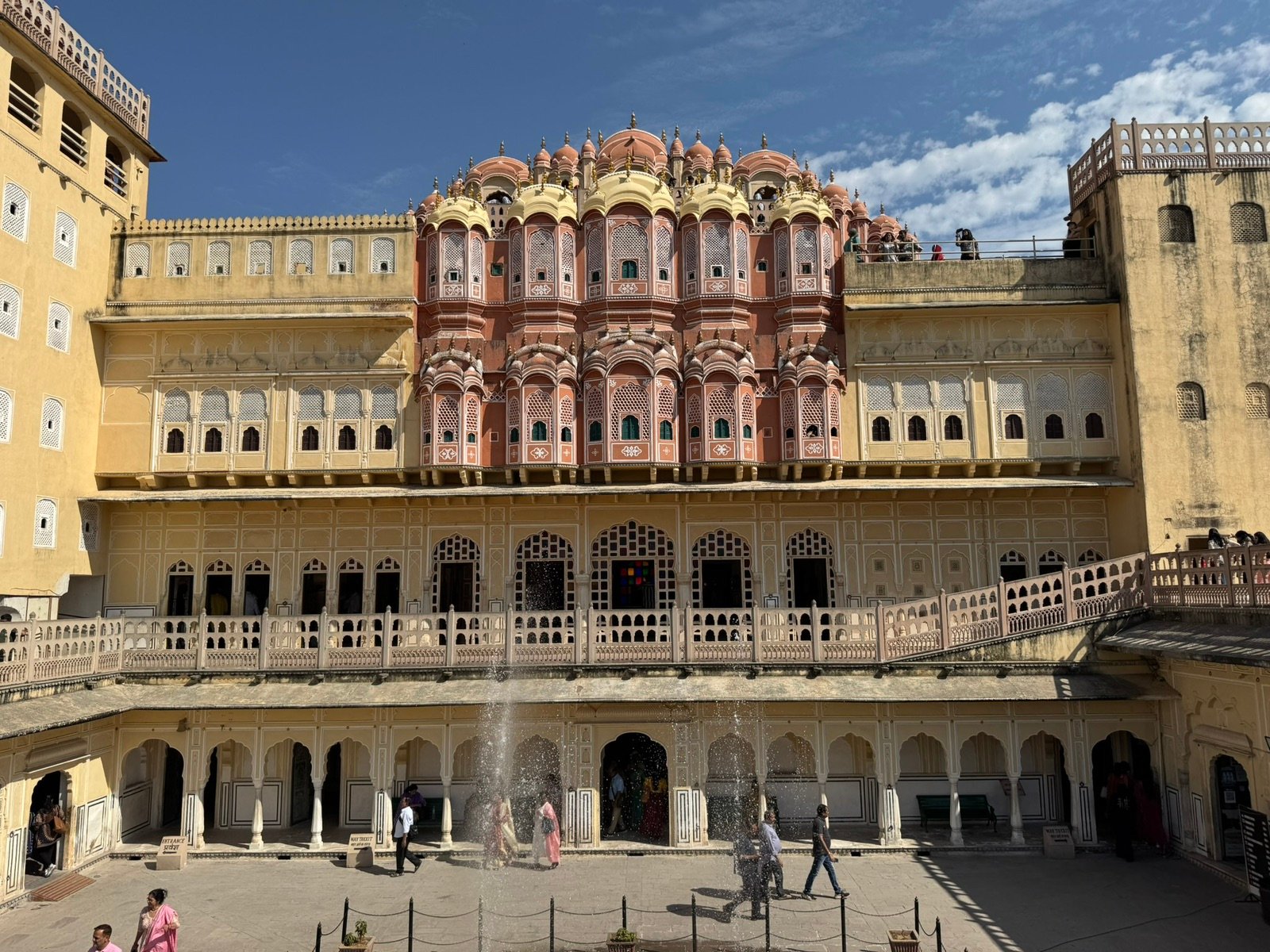
You’ve probably seen the famous pink honeycomb facade of Hawa Mahal in India all over social media. But most people just snap a quick photo from the cafes across the street and move on. If you actually step through the entrance, you get to stand in this quiet inner courtyard, looking up at the reverse side of the famous screen, away from the roaring Jaipur traffic.
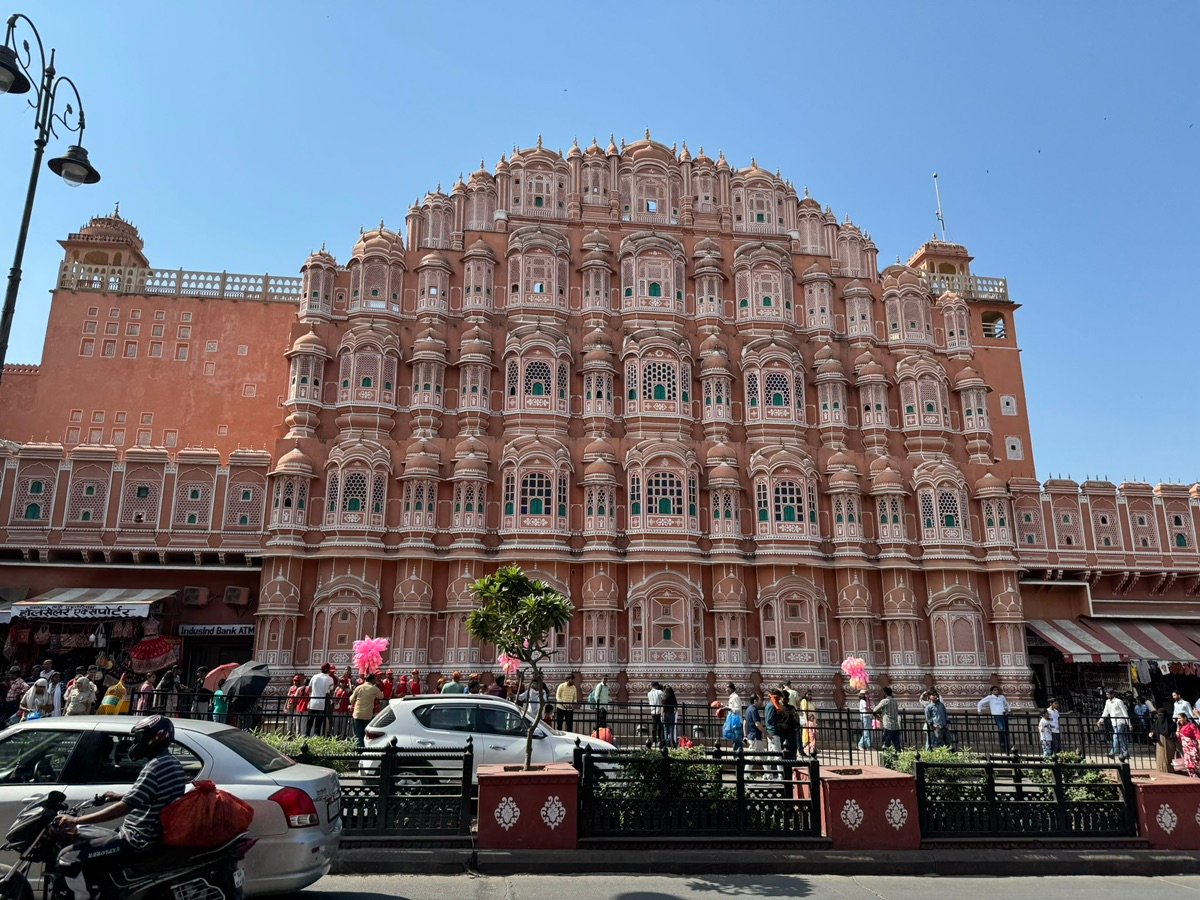
The massive pink wall is actually just a screen
Built in 1799, this structure wasn’t meant to be a full residential palace. Instead, the royal women used it to watch everyday street life and festivals below without being seen. The famous pink wall is surprisingly thin, designed specifically to let the wind pass through and keep the interior cool, acting like a giant natural air conditioner.
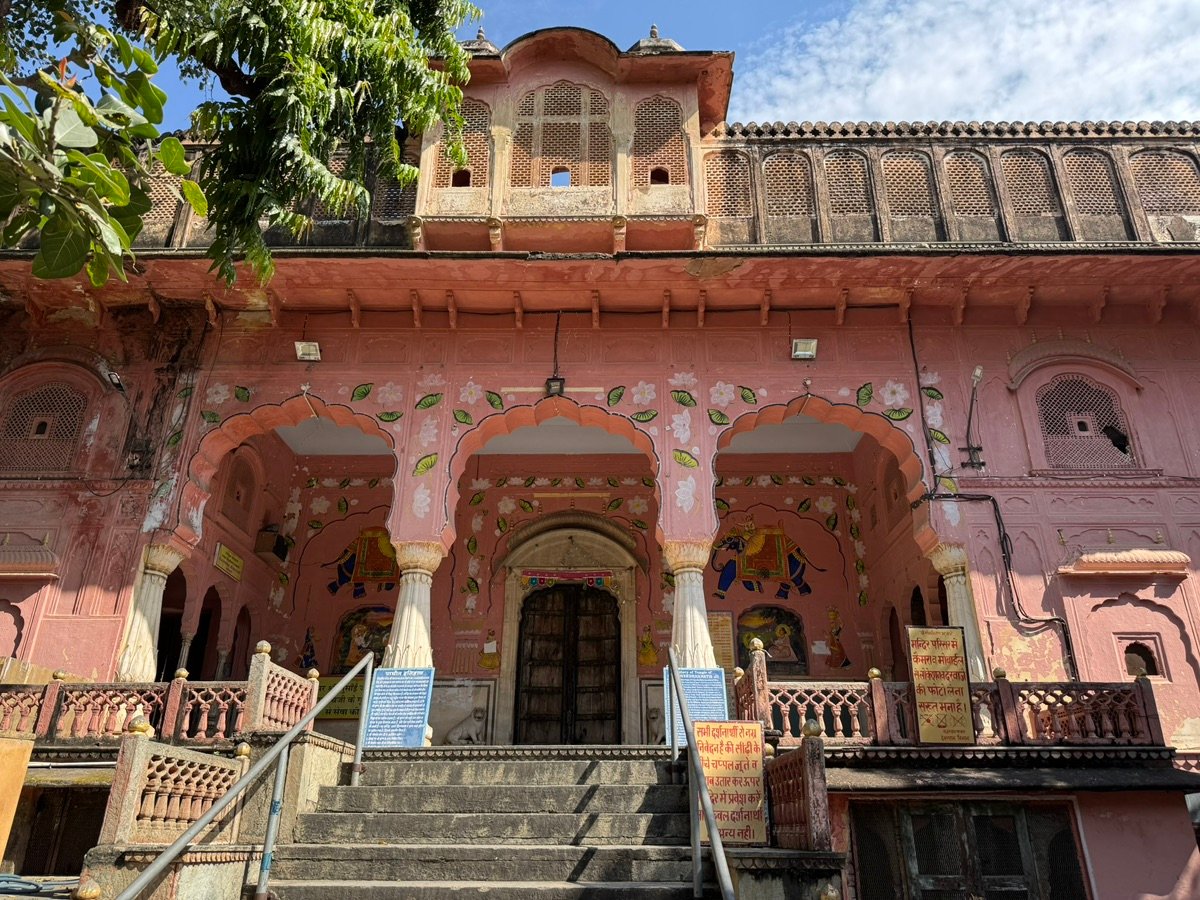
It’s surprisingly breezy and quiet once you’re inside
As soon as you walk past the gateway, the chaotic honking of Jaipur’s Old City fades. The inner courtyard feels like a completely different world. Cool air circulates through the narrow passages, and you can feel the draft that gave this building its name, the Palace of Winds.
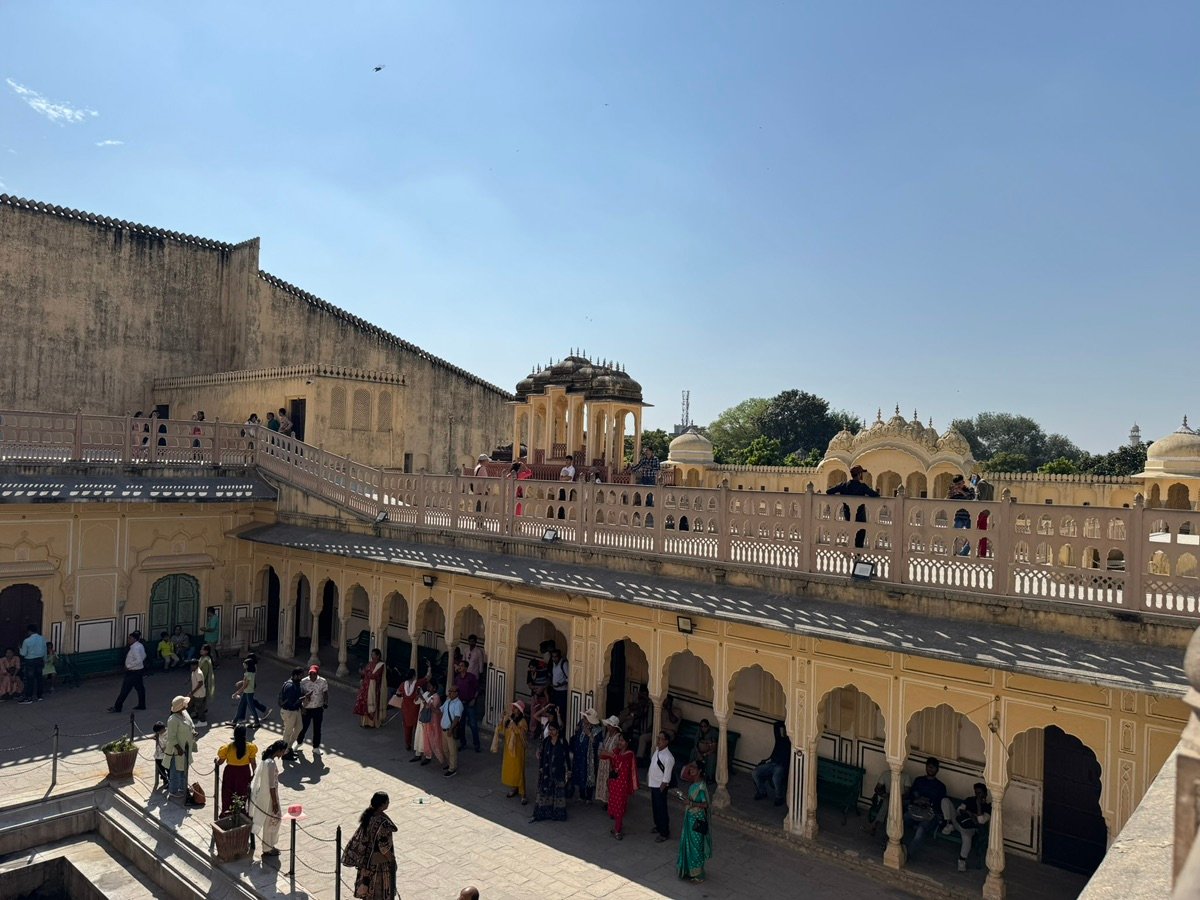
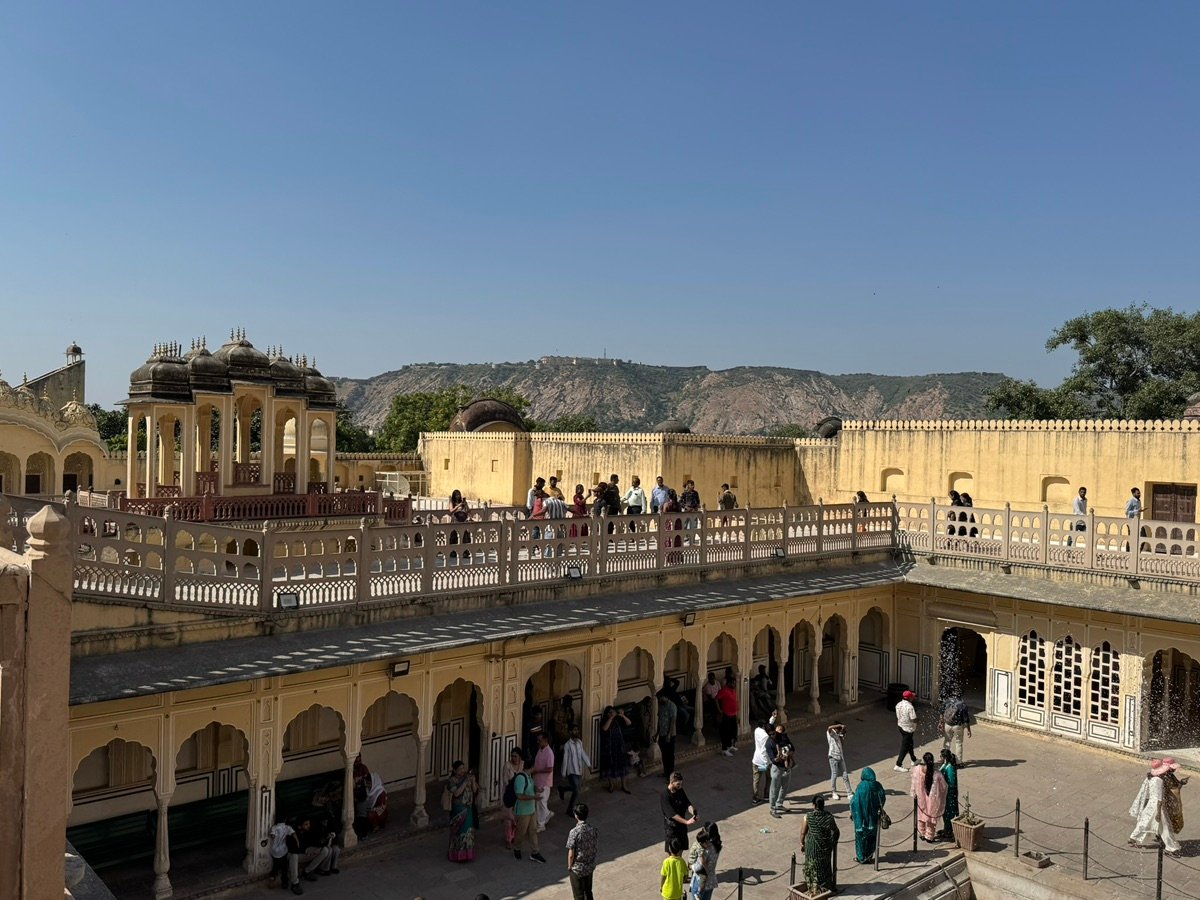
The view from the inner courtyard
Looking up from the center fountain of the inner courtyard, you get a unique perspective of the yellow and pink structures. The symmetry of the windows and the curved roofs look entirely different from this side than they do from the street outside.
Walking through the colored glass corridors
Inside, the corridors are narrow and steep with no stairs—only ramps were built so royal palanquins could be wheeled up. When the sun hits the small stained-glass windows at certain angles, it throws bright pools of blue, green, and yellow light across the stone floors.
Best Timing
The best time to visit is early in the morning, around 9:00 AM right when the gates open. The morning light hits the front facade beautifully, and you can explore the narrow upper corridors before the midday heat and tour groups arrive.
Climate & Best Season
The best season to visit is during the dry winter from October to March, when daytime temperatures are very comfortable, ranging from 11°C to 27°C. Summers from April to June are scorching and extremely dry, with temperatures peaking between 40°C and 45°C. Monsoons arrive from July to September, bringing heavy rains.
Traveler’s Memo
Access
The palace is located at Badi Chaupar in the old city. It’s an easy 200m walk from the Badi Chaupar Metro Station. If you are coming from Jaipur International Airport, which is about 13 km away, an Uber or Ola cab will cost around ₹350 to ₹500 and take roughly 35 minutes. From Jaipur Junction railway station, about 6 km away, an auto-rickshaw or cab costs between ₹100 and ₹300, taking about 15 minutes.
Budget
Entry tickets cost ₹50 for Indian nationals and ₹200 for foreign tourists. If you plan to visit multiple landmarks, consider buying the multi-monument composite ticket for ₹600 (Indians) or ₹1,500 (foreigners), which covers Amber Fort, Jantar Mantar, and other sights. Local guides at the entrance charge around ₹200 to ₹400 for a 45-minute tour, though you should negotiate the price beforehand. Local e-rickshaws around the market cost about ₹50 to ₹100.
Recommended Gourmet
For a savory snack, try the famous pyaaz kachori (spicy onion pastry) at Radhe Kachori Wala. If you want something sweet to beat the heat, grab a kesar kulfi (saffron ice cream) at Pandit Kulfi Bhandar right outside the monument. For a full sit-down meal, head to Govindam Retreat, a short 5-minute walk away, which serves an unlimited Rajasthani dal baati churma thali for ₹400 to ₹600.
Nearby Spots
- City Palace: A grand royal residence located right behind the monument with beautiful courtyards and museums.
- Jantar Mantar Observatory: A UNESCO World Heritage site featuring huge astronomical instruments built in the 18th century.
- Johari Bazaar: A bustling market famous for traditional Rajasthani jewelry, textiles, and handicrafts.
FAQ
Can you go inside the Hawa Mahal?
Yes, you can enter the building from the rear entrance, which leads to the inner courtyards and the upper floors where you can look through the tiny windows.
How much time do you need to visit Hawa Mahal?
You generally need about 45 minutes to an hour to explore the courtyards, walk up the ramps, and take photos from the upper balconies.
Is there a dress code for entering Hawa Mahal?
There is no strict dress code, but since it is a historical site in India, wearing modest clothing that covers your shoulders and knees is recommended.