During my trip to Egypt, there was one place besides the Cairo pyramids that I absolutely had to see. It is the Temple of Horus at Edfu, located along the Nile. Thanks to being buried under sand for centuries, this place survived in near-perfect condition for over two thousand years. Standing between the massive stone columns, the scale of the architecture feels completely overwhelming.
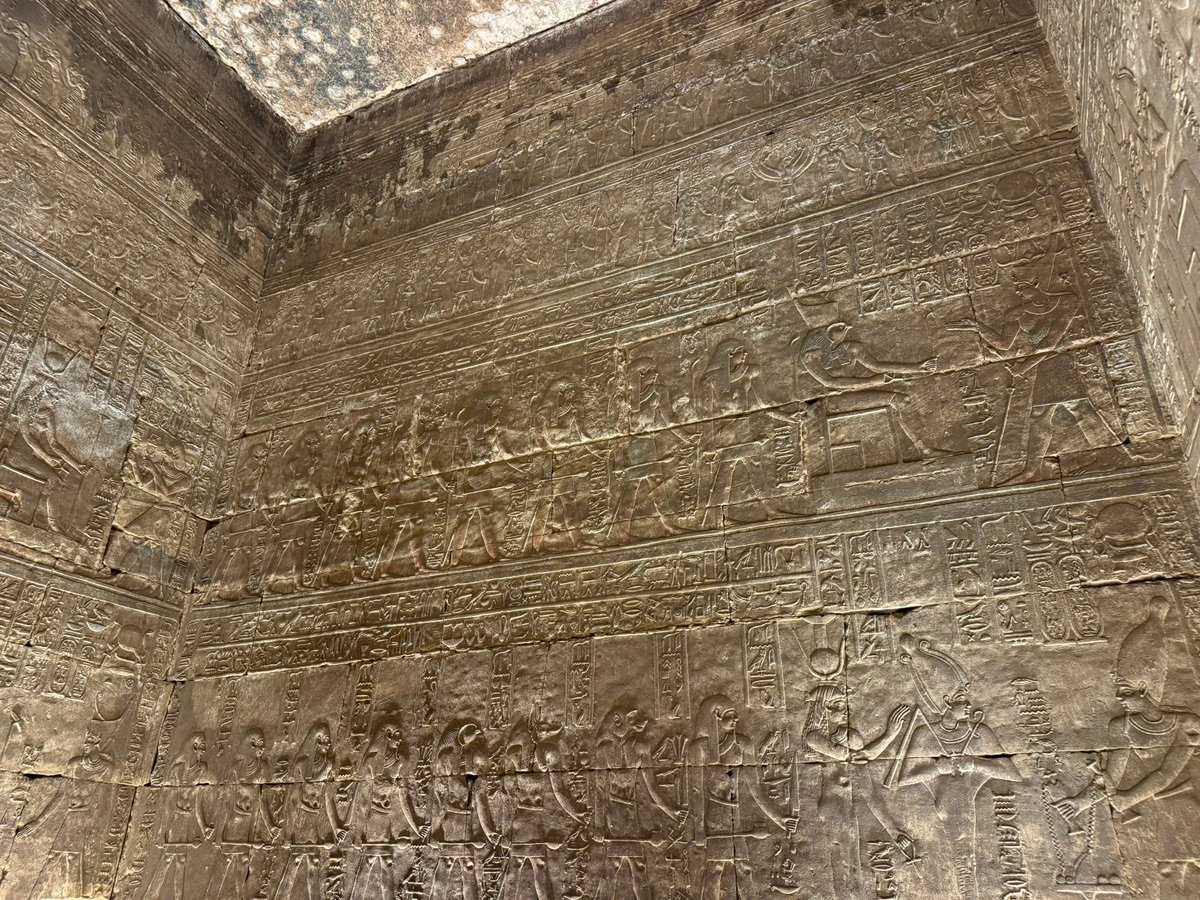
It stayed safe because it was buried in the sand
Built during the Ptolemaic period between 237 BC and 57 BC, the temple did not suffer the same damage as other Egyptian monuments. While many ancient structures were defaced by later religious groups or stripped of their materials, this one remained hidden. Layers of desert sand protected the ceilings and detailed relief carvings. In fact, when French archaeologist Auguste Mariette uncovered it in the 1860s, local houses had been built right on top of the buried roof.
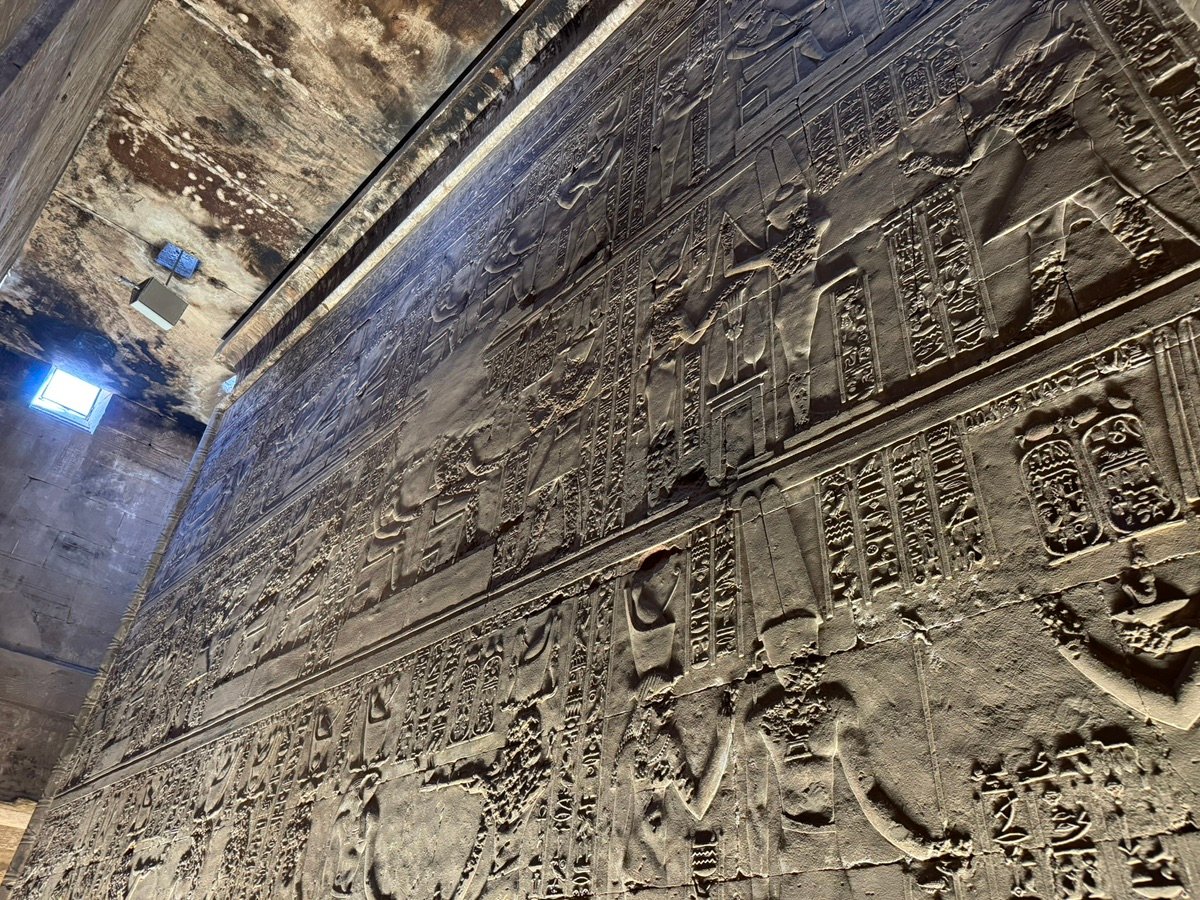
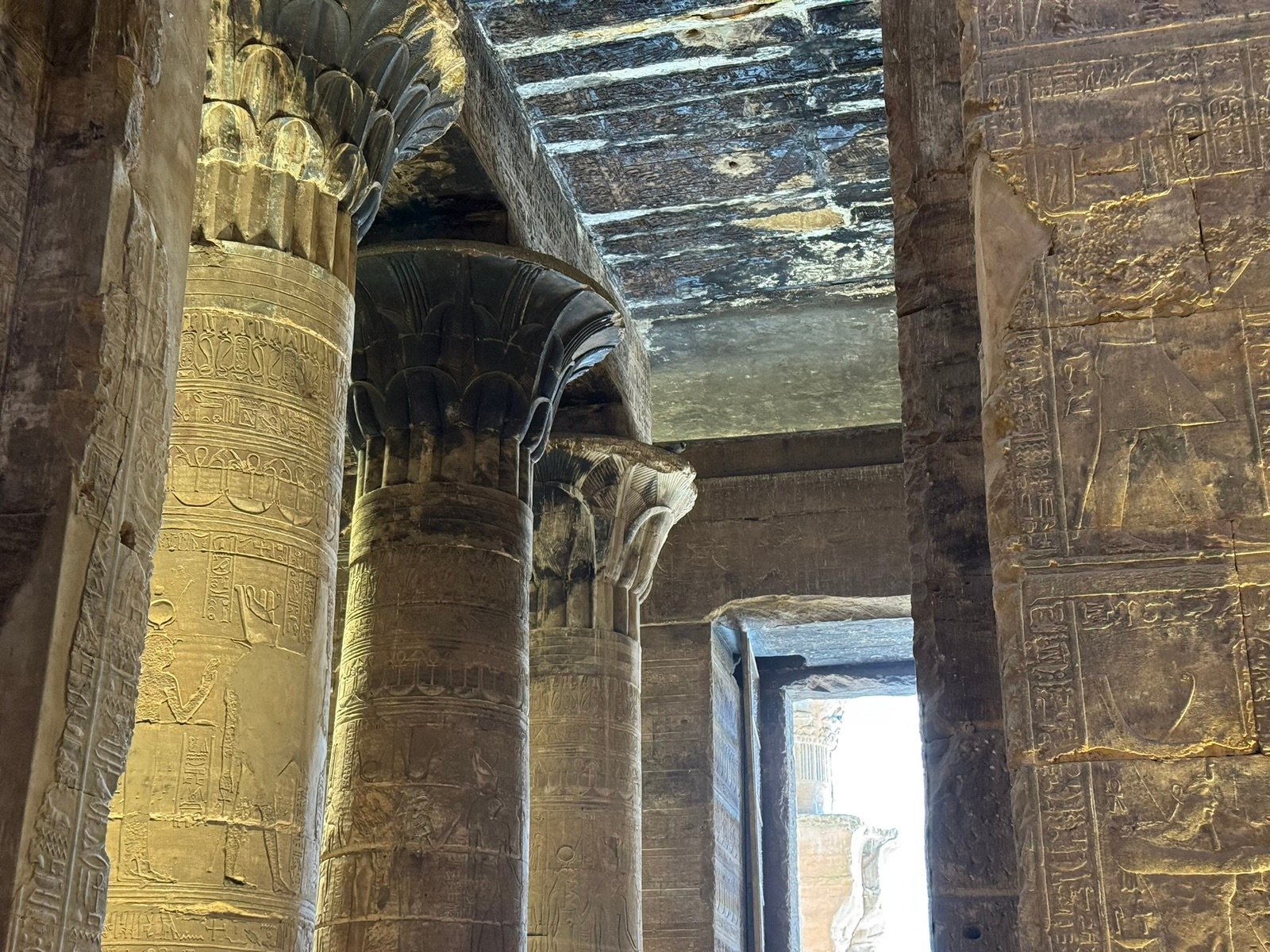
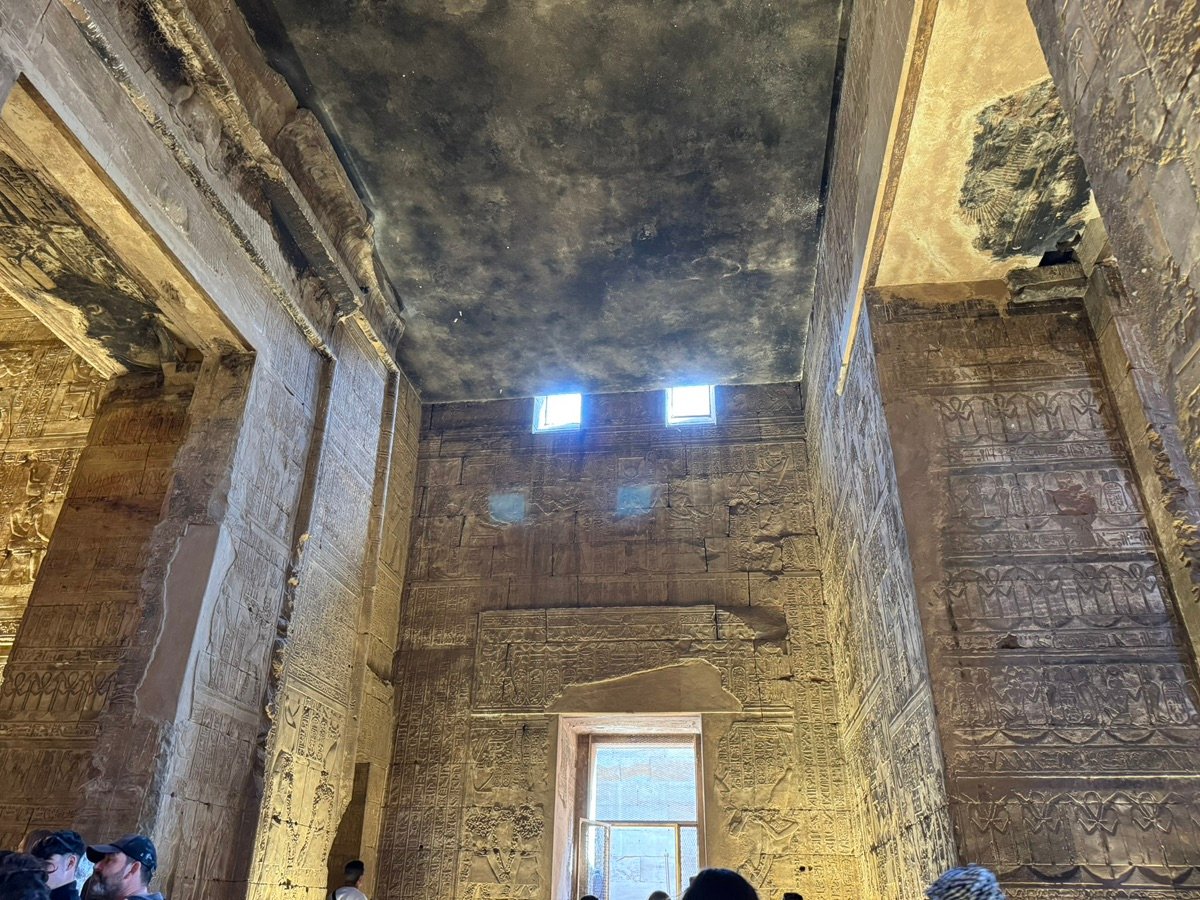
The blackened ceilings show a history of survival
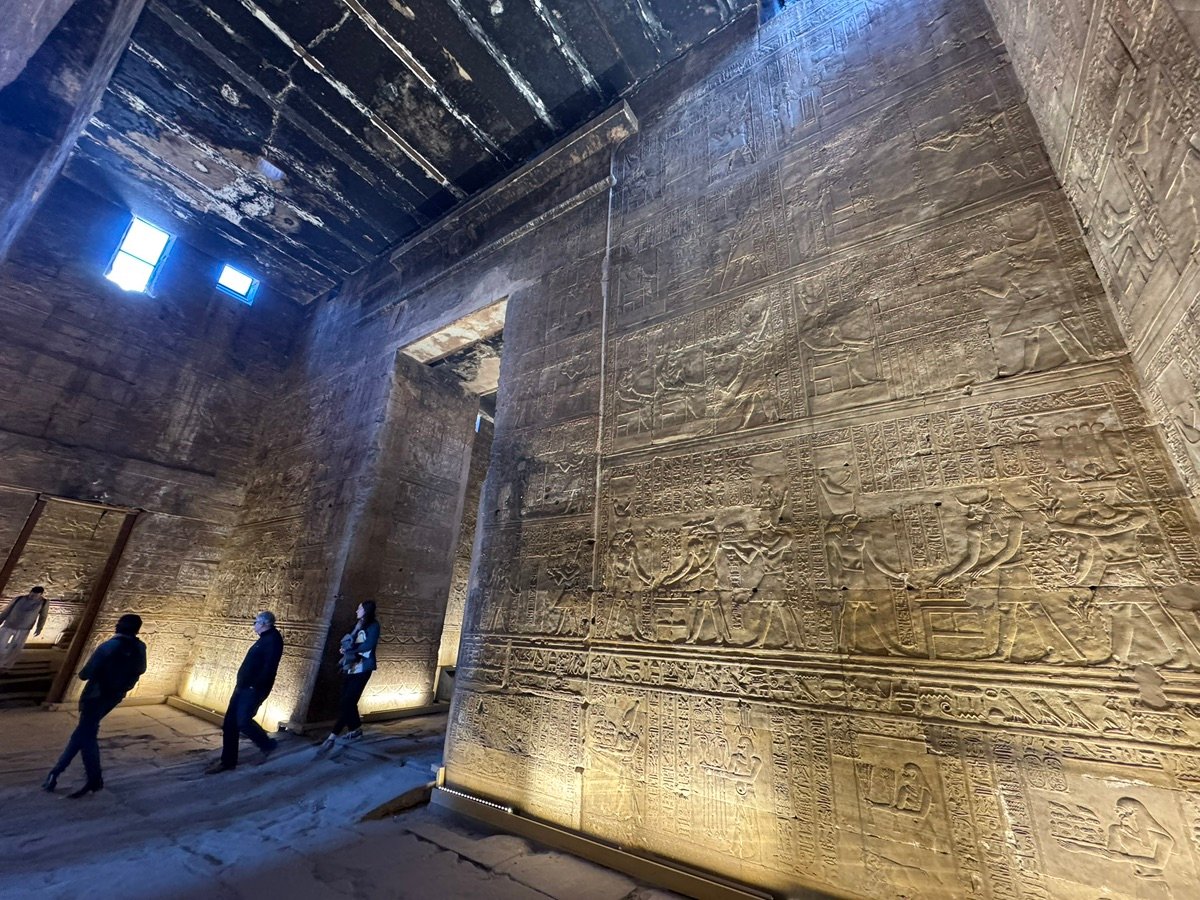
When you walk into the main hypostyle hall, look up. You will notice the stone ceiling is completely black. This soot came from fires lit by locals who lived inside the temple over the centuries, using it as shelter or trying to escape persecution. Seeing these dark stains next to ancient religious carvings gives the temple a surprisingly human atmosphere.
The giant falcon statue guarding the entrance
After crossing the open courtyard, you will find two large granite statues of Horus as a falcon. The statue on the left still wears the double crown of Upper and Lower Egypt. It is a favorite photo spot for visitors, but if you look closely, you can appreciate how sharp the eyes and how smooth the polished stone still look after all this time.
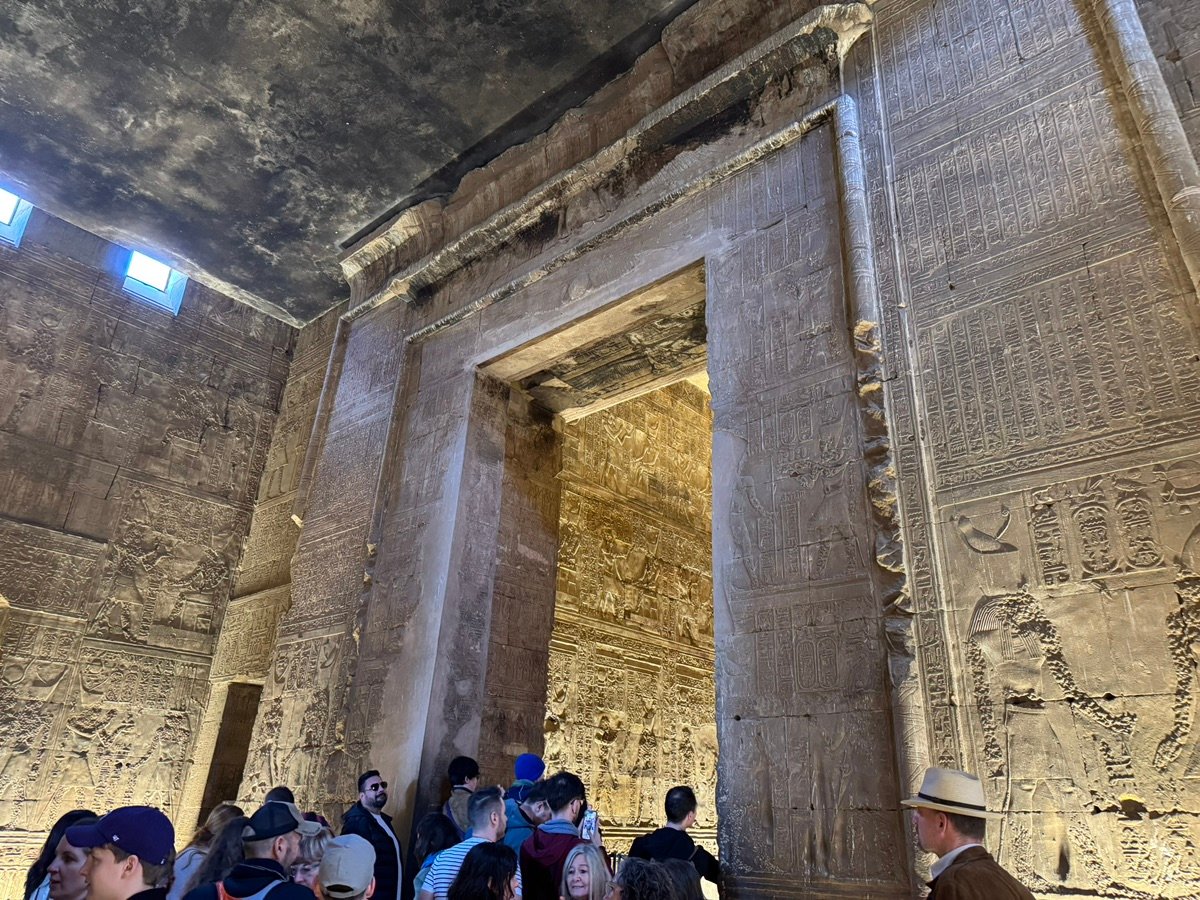
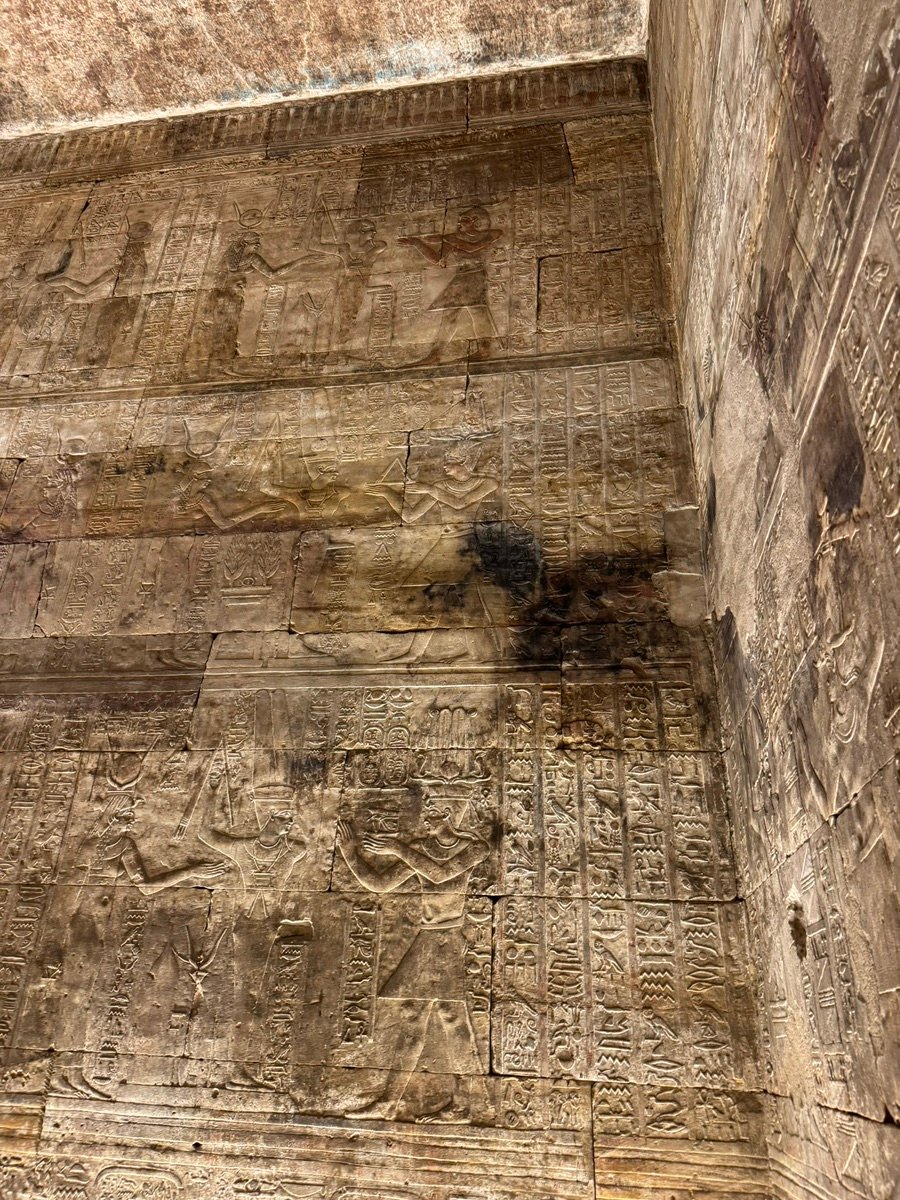
Wall carvings that read like a comic strip
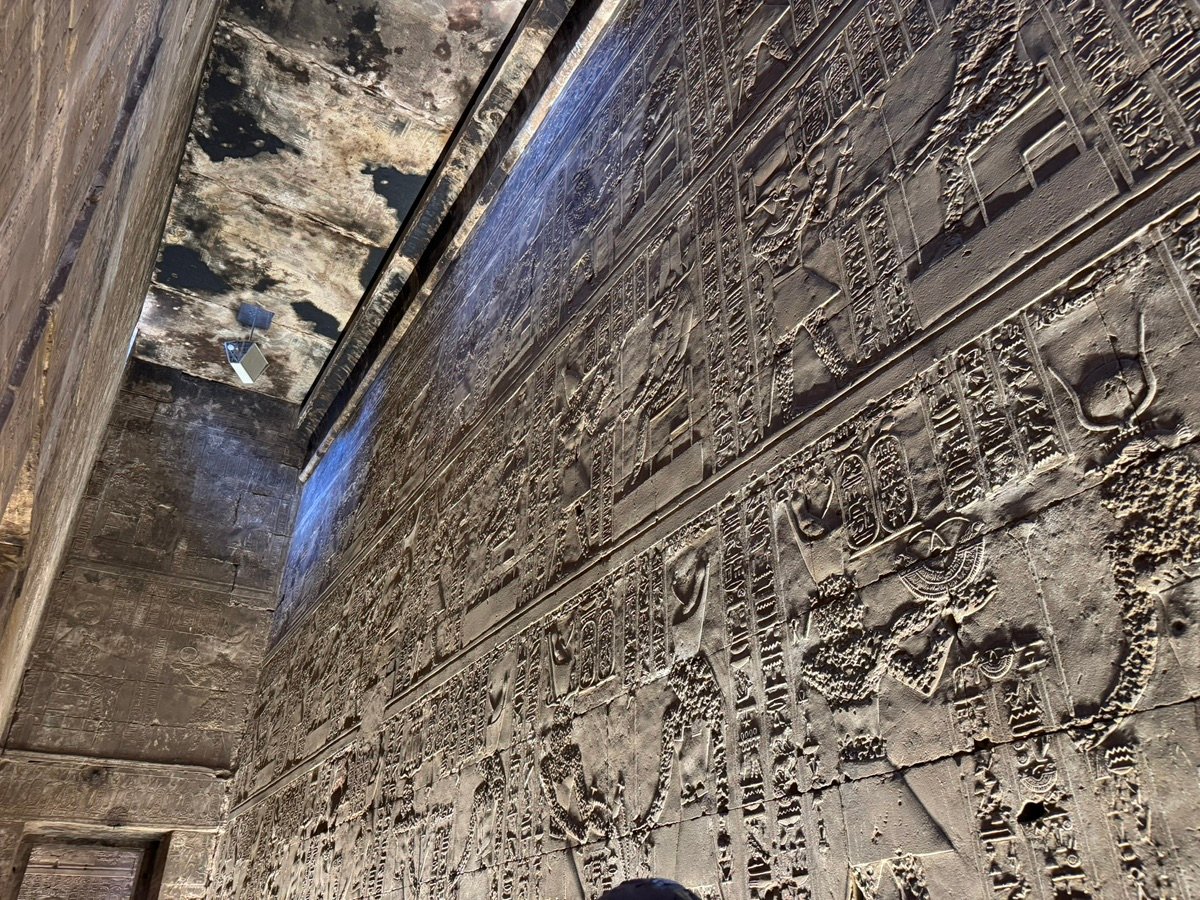
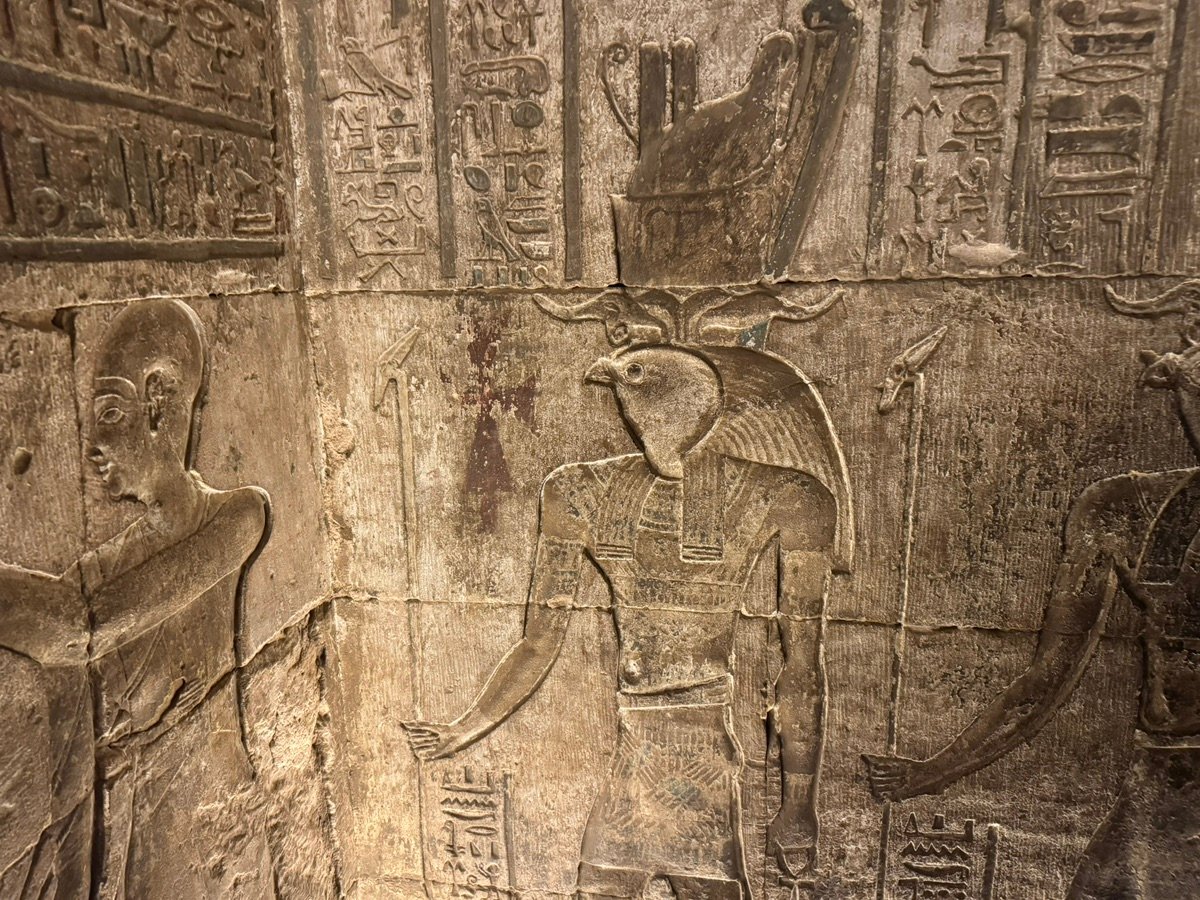
Nearly every wall is covered in detailed carvings. The most famous reliefs show the battle between Horus and his uncle Seth, the god of chaos, who is often depicted as a small hippopotamus. It is easy to walk right past these, but if you read about the story beforehand, the carvings suddenly come to life like an ancient storybook.
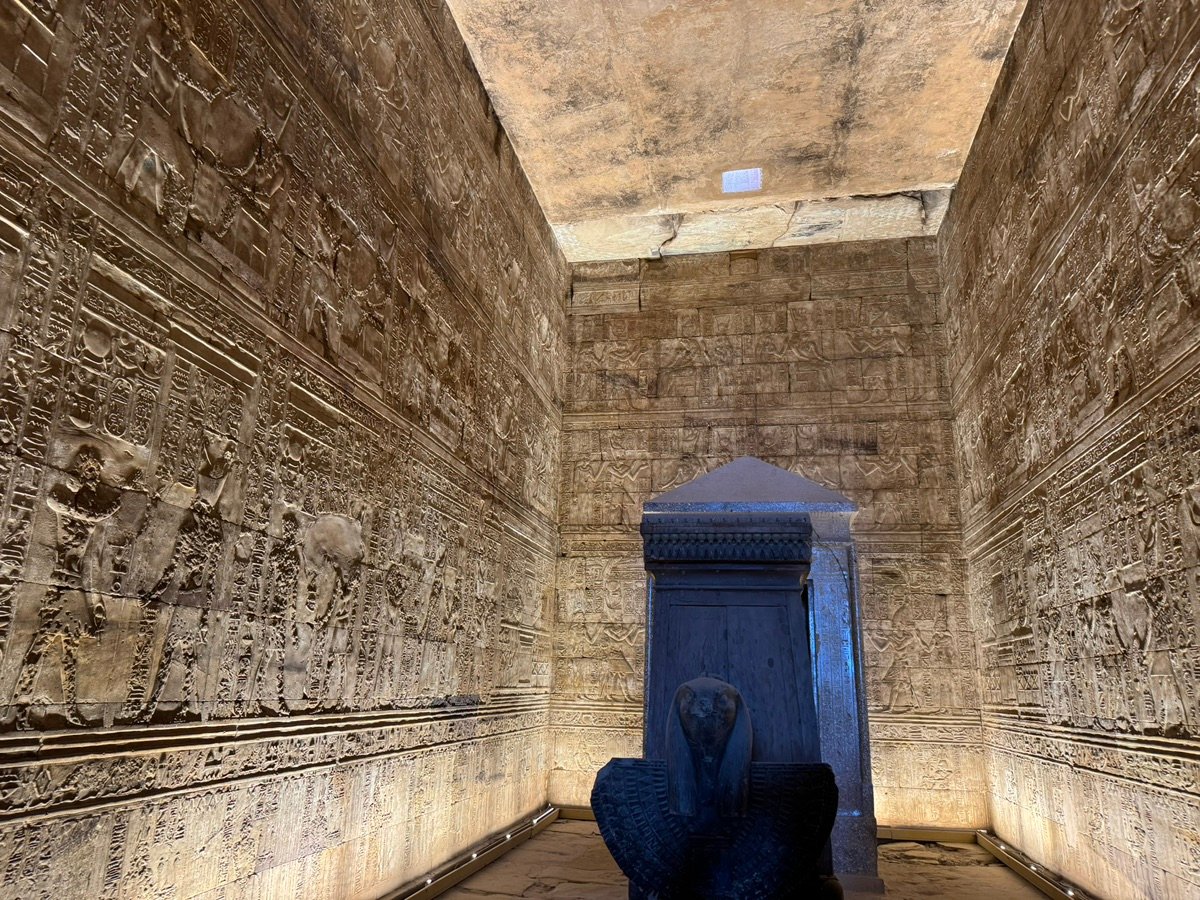
The dark sanctuary at the very back
At the deepest point of the temple lies the sanctuary, a room once reserved only for high priests and pharaohs. Inside sits a wooden barque (a replica of the sacred boat used to carry the statue of Horus). The small room is dark, but a single beam of light from the roof highlights the sacred nature of this spot.
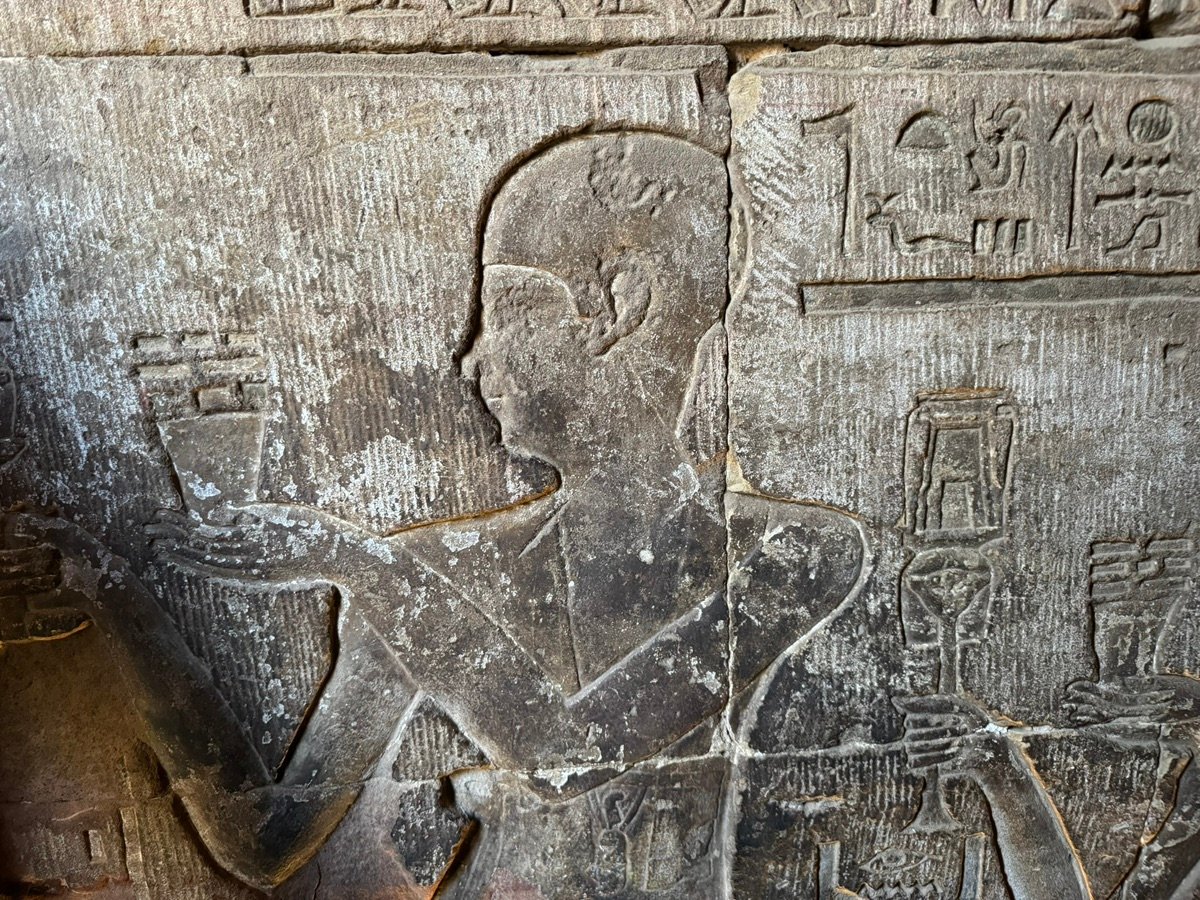
Real perfume recipes written on the stone walls
Off to the side of the hypostyle hall is a small, dark chamber known as the laboratory. Here, priests prepared sacred perfumes and incense for rituals. The walls are covered in hieroglyphics that detail exact recipes, listing ingredients and weights. It makes you feel like you can almost smell the ancient mixtures.
Arrive early or get stuck in horse carriage traffic
If you plan to visit, try to get here as early as possible. Most Nile cruise boats arrive in the morning, meaning hundreds of horse carriages (locally called caleches) bring crowds starting around 8:00 AM. If you arrive right when the gates open at 7:00 AM, you can explore the quiet corridors with almost nobody else around.
Best Timing
Getting there around 7:00 AM when the gates first open is the best pro-tip. You will beat all the big cruise ship groups and have the atmospheric temples almost entirely to yourself. Late afternoon is also a great choice as the sun starts to go down and cast a warm glow on the ancient stone carvings.
Climate & Best Season
Edfu has a dry desert climate. Summer temperatures routinely climb above 40°C (104°F), making daytime exploration difficult. The best months to visit are between October and April. During this winter period, daytime temperatures range from 20°C to 25°C (68°F to 77°F), which is comfortable for walking around.
Traveler’s Memo
Access
Most travelers visit Edfu as a stop on a Nile cruise between Luxor and Aswan. The temple is about 3 km (1.8 miles) from the river dock, and visitors usually take a horse carriage to the entrance. You can also hire a private car or driver for a day trip from either Luxor or Aswan.
Budget
Tickets for foreign adults cost 550 EGP (around $11 USD), and student tickets are 275 EGP (around $5.50 USD). The ticket office accepts credit card payments only, so bring a card. If you take a horse carriage, negotiate the price in advance and keep small bills handy for tips.
Recommended Gourmet
Near the temple, you can find small cafes serving hot sweet tea (shai) or fresh mint lemonade. For a quick snack, try taameya (Egyptian fava bean falafel) served inside fresh flatbread.
Nearby Spots
- Temple of Kom Ombo: A unique double temple dedicated to both Sobek the crocodile god and Haroeris.
- Temple of Khnum at Esna: A beautifully restored temple hall famous for its brightly colored ceiling astronomical carvings.
- Luxor: A massive open-air museum city located about 100 km north of Edfu, home to Karnak Temple and the Valley of the Kings.
FAQ
How much time do you need to tour the temple?
Most visitors spend about 1.5 to 2 hours exploring the site. This gives you plenty of time to look at the main carvings and walk through the inner rooms without rushing.
Can I pay for the ticket with cash?
No, the official ticket office now only accepts credit cards. Make sure to have a Visa or Mastercard ready when you arrive.
Lock
Are horse carriages safe to use?
They are generally safe but require clear communication. Always agree on the total round-trip price before boarding and only pay when you return to the boat.