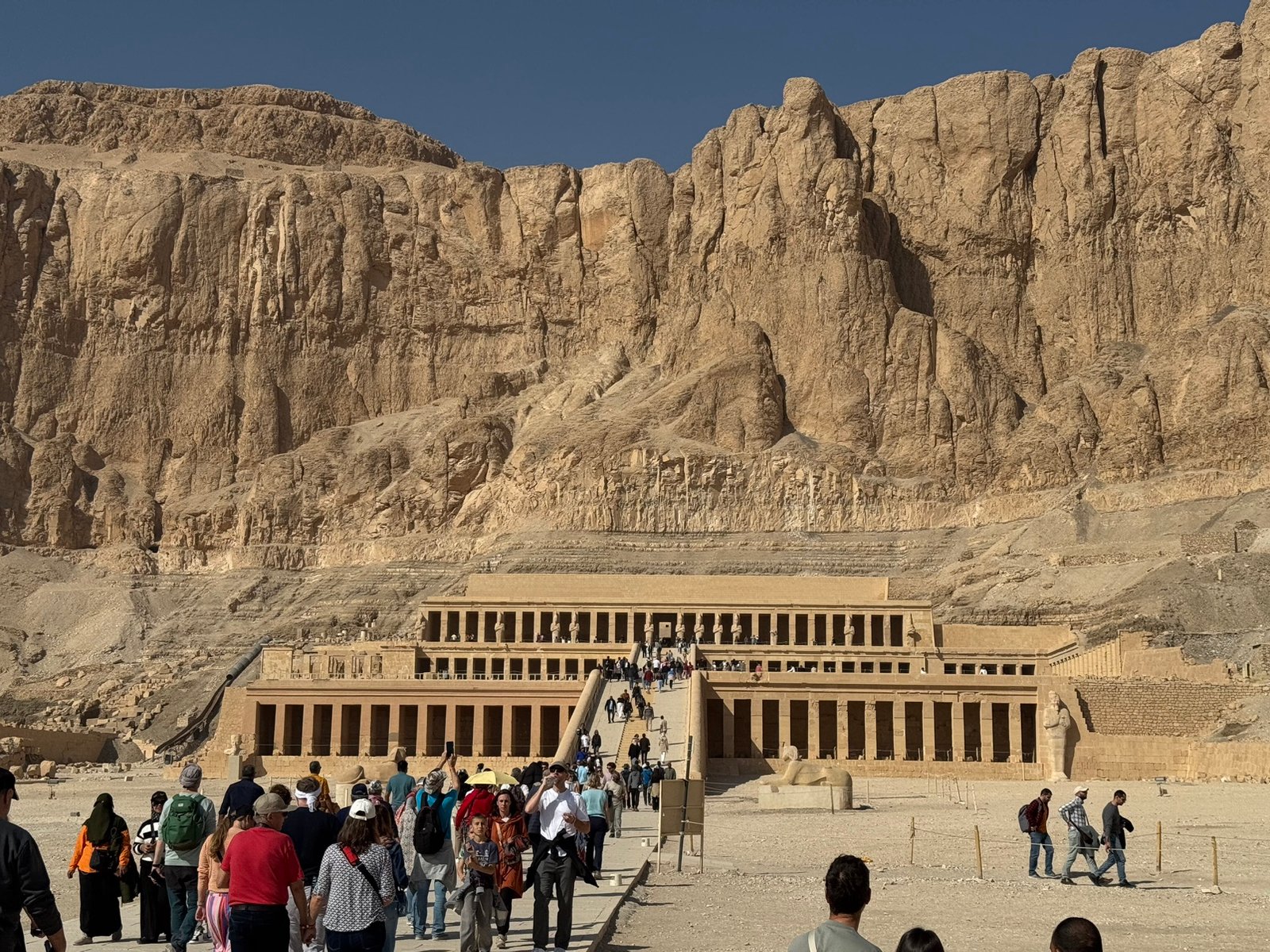
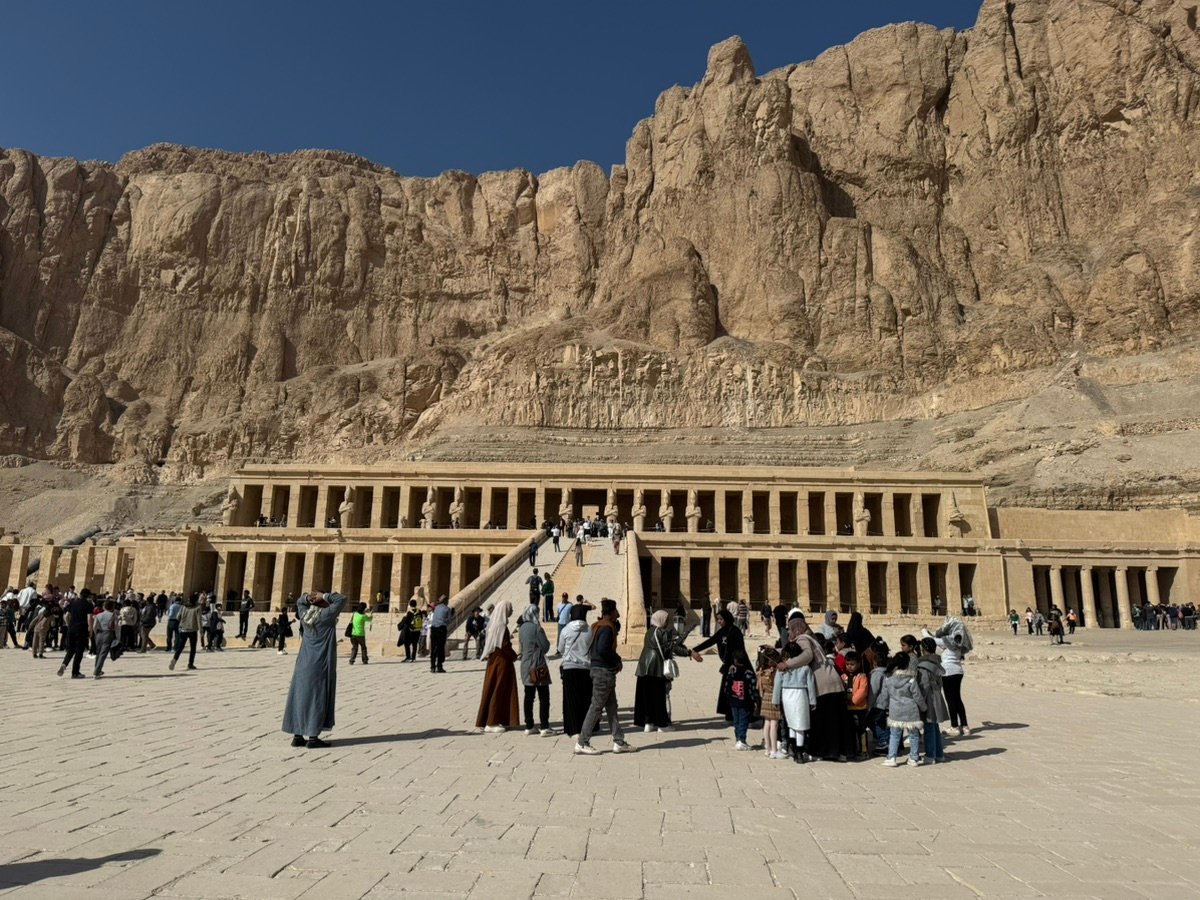
You probably recognize those massive sandy cliffs from photos of Egypt, rising dramatically behind a three-tiered terrace structure. This is the Mortuary Temple of Hatshepsut, located near Luxor in Egypt. Walking up the long ramp makes you feel tiny against the sheer limestone cliffs of Deir el-Bahari.
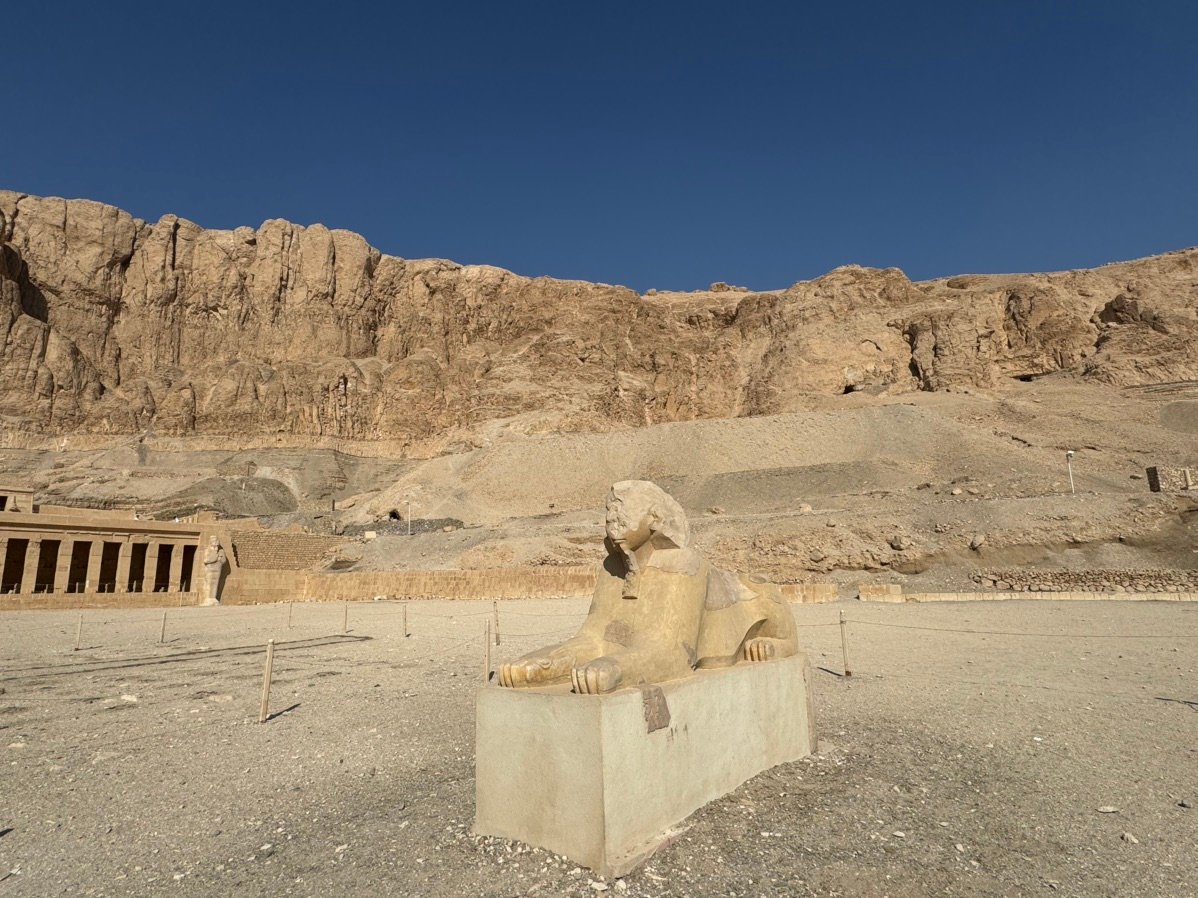
She built this to prove she belonged on the throne
Hatshepsut was one of ancient Egypt’s few female pharaohs, and she had to work twice as hard to establish her legitimacy. This temple wasn’t just a place for worship; it was a massive political statement. Completed around 1479 BC, the design was intentionally modern for its time, mirroring the natural vertical lines of the cliffs behind it to look like it grew directly out of the mountain.
After her death, her successor tried to erase her name and images from the walls, chipping away at her statues and reliefs. Despite these ancient efforts to wipe her from memory, the sheer scale of the temple survived, leaving us with one of the most unique architectural layouts in the ancient world.
It feels like walking into a massive open-air theater
When you step onto the lower courtyard, the dry desert heat hits you, but the openness is what really takes you by surprise. Unlike the dark, column-filled interiors of typical Luxor temples, this place is bright, exposed, and incredibly spacious. You can hear the gravel crunching under the shoes of fellow visitors, while local guards in traditional galabeyas chat quietly in the shade of the grand colonnades.
The painted reliefs that survived for thousands of years
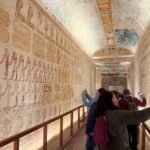
If you walk into the shaded colonnades on the middle terrace, look closely at the walls. You will find carvings that still retain their original ancient pigments. Look for the famous Punt expedition scene, which details an ancient trading mission. You can see detailed carvings of exotic trees, fish, and foreign houses that look surprisingly fresh.
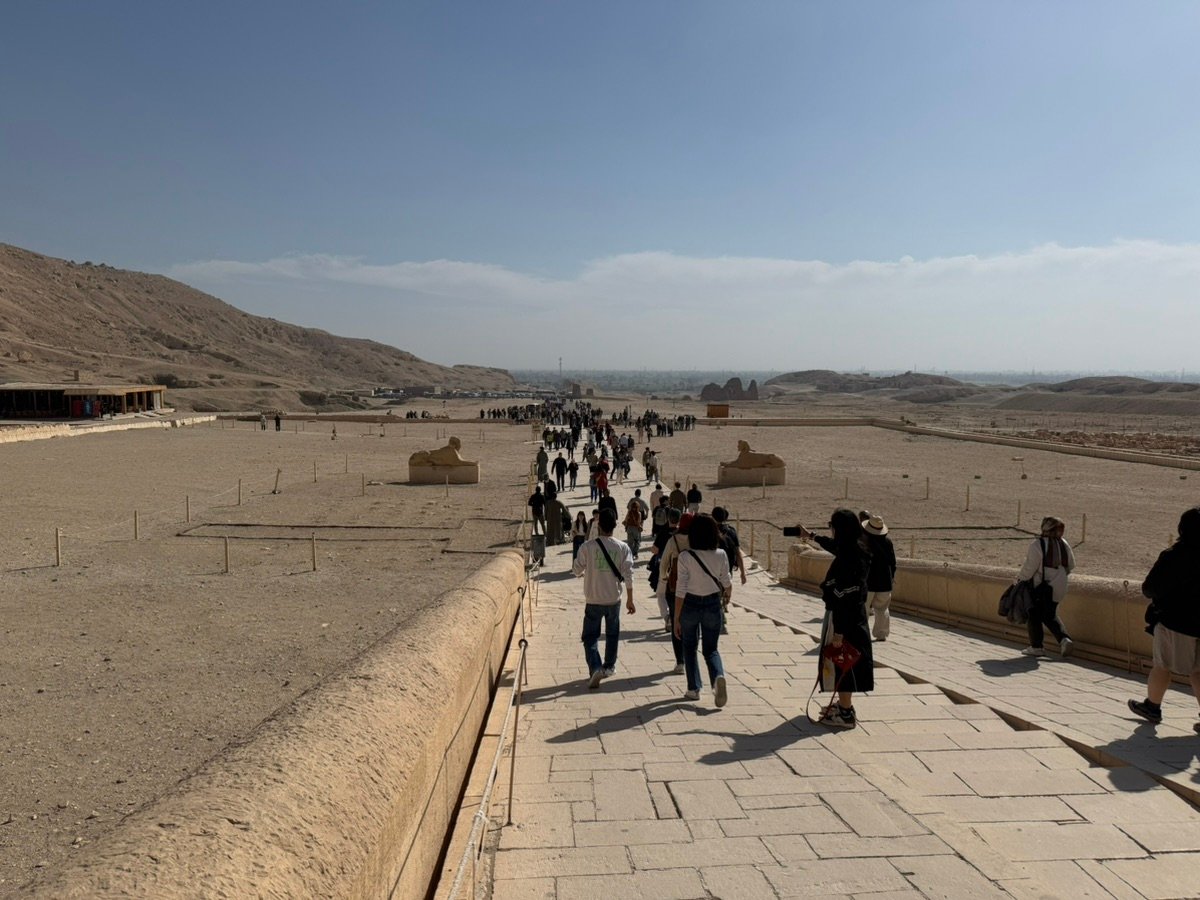
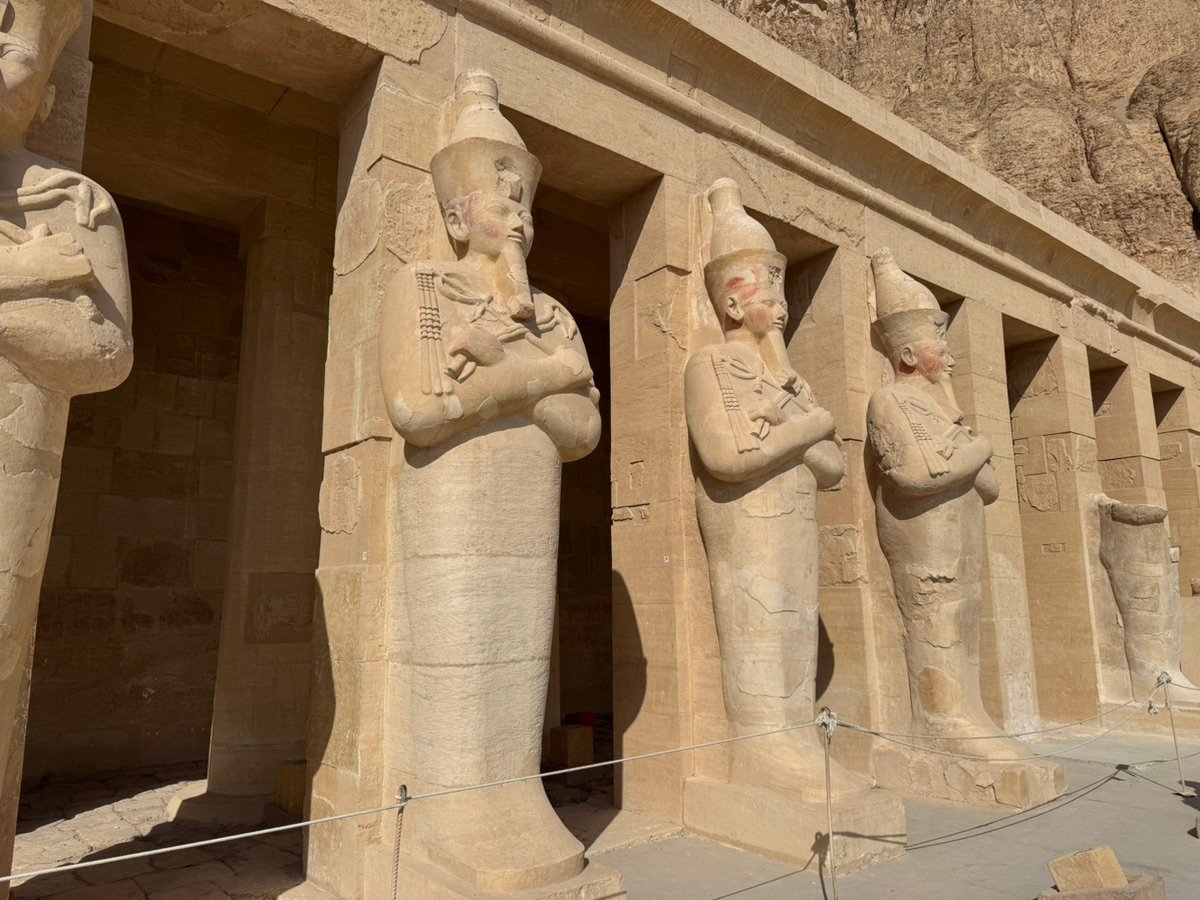
The Osirian statues standing guard on the upper terrace
On the top terrace, a row of tall statues depicting Hatshepsut as Osiris, the god of the afterlife, stands against the square pillars. Each statue has its arms crossed over the chest. Walking past them gives you a real sense of the monumental scale the builders achieved. The texture of the sun-beaten stone shows the incredible craftsmanship of ancient sculptors.
The view looking back at the Nile valley
Make sure to turn around when you reach the highest terrace. From here, you can look out across the green strip of the Nile valley contrasting sharply with the harsh desert. It shows exactly why ancient Egyptians saw this line between life and death so clearly. The symmetry of the main ramp aligning with the valley floor is brilliant.
Best Timing
Try to arrive right when the gates open at 6:00 AM. The morning light hitting the cliffs is beautiful, and you will avoid the intense midday heat. Most tour buses arrive around 8:00 AM, so arriving early gives you a quiet, uncrowded experience for at least an hour.
Climate & Best Season
Luxor is extremely hot and dry. Summer (June to August) routinely exceeds 40°C, making midday visits almost unbearable. Winter (December to February) is much more pleasant, with average daytime temperatures around 22°C, though nights can get chilly. The best months to visit are October, November, March, and April, offering a good balance of comfortable weather and manageable crowds.
Traveler’s Memo
Access
Located on the West Bank of the Nile, about a 30-minute drive from downtown Luxor. You can hire a private taxi for the day, which is the most convenient option, or take the local public ferry across the Nile and catch a taxi from the West Bank dock.
Budget
An adult entry ticket costs around 360 EGP. Student tickets are available at half price with a valid ID. There is an extra fee of about 20 EGP for the electric open-air trolley that takes you from the parking area to the temple entrance, which is highly recommended under the hot sun.
Recommended Gourmet
Try traditional Egyptian dishes like Koshary (a mix of macaroni, rice, lentils, chickpeas, and spicy tomato sauce) or fresh falafel (locally called Ta’ameya) at local restaurants on the West Bank. Pair it with cold hibiscus tea (Karkadeh) to cool down after walking in the sun.
Nearby Spots
- Valley of the Kings: The famous ancient burial ground containing the tombs of pharaohs, located just over the ridge.
- Colossi of Memnon: Two massive stone statues of Pharaoh Amenhotep III standing by the roadside on the way to the West Bank sites.
- Medinet Habu: The highly detailed mortuary temple of Ramesses III, known for its deep, well-preserved carvings.
FAQ
How much walking is required at the Hatshepsut temple?
The walk from the visitor center to the temple is about 15 minutes, but there is an electric trolley available for a small fee. Once at the temple, you will need to walk up several long stone ramps to reach the different terrace levels.
What should I wear when visiting?
Wear light, breathable clothing to handle the intense heat, but keep your shoulders and knees covered out of respect. A wide-brimmed hat, sunglasses, and comfortable walking shoes are absolutely necessary.
Are there toilets and water available on site?
Yes, there are restrooms and small shops selling cold drinks at the visitor center near the main parking lot. There are no facilities once you walk past the ticket gate toward the temple itself, so bring water with you.