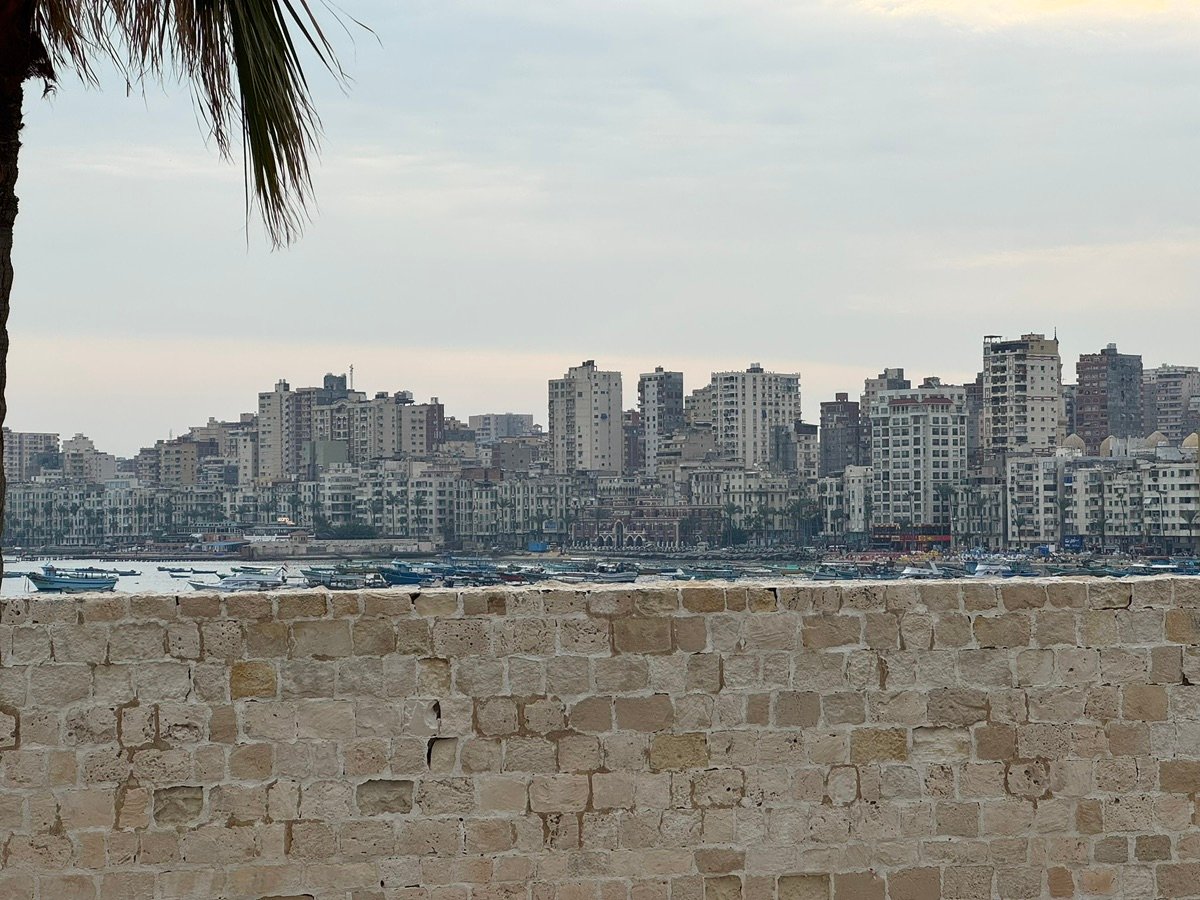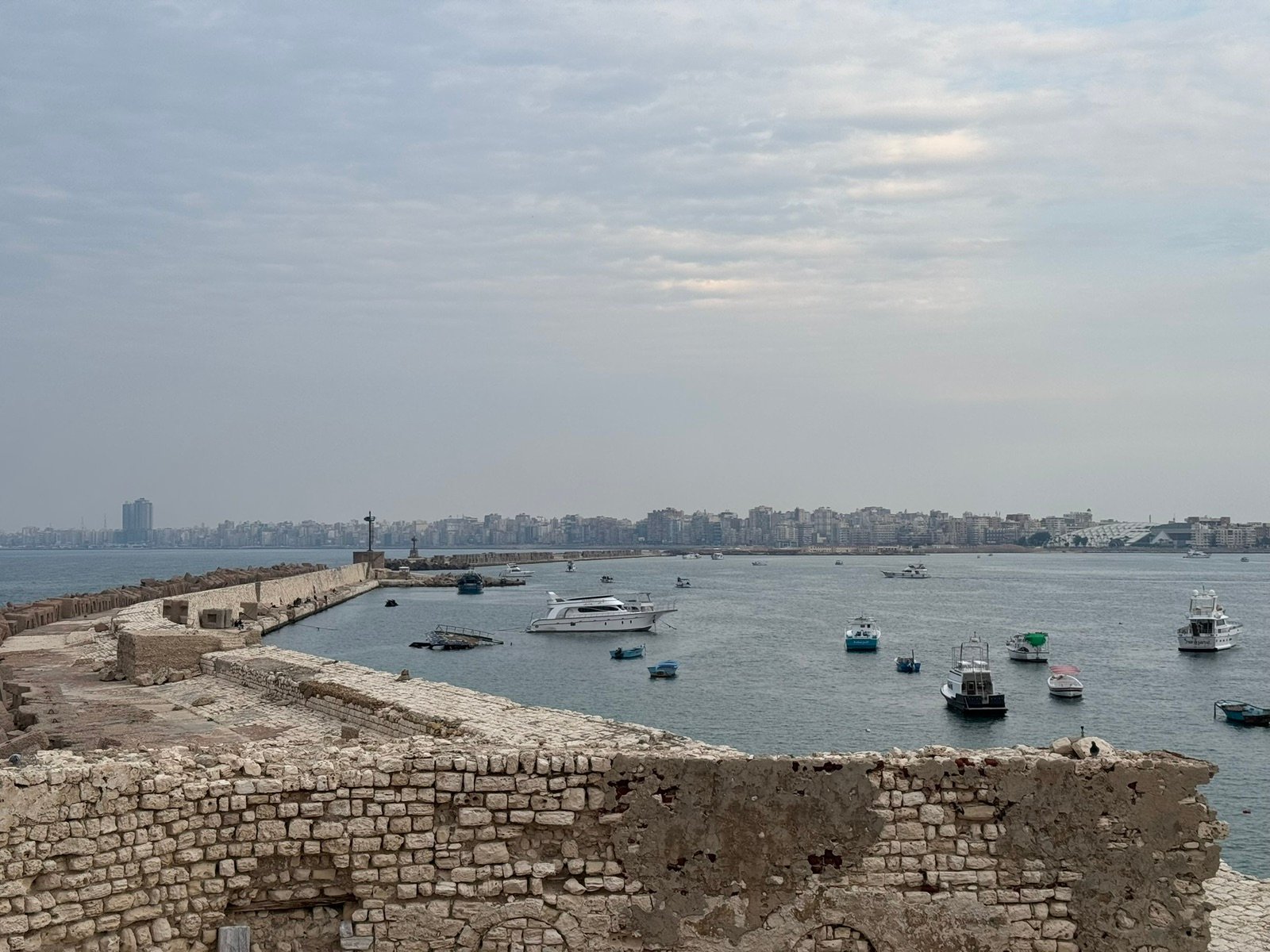
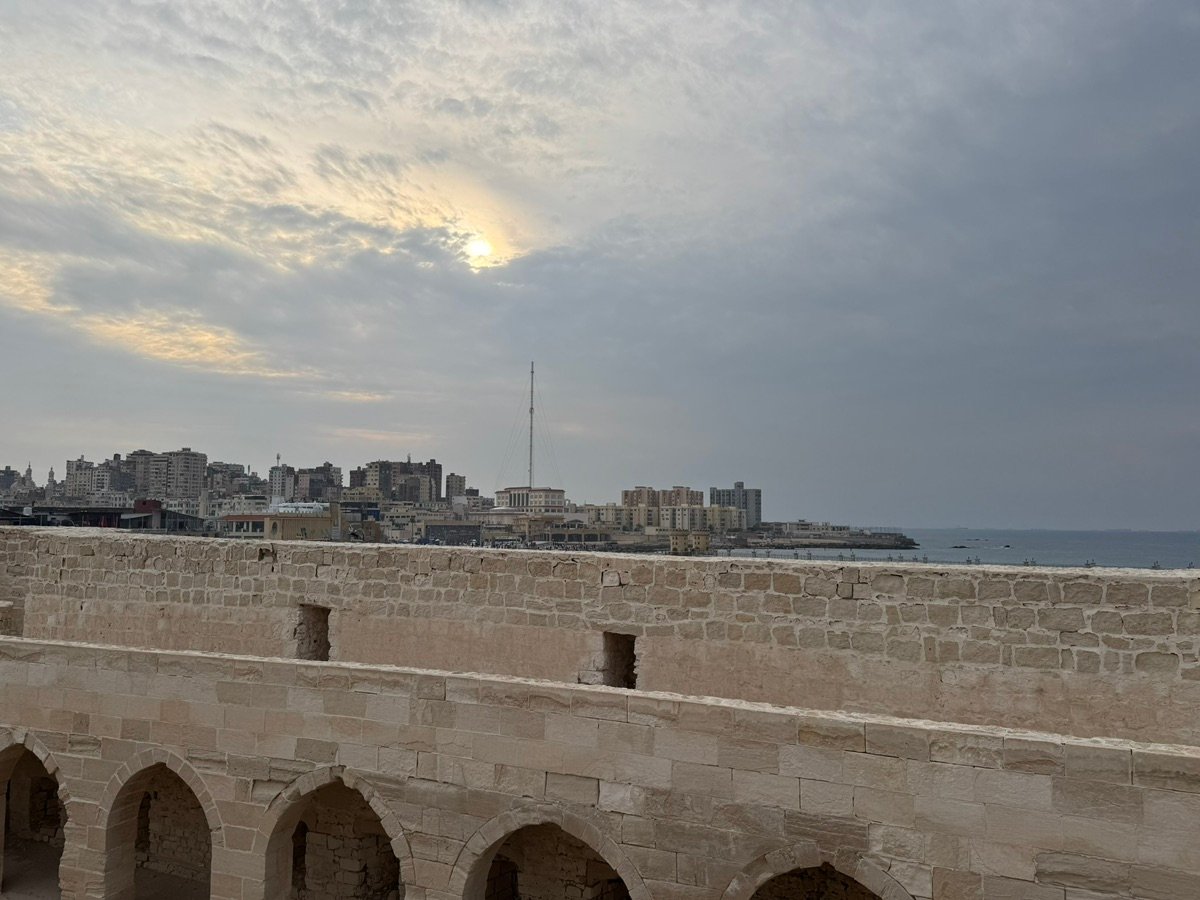
When you walk along the sea-facing walls of the Citadel of Qaitbay in Alexandria, Egypt, you are looking at the same harbor that ancient sailors watched thousands of years ago. From this raised stone pathway, the modern city curves around the water, creating a view where old stone meets the busy urban shoreline.
The fort built on top of a ancient wonder
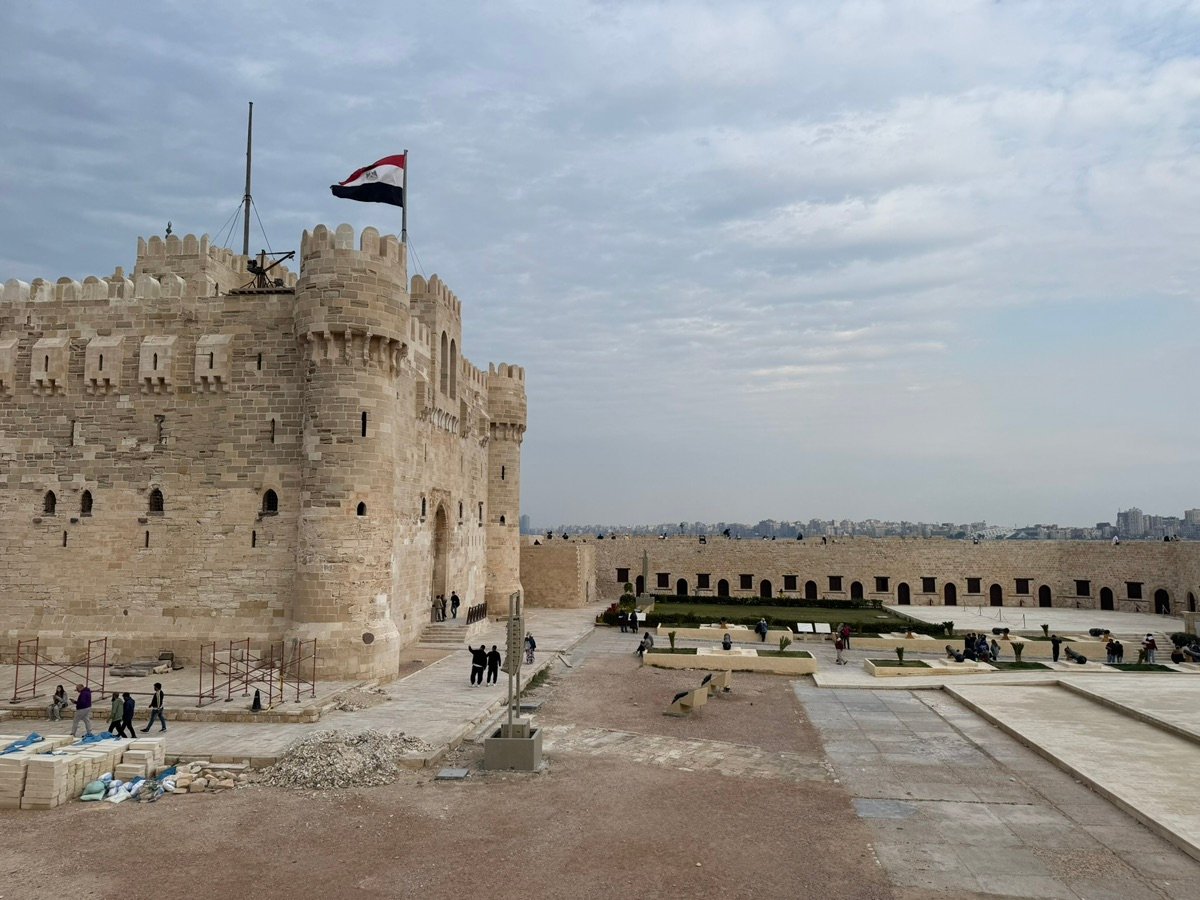
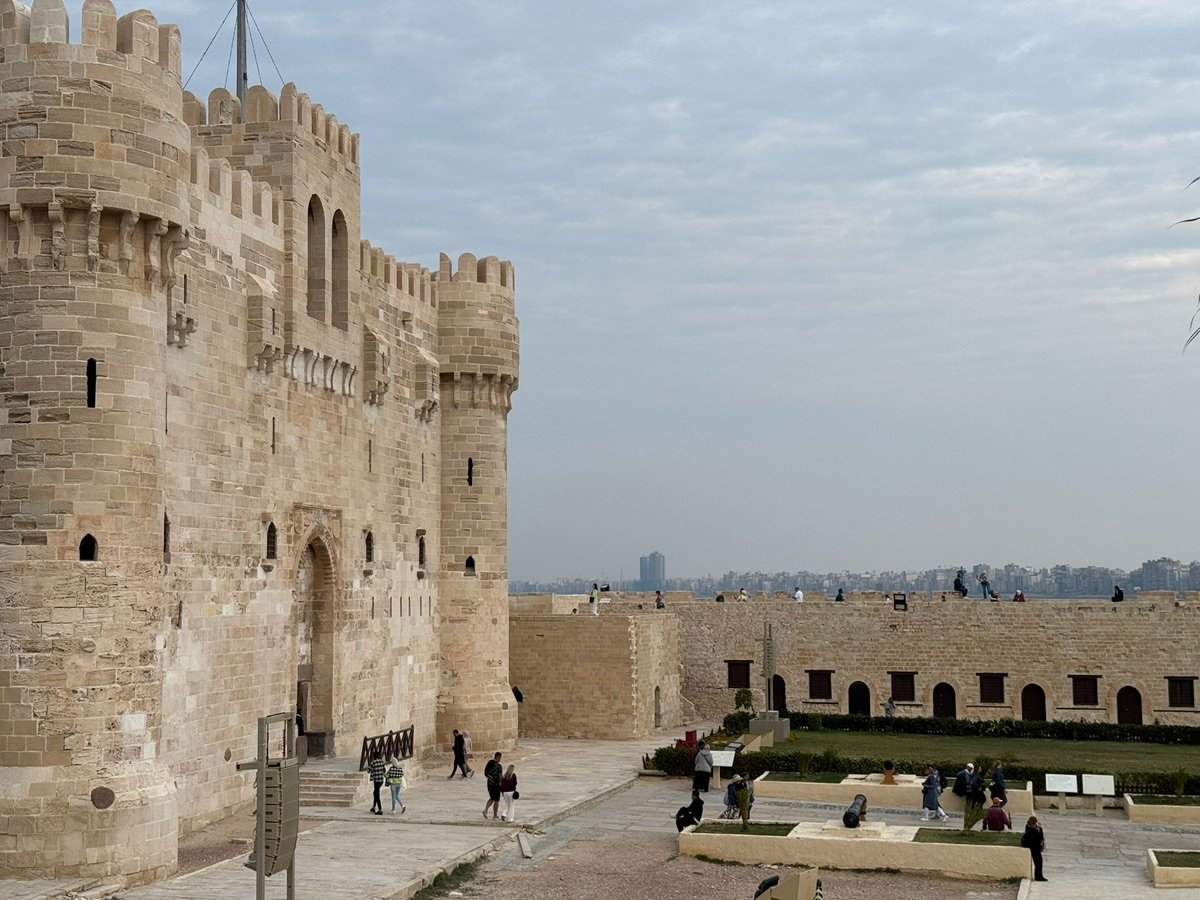
This stronghold was constructed during the 15th century by Sultan Qaitbay to defend the city from naval attacks. The most interesting part is that it occupies the exact site of the legendary Pharos Lighthouse, which was destroyed by earthquakes. Instead of sourcing new materials from far away, builders used the fallen limestone blocks of the ancient lighthouse to construct these very walls.
Fresh sea breeze and the sound of waves
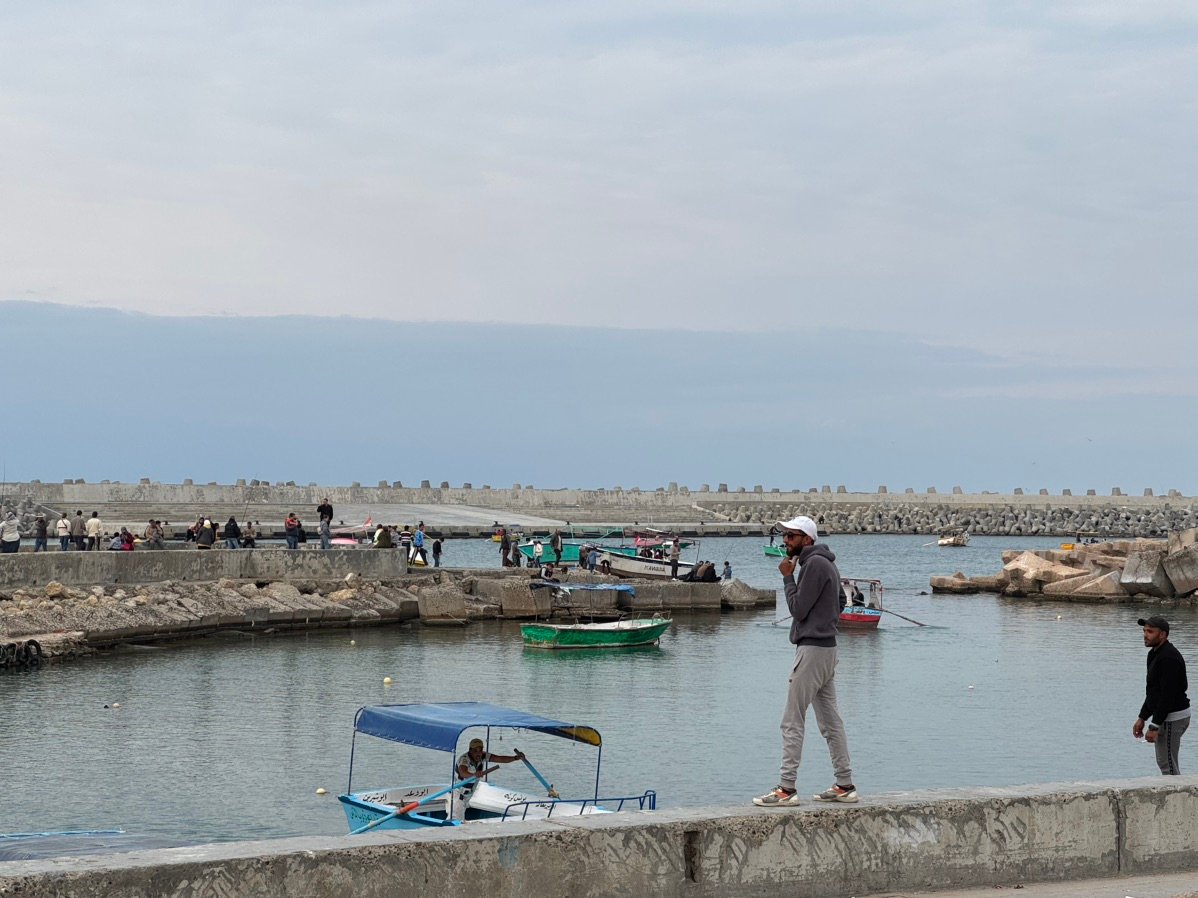
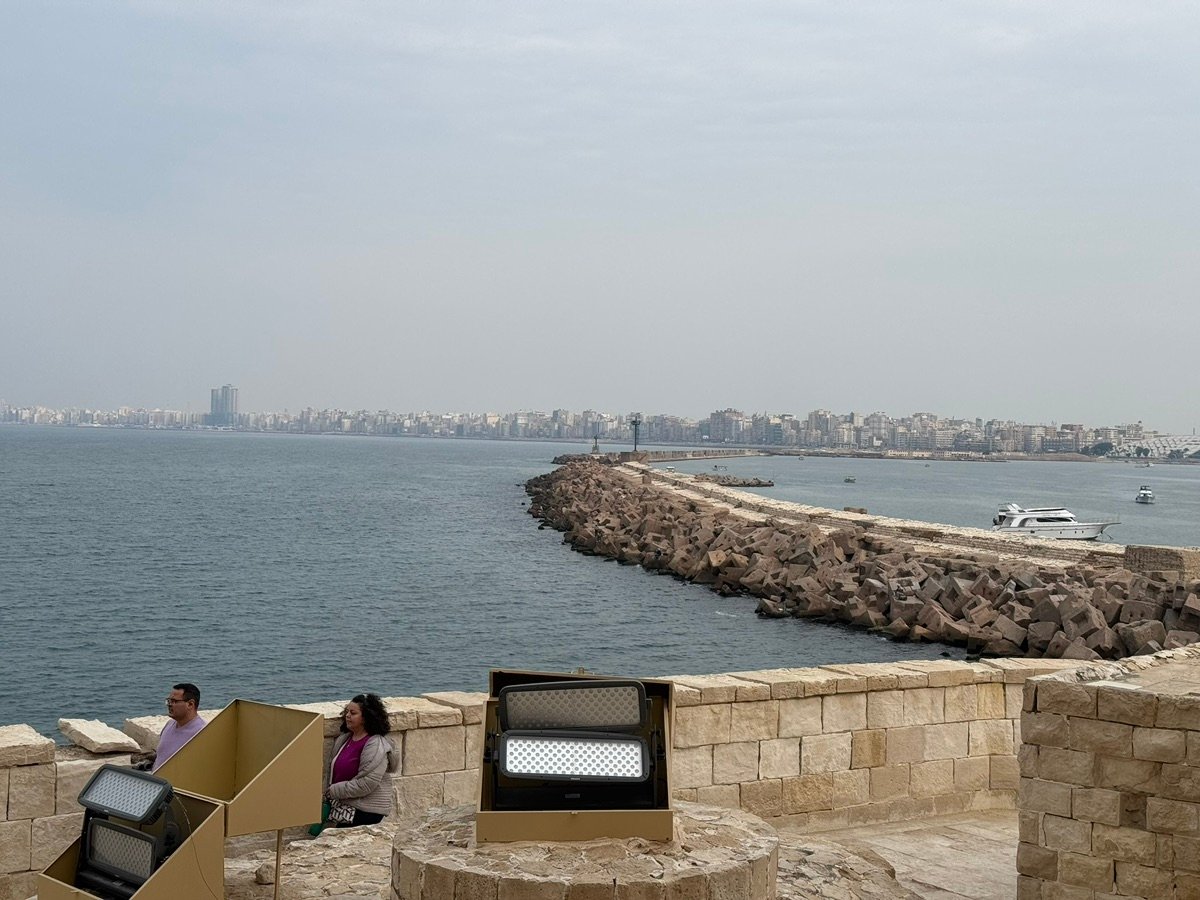
The atmosphere along the ramparts is relaxed. While the city streets behind you are packed and noisy, the air up here feels clean and cool. You will hear the constant sound of waves hitting the breakwater below and see local fishermen patiently waiting for a catch on the rocks. It is a favorite spot for families to stroll and enjoy the view of the Mediterranean.
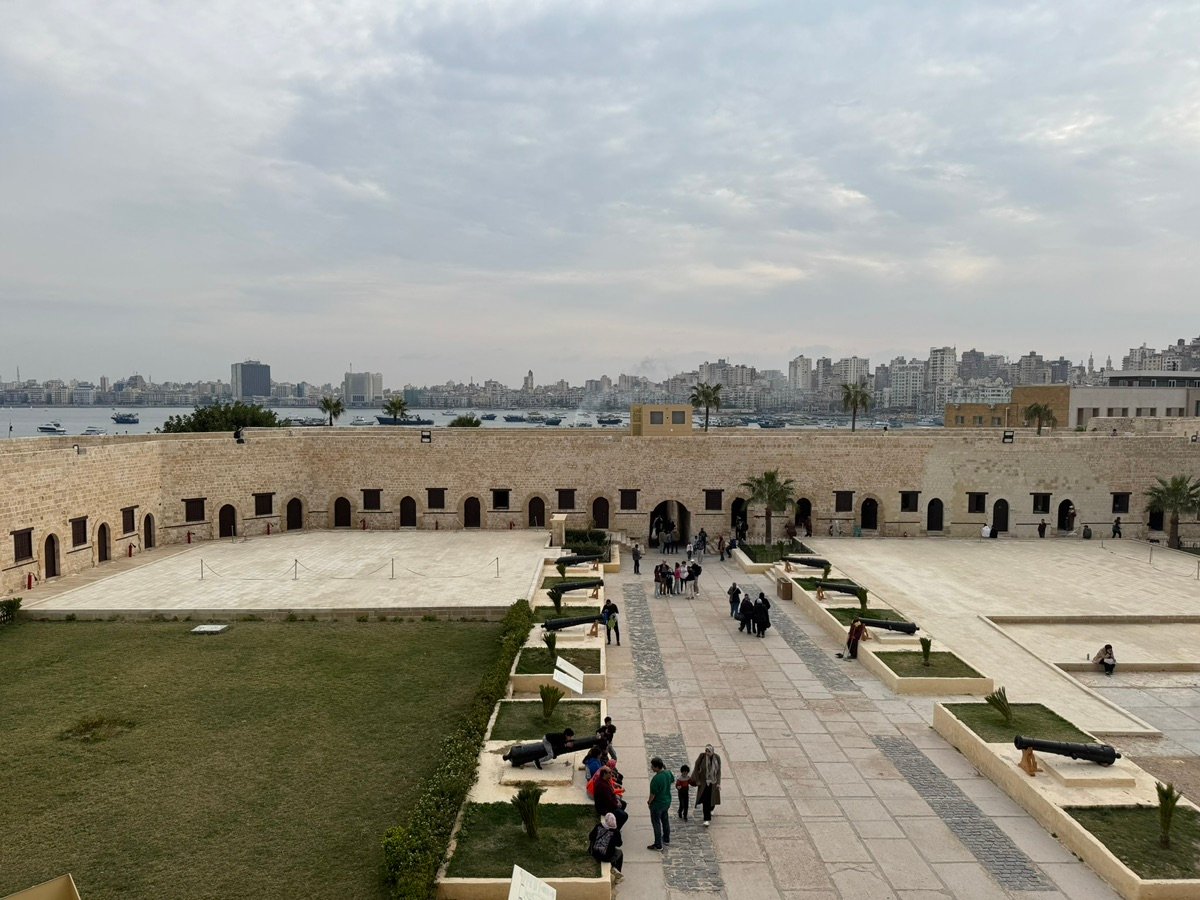
Spotting the modern library across the bay
If you look toward the far right of the curving bay, you can see the distinctive white, angled roof of the Bibliotheca Alexandrina. This modern structure is a nod to the ancient library of Alexandria, and seeing it from the medieval fortress walls connects different eras of the city in a single glance.
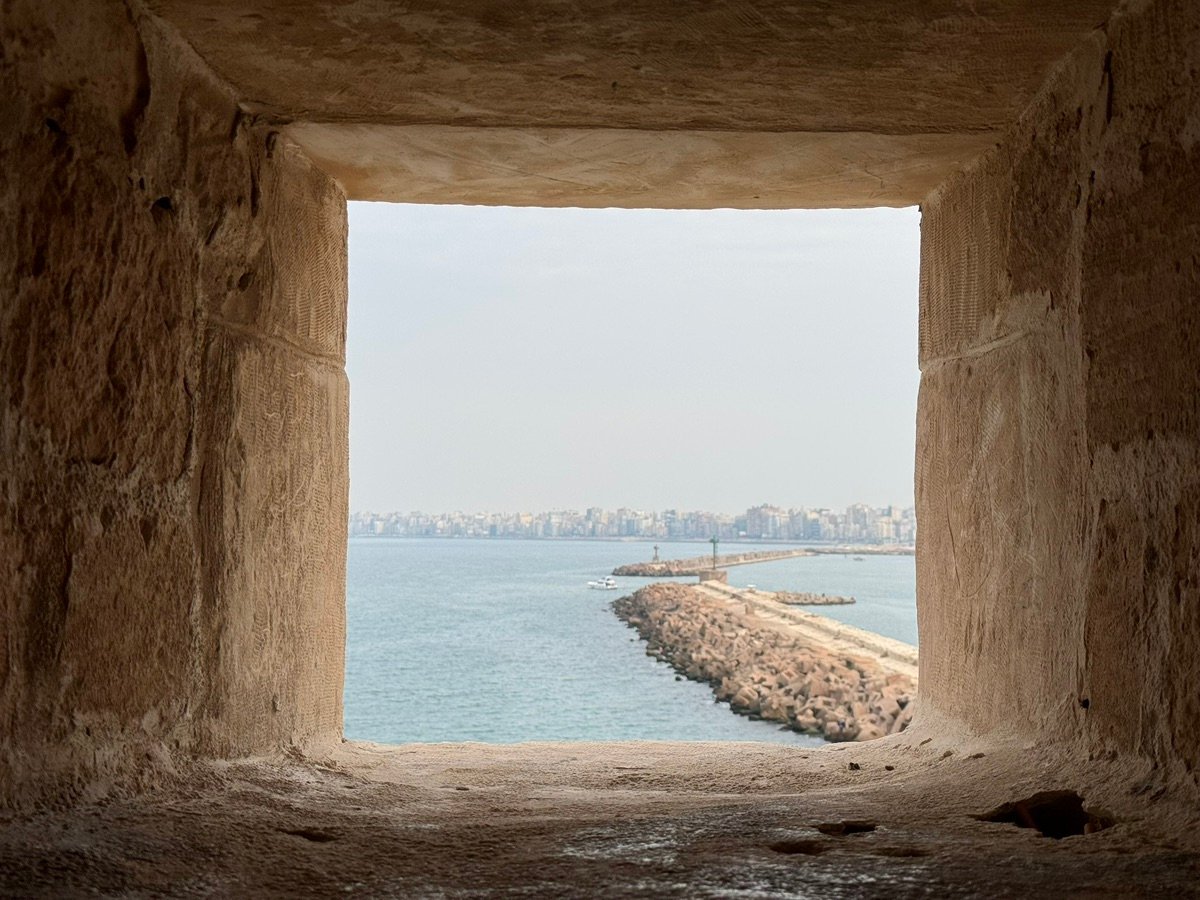
The massive limestone blocks under your feet
Take a close look at the lower levels of the walls and the floor of the ramparts. Some of the stone blocks are noticeably larger and rougher than others. These massive pieces of stone are believed to be the original remnants of the Pharos Lighthouse, repurposed to secure the fort’s foundation against the sea.
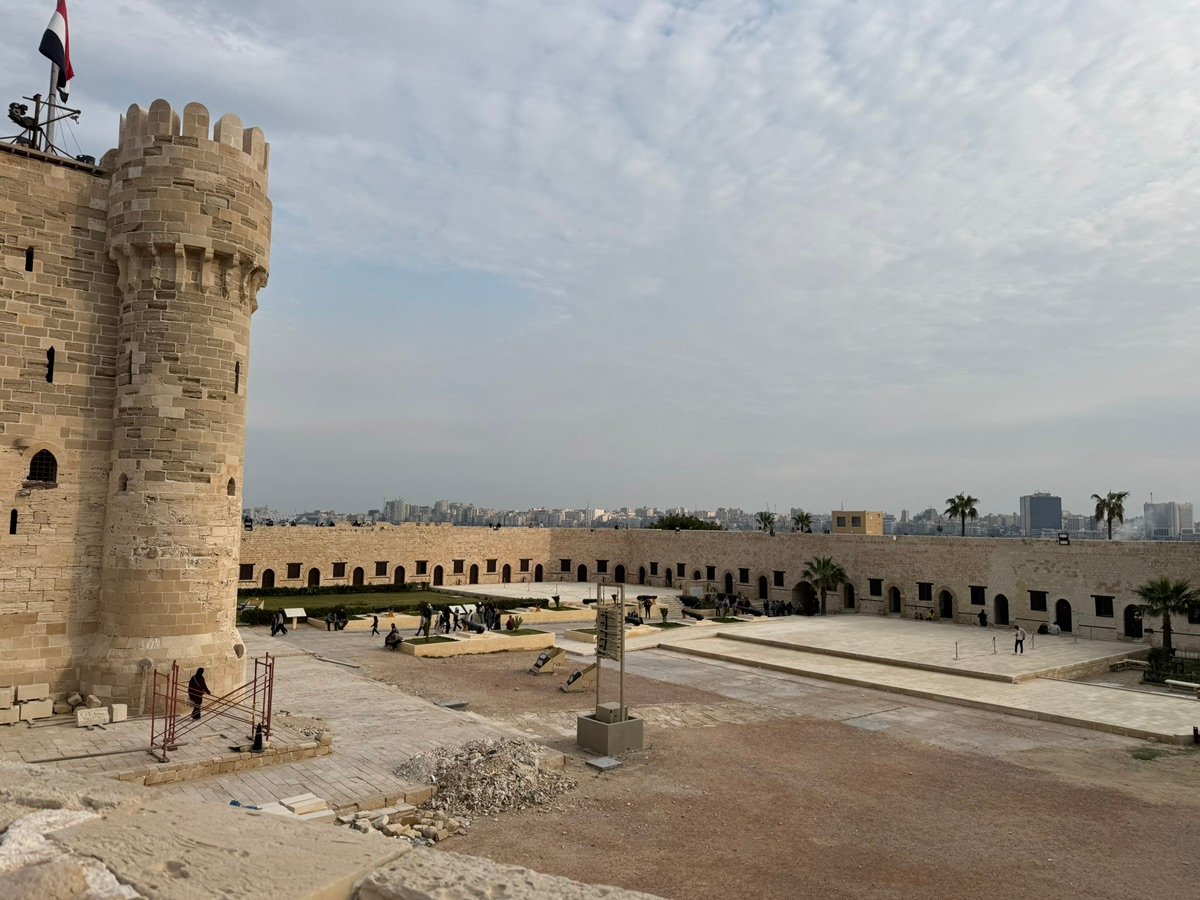
Watching the wooden fishing boats go by
The Eastern Harbour is always dotted with colorful wooden fishing boats alongside modern white yachts. Watching them maneuver through the narrow entrance of the harbor gives you a sense of the daily coastal life that has sustained this Egyptian port city for generations.
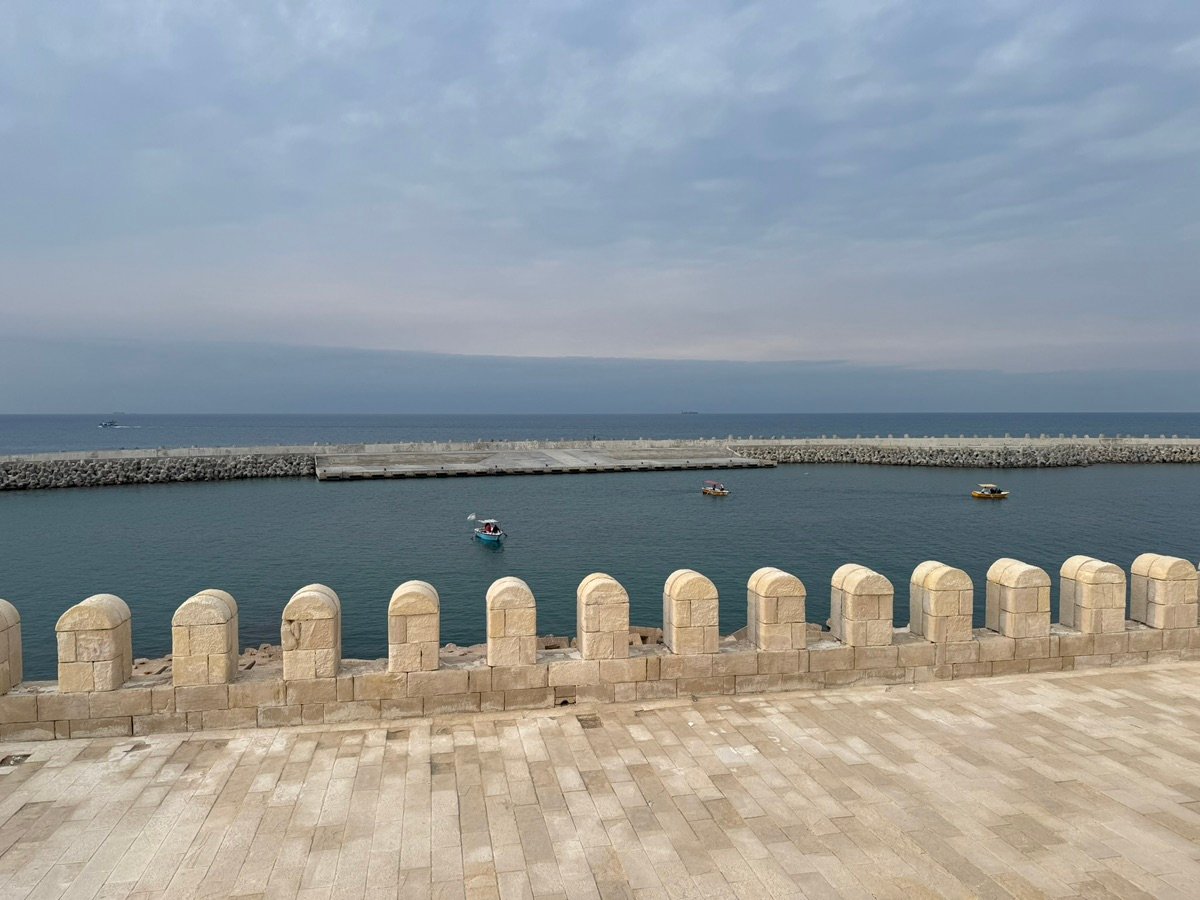
Best Timing
The best time to visit is in the late afternoon, about two hours before sunset. The temperature drops, and the low sun casts a warm glow over the pale limestone walls, making it ideal for taking photos. Arrive at least 45 minutes before closing time to ensure you have enough time to explore the inner chambers and walk the outer walls before they close the gates.
Climate & Best Season
Alexandria has a Mediterranean climate, making it much cooler and more humid than Cairo. Summers (June to August) average around 30°C with high humidity but pleasant sea breezes. Winters (December to February) are mild, averaging 14°C, but can bring rain and strong winds. The best months to visit are from March to May and from September to November, when the weather is comfortable for walking outside.
Traveler’s Memo
Access
You can easily reach the fort by taking a taxi or using a ride-hailing app from central Alexandria. It is located at the very western end of the Corniche road. If you prefer a slow, scenic route, you can walk along the Corniche from the city center, which takes about 30 to 45 minutes.
Budget
The entrance ticket for international tourists is around 300 EGP, with discounts available for students with valid ID. Card payments are generally required at the ticket office, so make sure to bring a credit or debit card.
Recommended Gourmet
Directly outside the fort and along the harbor, you will find several local seafood restaurants. Try the fresh grilled sea bass or calamari seasoned with cumin and garlic, served with traditional yellow rice.
Nearby Spots
- Bibliotheca Alexandrina: A massive modern library and cultural center built to commemorate the ancient library.
- Roman Amphitheatre: An excavated 2nd-century Roman theater located in the middle of the city.
FAQ
Are there bathrooms inside the fortress?
Yes, there are basic public restrooms located near the entrance of the complex, but it is recommended to carry your own tissue paper.
Is the site accessible for visitors with limited mobility?
The outer courtyard is relatively flat, but accessing the ramparts, upper walls, and inner chambers requires climbing steep stone stairs without handrails.
How long does it take to explore the citadel?
Most visitors spend about 1 to 1.5 hours exploring the inner rooms, walking along the high walls, and taking in the harbor views.