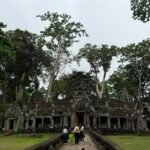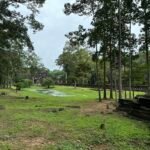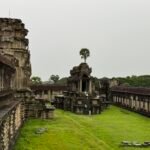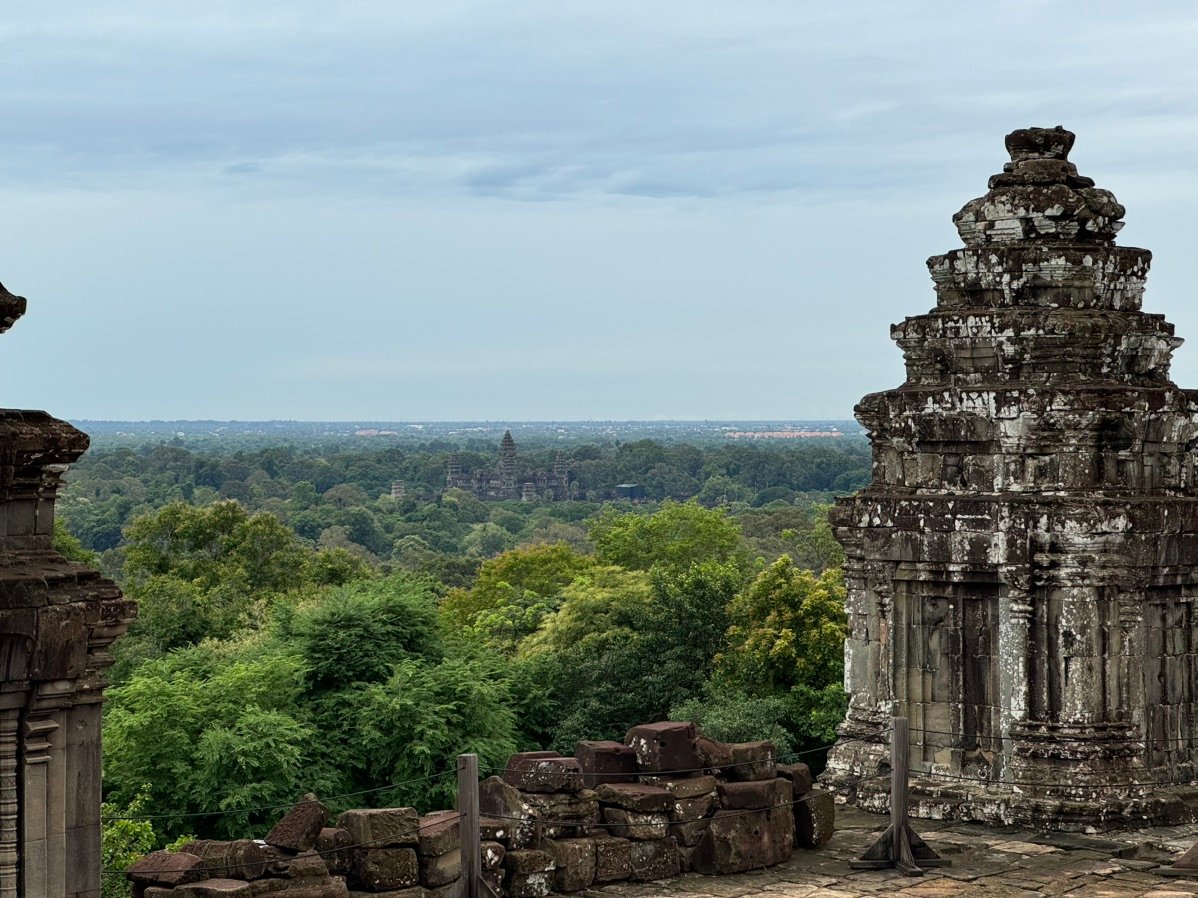
You know that classic photo of Angkor Wat’s central towers peeking through a massive sea of green trees? That view is captured from the top of Phnom Bakheng, a historic temple mountain in Cambodia. It is one of the oldest temples in the Angkor archaeological area, sitting on a natural hill that gives you a complete panoramic look at the surrounding plains.
It was built long before Angkor Wat even existed
While everyone associates this region with Angkor Wat, this hilltop sanctuary was actually built at the end of the 9th century, nearly two centuries earlier. King Yasovarman I moved his capital here and chose this hill as his temple mountain, dedicating it to Shiva. Its structure represents Mount Meru, the home of the Hindu gods, built in a massive stepped pyramid shape with dozens of smaller stone towers surrounding the central platform.
A cool breeze and the sound of cicadas from the jungle
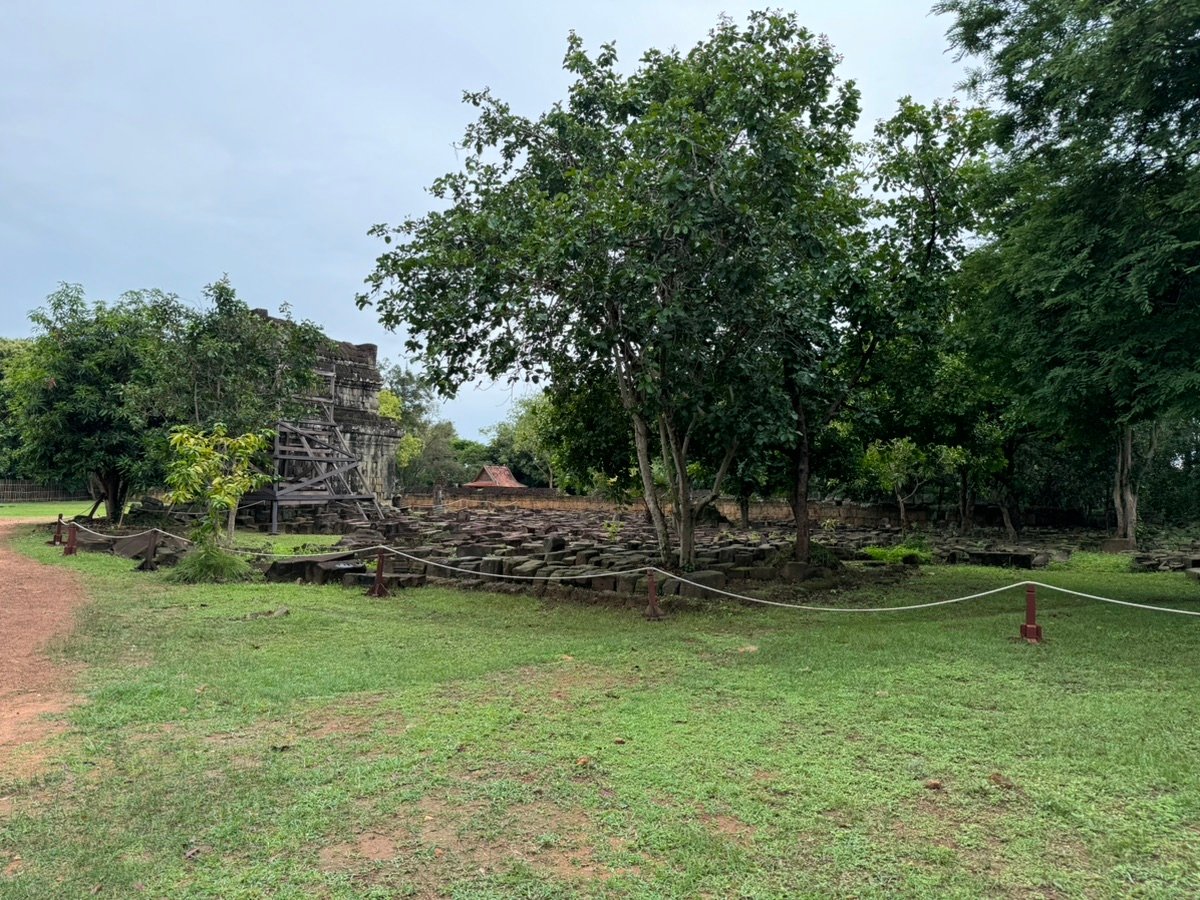
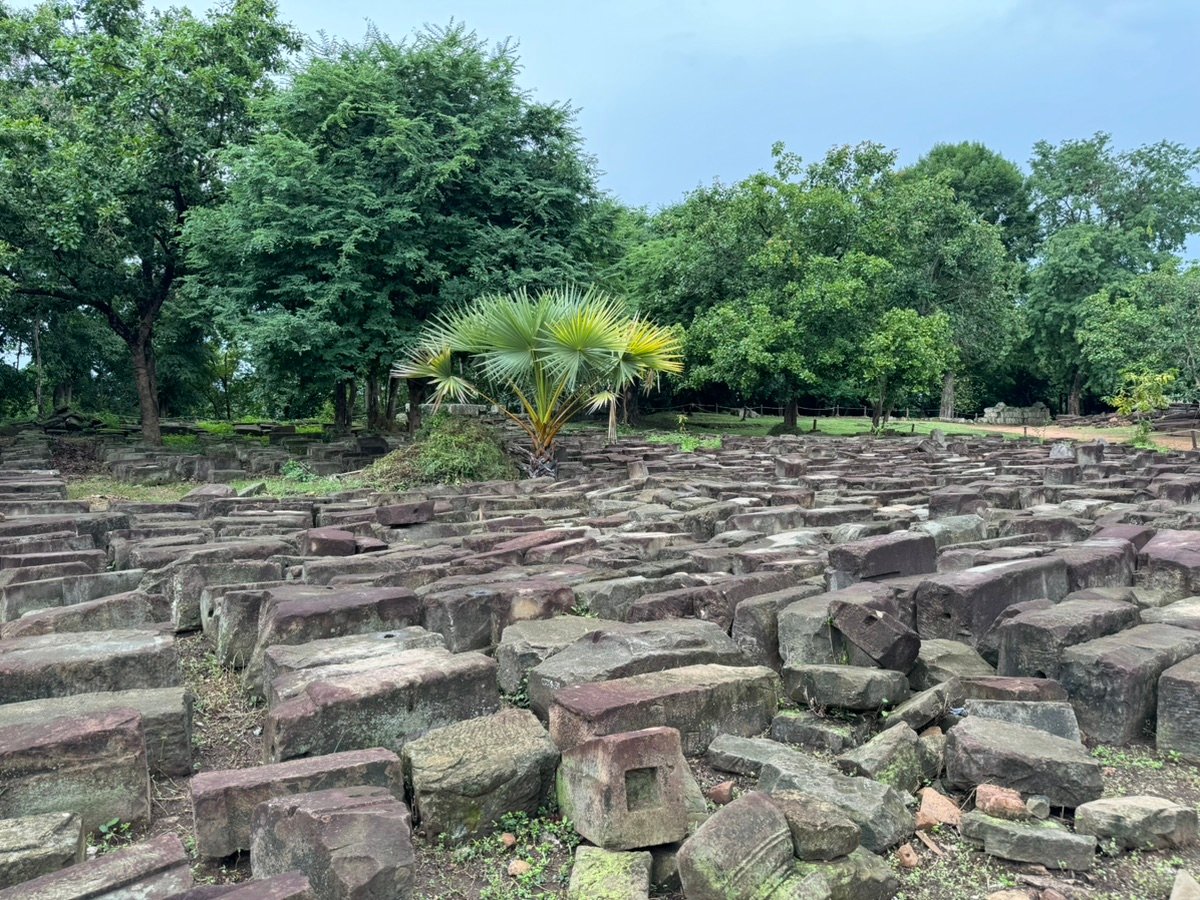
Climbing up the hill in the late afternoon heat feels intense, but once you step onto the top stone terrace, the breeze takes over. Standing next to these ancient, weathered blocks of gray-brown sandstone, you look out at an ocean of green canopy. In the distance, the sharp spires of Angkor Wat cut through the horizon, looking small but incredibly distinct. There is a quiet hum of cicadas and wind, interrupted only by the gasps of travelers seeing the vast landscape for the first time.
Look closely at the seven-tiered design
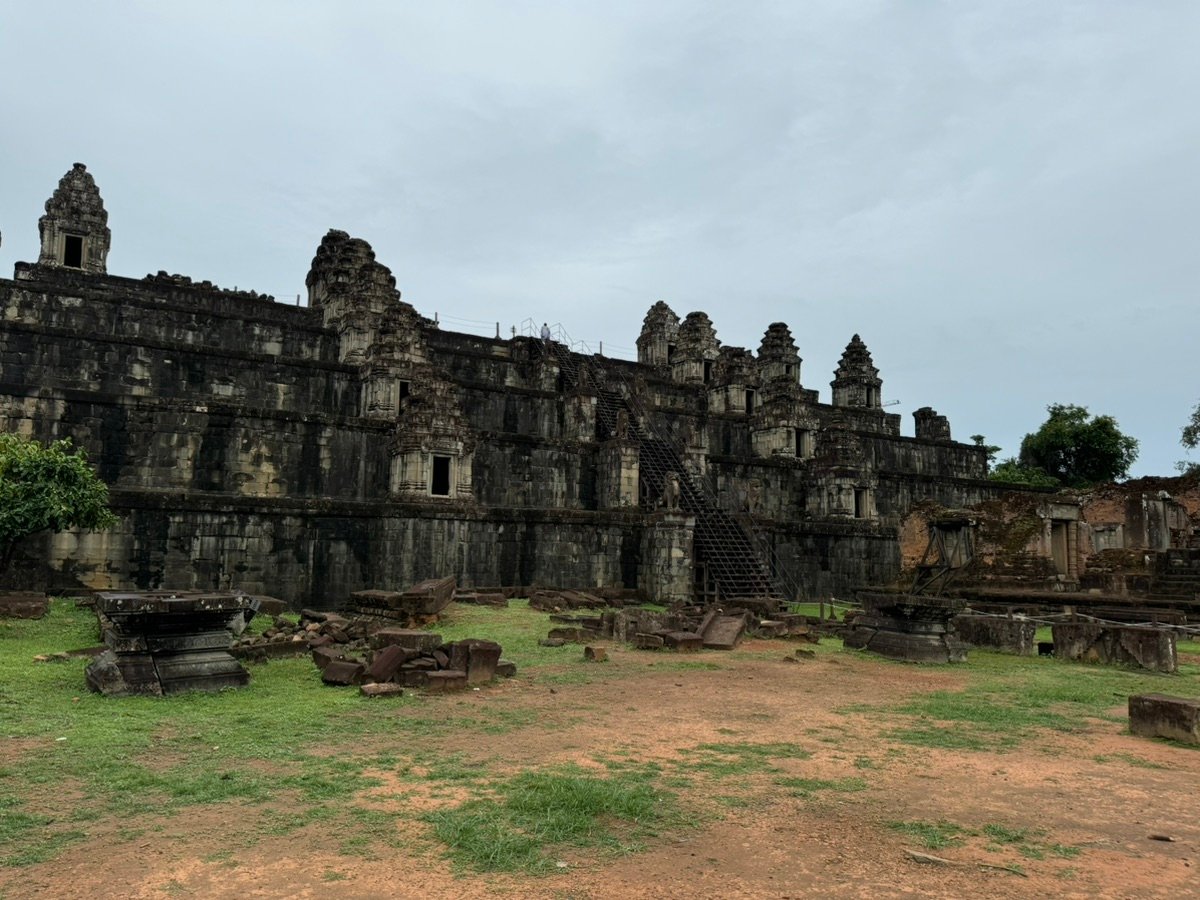
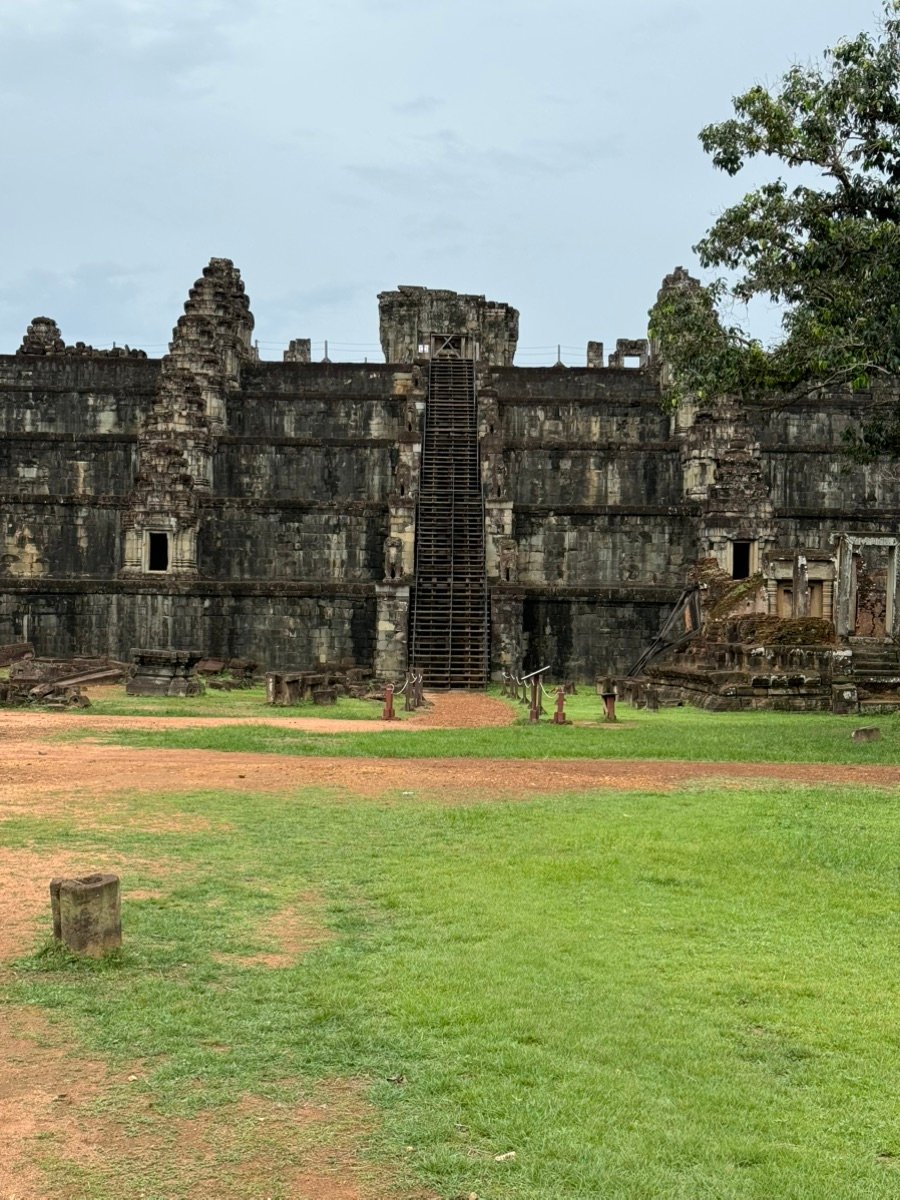
The pyramid has seven levels, representing the seven Hindu heavens. As you walk up the narrow, steep stairs, notice how the towers are positioned. There are exactly 108 small towers around the monument, a sacred number in Hindu cosmology. When you stand directly in front of any of the four sides, some towers block others so that you can never see all of them at once. It is an intentional design trick created by ancient architects.
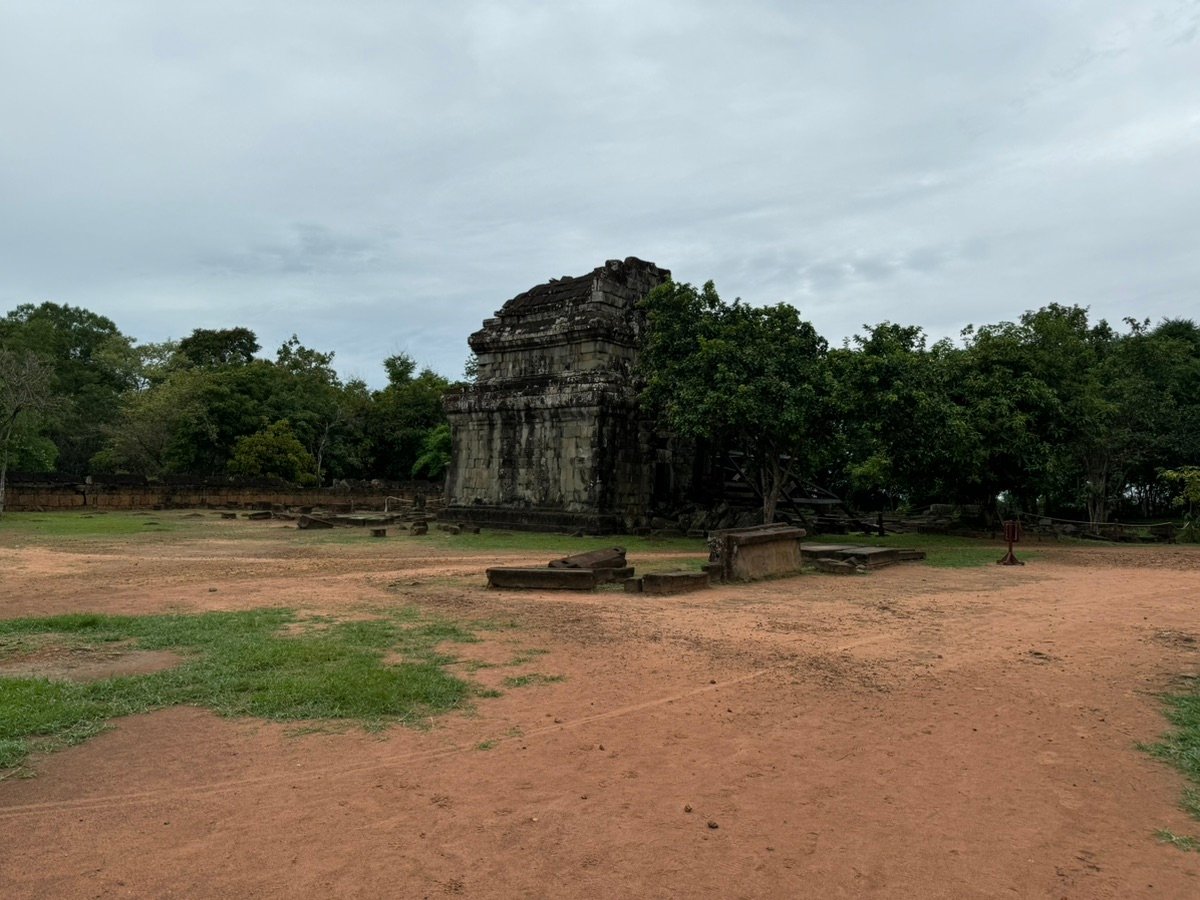
The preserved stone carvings on the top terrace
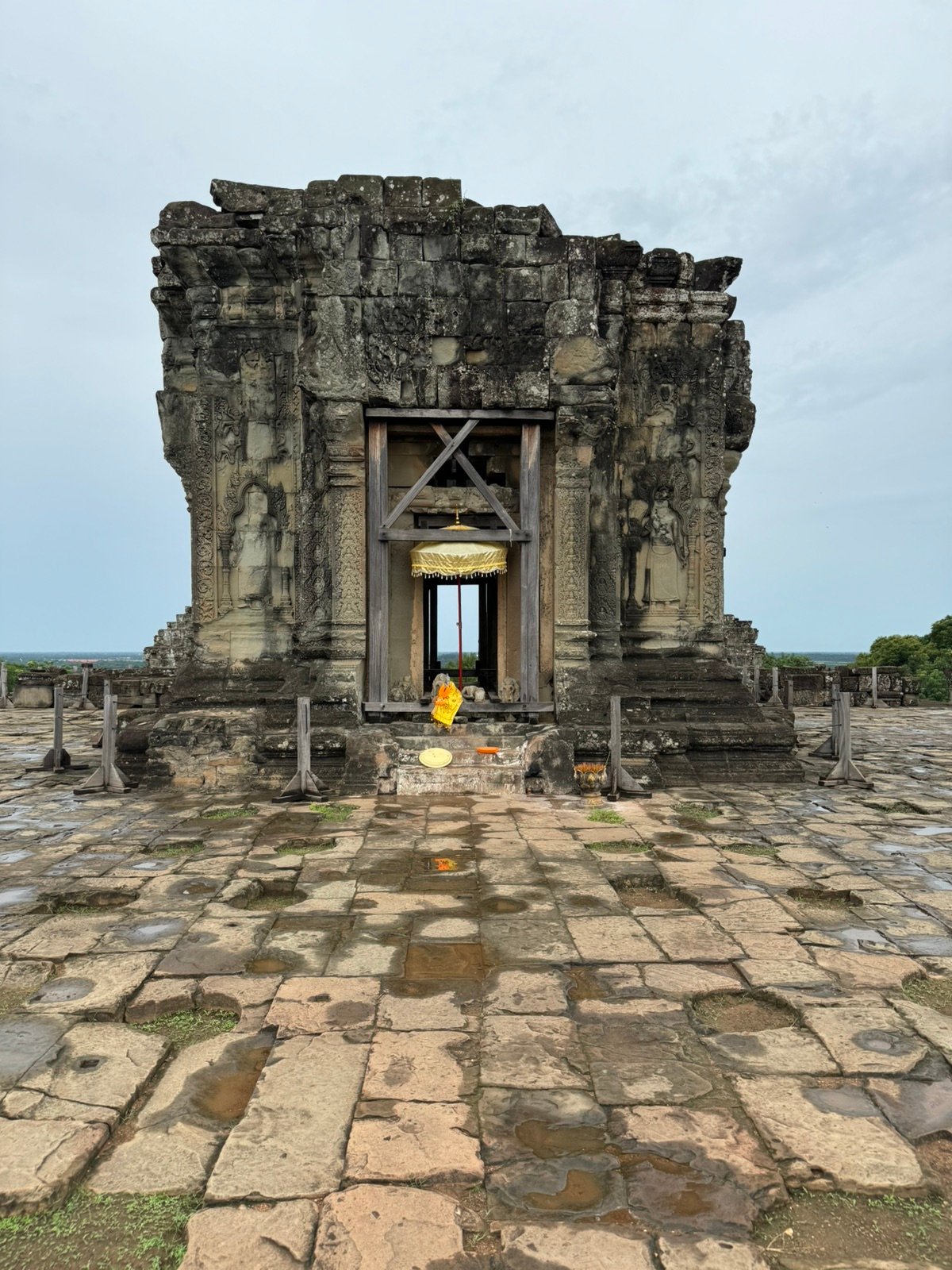
Many of the stones on the lower levels are heavily weathered, but if you look at the door frames of the remaining towers on the top platform, you can still find delicate carvings of Devatas (sacred female figures). They have survived over a thousand years of tropical rains and shifting empires.
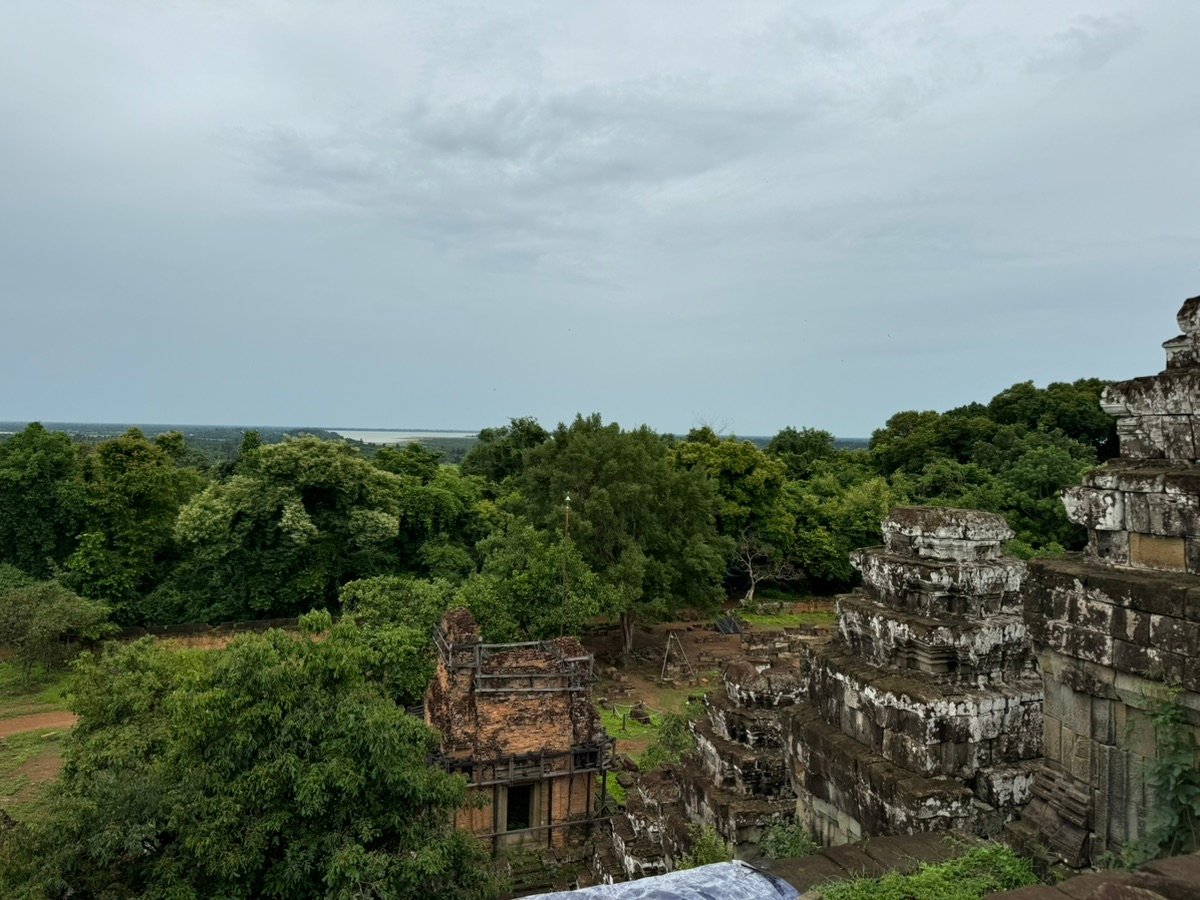
The steep steps that make your knees shake
The original stone stairs leading up the tiers are incredibly steep and narrow, designed to make visitors climb mindfully towards the gods. Today, modern wooden stairs have been built over them to protect the structure and keep you safe, but looking down at the original steep steps gives you a real appreciation for those who built and worshipped here.
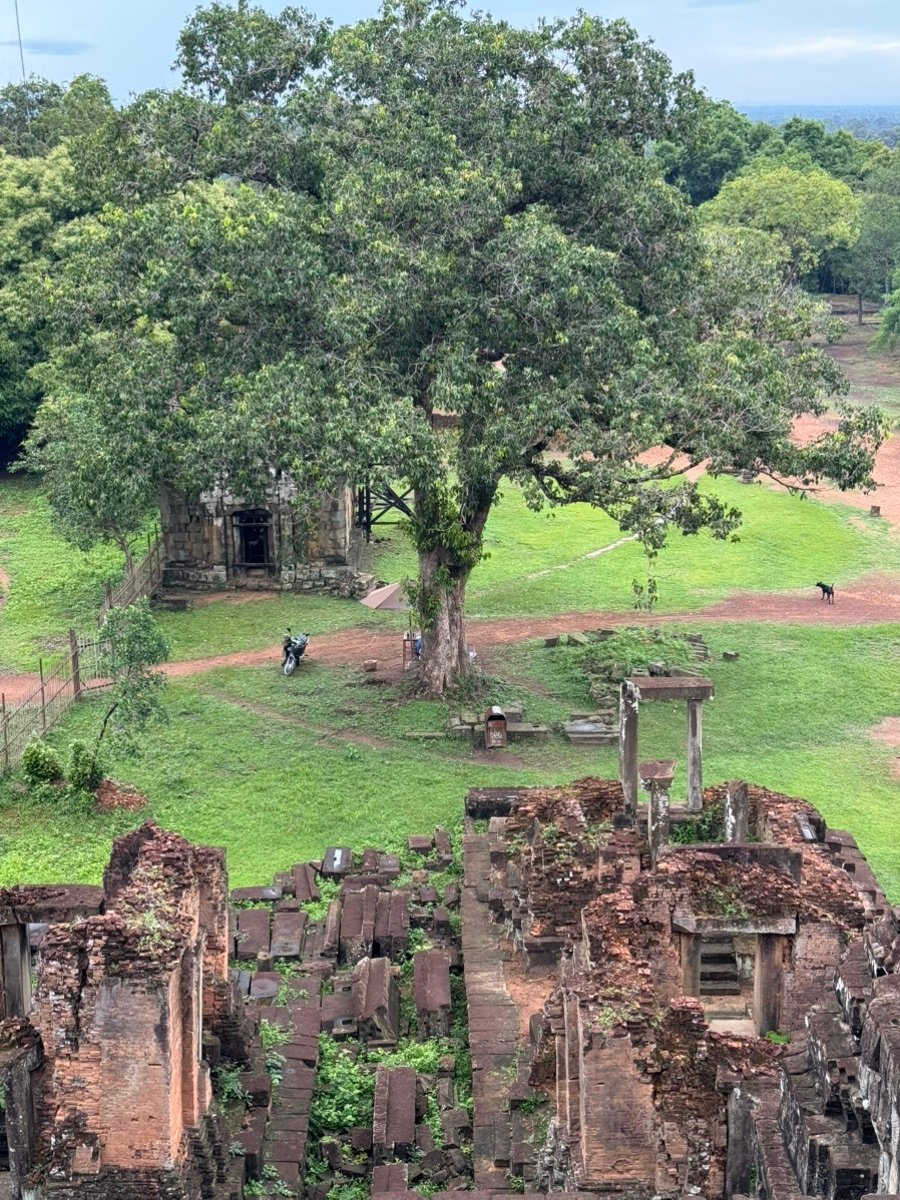
The view of the Tonle Sap lake on a clear day
While everyone turns east to spot the towers of Angkor Wat, look south. On a clear day, you can see the shimmering waters of the Tonle Sap, Southeast Asia’s largest freshwater lake, stretching out toward the horizon. It shows how strategically placed this hill really was.
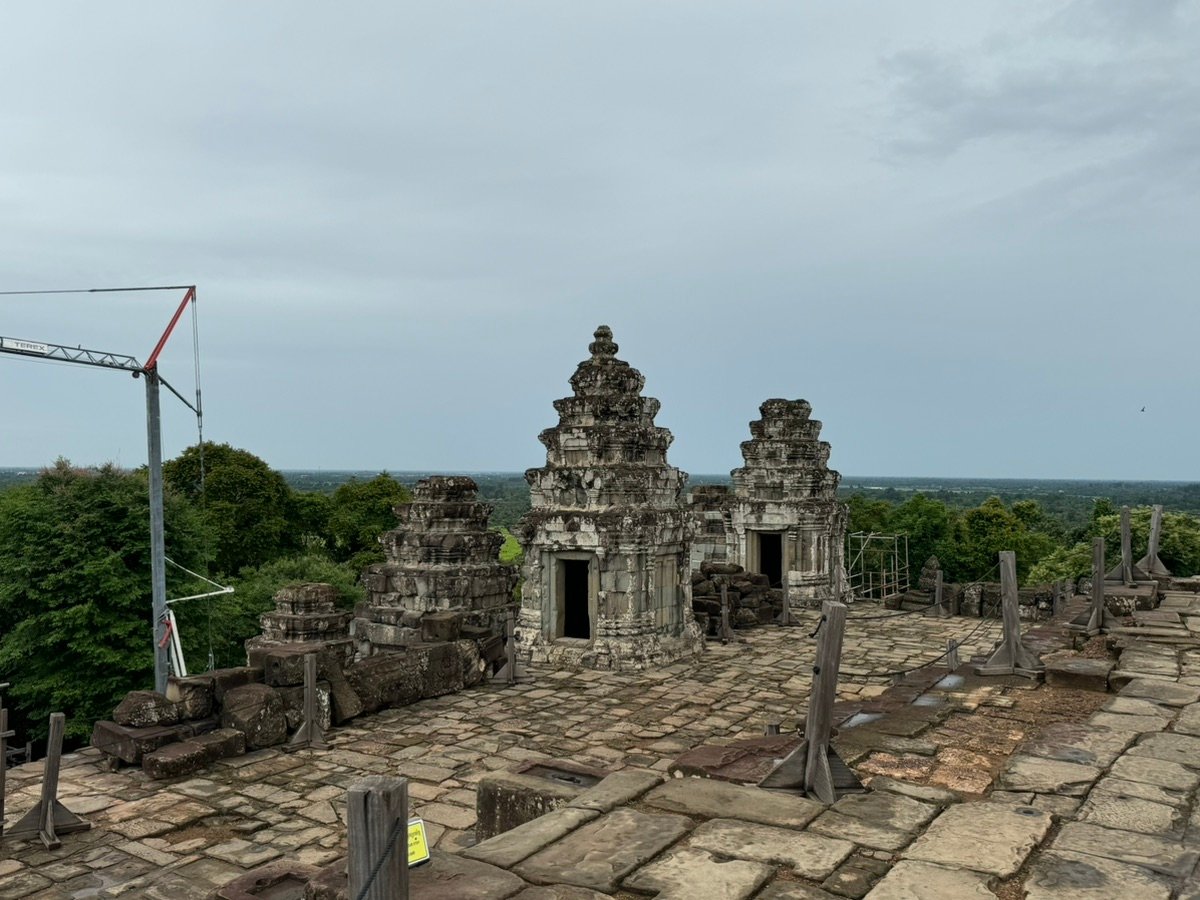
Best Timing
You want to get up here for the sunset, but so does everyone else. Because of safety and preservation rules, only 300 people are allowed on the top terrace at any given time. A pro-tip is to arrive at the hill by 4:00 PM at the latest. If you wait until 5:00 PM, you will likely get stuck in a long queue at the bottom of the temple stairs, missing the sunset entirely while watching people slowly descend.
Climate & Best Season
Cambodia is tropical and warm throughout the year, with temperatures averaging between 24°C and 35°C. The rainy season runs from May to October, bringing lush green scenery but cloudy afternoons that might block the sunset. The dry season from November to April is much more reliable, with November to February being the absolute best months to visit because the air is drier and slightly cooler.
Traveler’s Memo
Access
Located about 8 km north of Siem Reap. You can take a 15–20 minute tuk-tuk ride from the city center, costing $5–$8 USD for a round-trip if booked point-to-point. Once you reach the base of the hill, it is a 15–20 minute walk up a wide, winding gravel path to the temple’s summit.
Budget
There is no separate ticket for this temple; entry is fully included in your Angkor Pass, which costs $37 for 1-day, $62 for 3-day, and $72 for 7-day access. Booking a full-day tuk-tuk charter to tour this and nearby temples costs about $15–$25 USD (approx. 60,000–100,000 KHR). Hiring a local temple guide is around $40–$45 USD per day. US dollars are widely used and accepted everywhere, and haggling with drivers is expected.
Recommended Gourmet
Walk down to the open-air food stalls outside the nearby Angkor Wat complex entrance or head to Road 60 in the evening to try local Cambodian dishes. You must try fish amok, a creamy coconut-based fish curry steamed in banana leaves, or nom banh chok, which are traditional Khmer noodles topped with a light, aromatic fish gravy.
Nearby Spots
- South Gate of Angkor Thom: The grand, statue-lined entrance to the ancient city of Angkor Thom, located just north of the hill.
- Baksei Chamkrong: A small, elegant stone pyramid temple located right at the foot of the hill.
- Angkor Wat: The legendary temple complex visible from the hilltop, located just a short drive to the south.
FAQ
Is Phnom Bakheng safe for beginners?
Yes, the path up the hill is wide and gentle, and the steep temple steps are now climbed via a sturdy wooden staircase with handrails.
Do I need a separate ticket to visit?
No, entry is included in your standard Angkor Pass. You do not need to buy an extra ticket.
What should I wear to Phnom Bakheng?
Like all temples in the Angkor park, you must cover your shoulders and knees. Tight leggings or sheer clothing are not allowed.