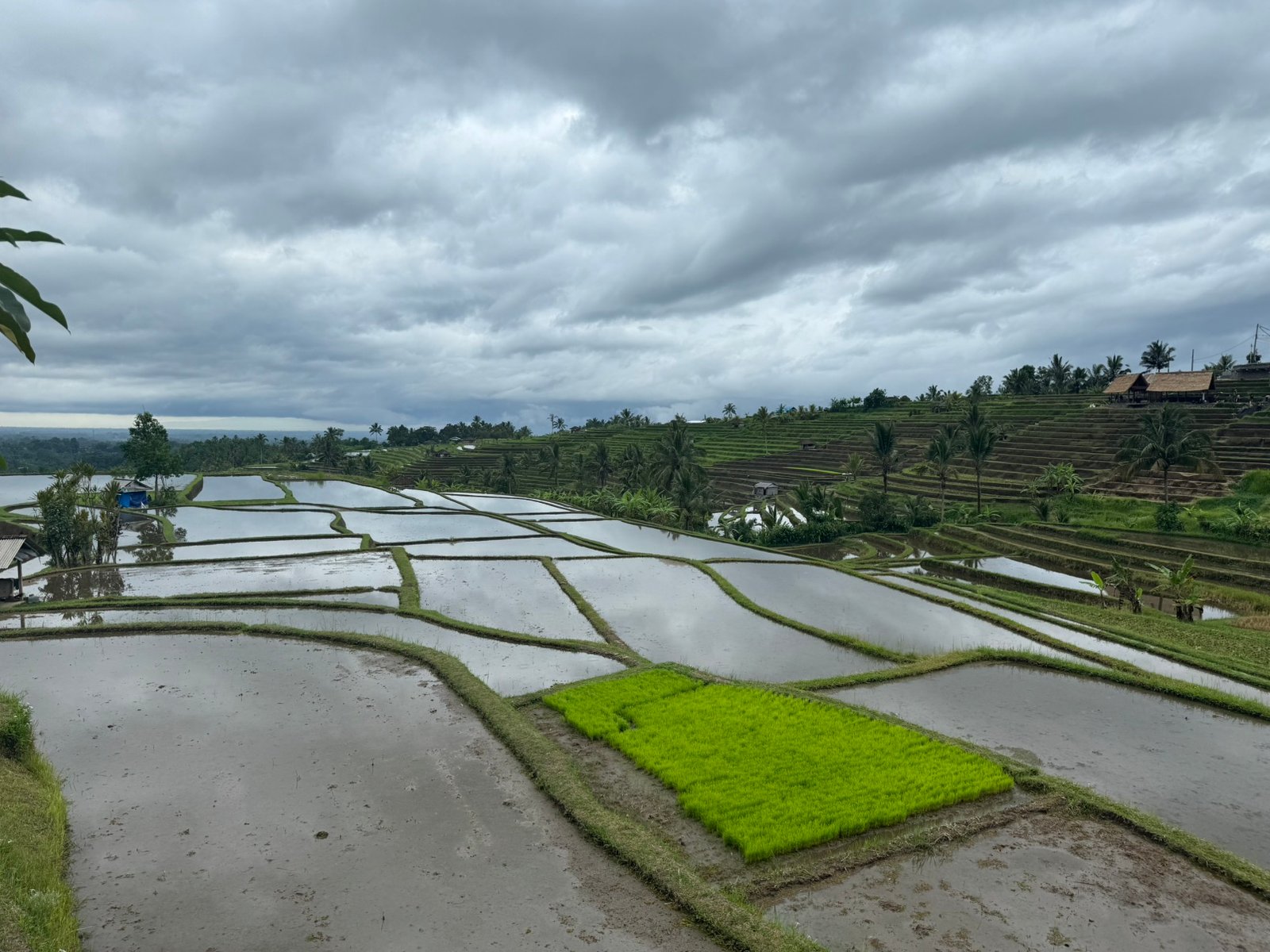
That green patch of young seedlings standing out against the mirror-like flooded fields is what you see when you first look down at the terraces.
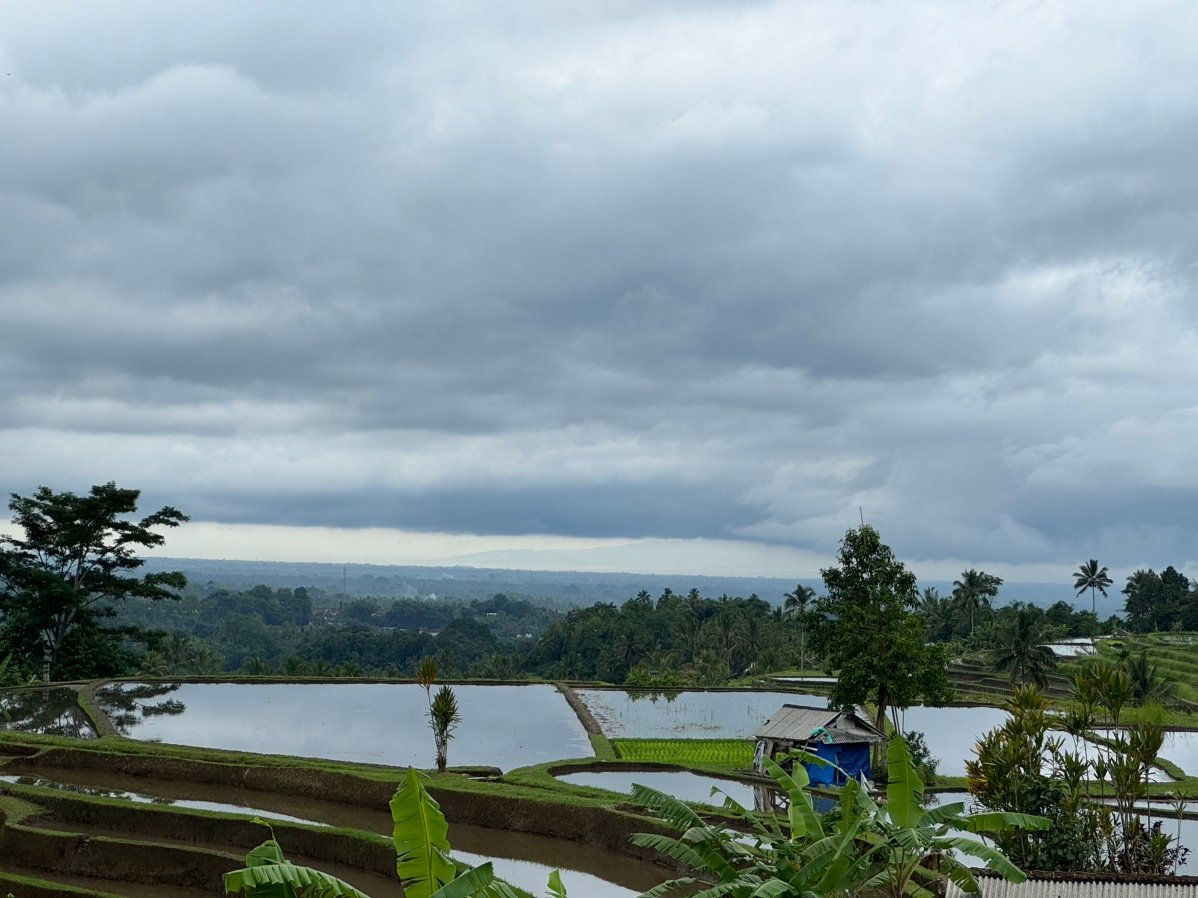
This farming system is actually over a thousand years old
These terraced fields at the Jatiluwih Rice Terraces in Indonesia are not just a pretty view. They use an ancient Balinese cooperative irrigation system called Subak, which dates back to the 9th century. Water flows down from mountain springs through temples and cooperative canals, sharing the resource equally among local farmers. It is so culturally significant that the entire region is recognized as a UNESCO World Heritage site.
The wind sounds different when there are no crowds around
Unlike the busy tourist spots closer to Ubud, this place feels incredibly open and peaceful. When you stand near the edge of the paths, you can hear the constant trickle of running water moving between the terraces and the sound of palm leaves rustling in the breeze. The air is noticeably cooler here because of the higher elevation, making the walk along the paved pathways highly enjoyable.
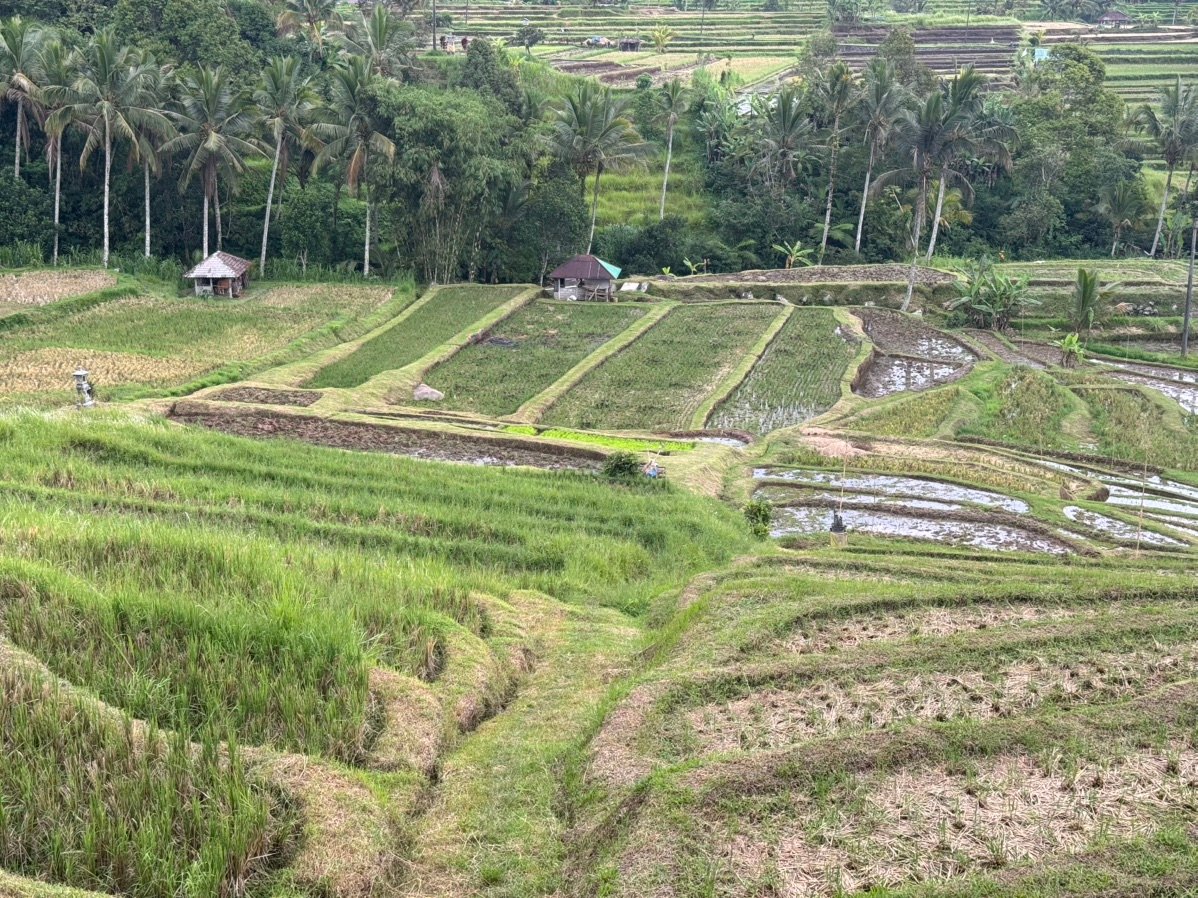
Keep an eye out for the bright green seedling nurseries
If you look closely at the flooded paddies, you will notice small, rectangular patches of incredibly bright, dense green grass. These are the nurseries where farmers grow young rice shoots before transplanting them into the wider mud fields. It creates a striking contrast against the reflective brown and gray water that fills the rest of the terraces.
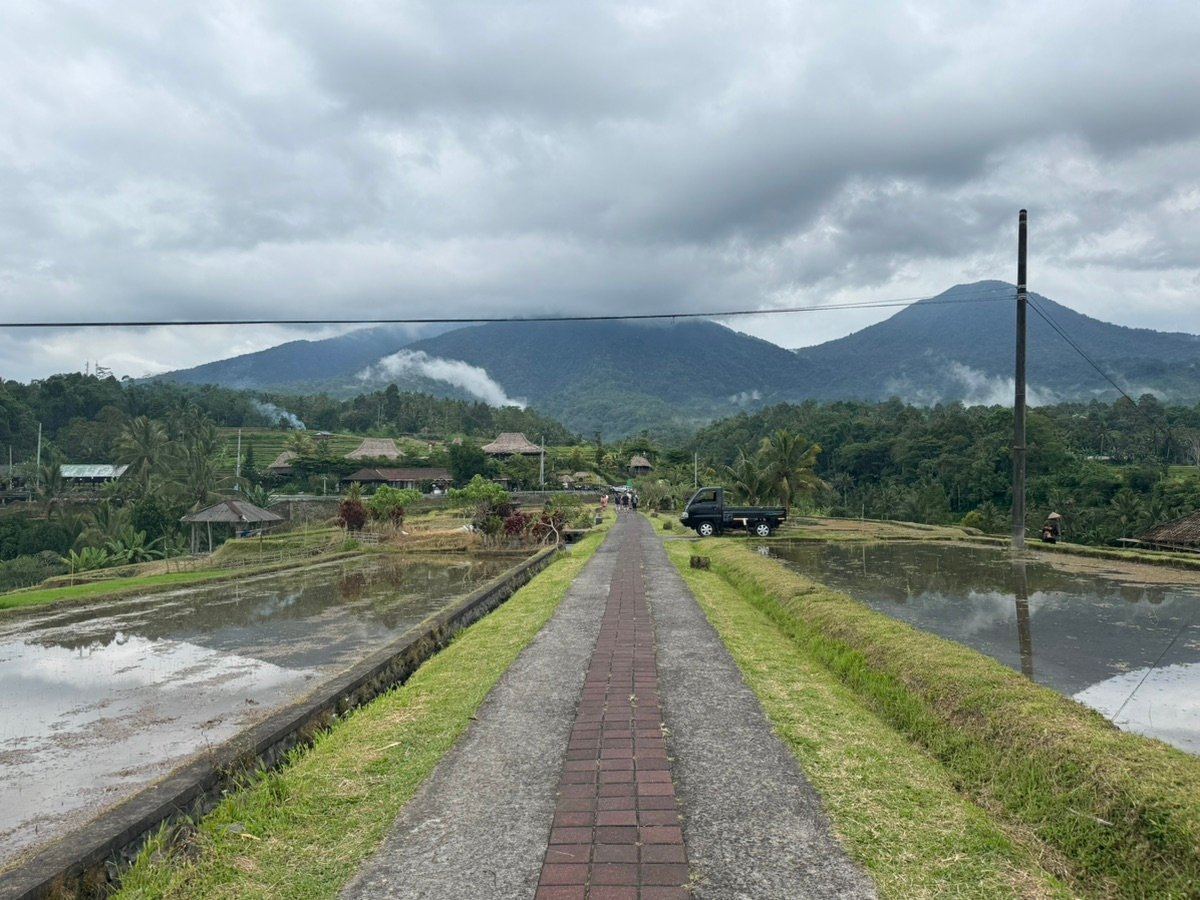
The small wooden shelters on the hillsides
Scattered across the ridges, you will see simple wooden huts with thatched roofs. Farmers use these small structures to take breaks from the midday sun, store their tools, or keep watch over the crops. They blend perfectly into the agricultural fields, showing the simple lifestyle that has kept this place running for generations.
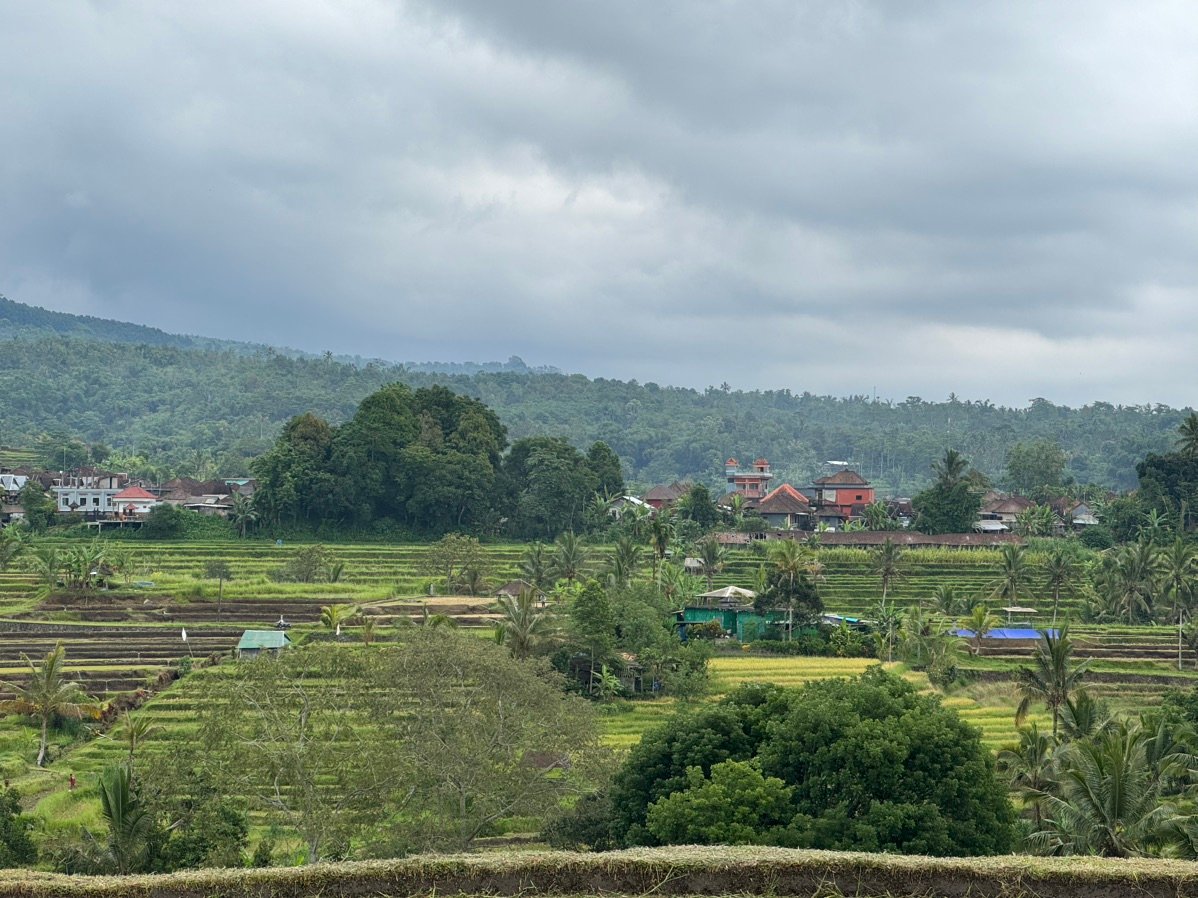
Best Timing
To see the fields reflecting the sky like mirrors, try to visit during the planting season around April or May when the terraces are freshly flooded. For the greenest views, visit just before the harvest in June. Aim to arrive by 8:00 AM to beat both the afternoon rain clouds and the tour buses that usually show up around midday.
Climate & Best Season
This highland area is cooler than coastal Bali, with average temperatures ranging from 20°C to 28°C. The dry season runs from April to October, which is the best time for walking. The wet season from November to March brings frequent afternoon downpours, which make the paths slippery but fill the terraces with abundance of water.
Traveler’s Memo
Access
The easiest way to get here is by hiring a private driver or renting a scooter from Ubud, which takes about 1.5 hours. The roads up the mountain can be narrow and winding, so hiring a driver is highly recommended if you are not used to local traffic conditions.
Budget
The entrance fee for international tourists is 40,000 IDR per person. Parking for scooters costs around 2,000 IDR, while cars are 5,000 IDR. Walking the main paths is free once you have paid the entrance fee.
Recommended Gourmet
Try the local red rice tea or organic red rice dishes at one of the small cafes lining the main road. Nasi Goreng Merah (red rice fried rice) is particularly delicious here as the red rice is grown directly in these fields and has a rich, nutty flavor.
Nearby Spots
- Pura Luhur Batukaru: A quiet, misty temple located on the slopes of Mount Batukaru, surrounded by dense rainforest.
- Leke Leke Waterfall: A hidden waterfall tucked inside a narrow jungle canyon, ideal for cooling off.
FAQ
How long does it take to walk around the rice terraces?
There are several paved trails ranging from 1 km to over 5 km. Most visitors spend about 1 to 2 hours exploring the shorter loop paths.
Is there a dress code for visiting the terraces?
There is no strict dress code, but wearing comfortable walking shoes with good grip is recommended as paths can get slippery when wet.
Can you walk directly inside the rice paddies?
You must stay on the designated paved and dirt pathways. Walking directly into the muddy fields can damage the young crops and disrupt the irrigation system.